A Veteran's Day even sadder than most
THE EMERGING stories about the background of Maj. Nidal Malik Hasan, acused of killing 13 military personnel at Fort Hood last week, should not obscure the importance of the story he shares with too many others: the extraordinary demands on mind, body and spirit that we impose on our military men and women, and the often deadly ways that our soldiers cope with those demands.
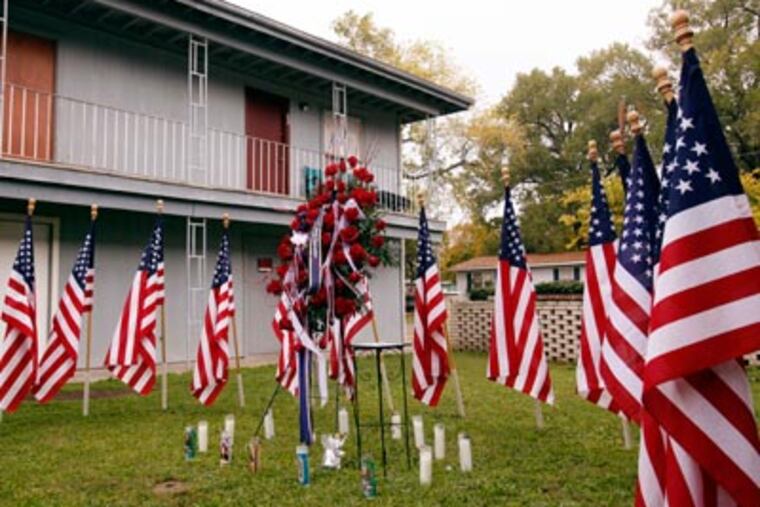
THE EMERGING stories about the background of Maj. Nidal Malik Hasan, acused of killing 13 military personnel at Fort Hood last week, should not obscure the importance of the story he shares with too many others: the extraordinary demands on mind, body and spirit that we impose on our military men and women, and the often deadly ways that our soldiers cope with those demands.
In Hasan's case, the pressure of being deployed to Afghanistan is one of the factors cited in his deterioration, although the picture is getting muddier as news of his communication with a militant imam emerges. And that's too bad, because in so many other ways, Hasan's case should keep our attention focused on the increasing psychic damage to our troops.
Then again, we don't have to look far for other symbols of the extraordinary pressures of modern warfare.
In fact, this is not the first time Fort Hood has been the site of violence. Since the Iraq and Afghanistan war began, the area surrounding the Texas base has seen a 75 percent increase in domestic abuse, according to a New York Times report. Crime is up. And this year alone, 10 people assigned to Fort Hood commited suicide; and since 2003, 76 from that base have commited suicide.
Military families face pressures that were unimaginable even a decade ago: Because of the large number of reservists who are called up, men and women who are subject to multiple deployments, families are being disrupted and sometimes shattered at a shocking rate. That doesn't even speak to the complexities of the 21st-century battles we expect our military to fight: wars in places with ill-defined boundaries and complicated enemies, amid wavering public support.
We have a hard enough time trying to fathom the deaths that occur in battle; the domestic deaths from violent acts like homicide and suicide can only conjure shock and despair. A rash of recent reports on increases in mental-health problems among vets and active military show that the toll is accumulating. One report issued in July found that more than a third of Iraq and Afghanistan war veterans were diagnosed with mental-health problems, usually post-traumatic stress disorder or depression.
Fortunately, funding has increased for veterans' health; from 1995 to 2009, funding for the Veterans Health Administration rose 154 percent. And President Obama recently signed the Veterans Health Care reform bill that will stop the budget delays that plagued the Veterans Administration's medical centers and clinics.
Still, those budget increases will be offset by cuts at the state levels for veterans programs.
But budgets are only one element in this problem. The devastating human toll that these wars take on so many needs to be a much bigger factor when we weigh whether we fight, how we fight, whom we ask to fight, and for how long. The support we give our trooops must increase.
None of this is easy. For example, at least three of Hasan's victims were therapists, about to be deployed to help soldiers cope in Afghanistan. *