Inquirer Editorial: Pension crisis looms
City Hall retirees shouldn't be the only Philadelphians worried about the latest report outlining the sorry state of funding for municipal pensions. Anyone who relies on city services has to be just as concerned that the mounting pension debt eventually will hit them where they live.
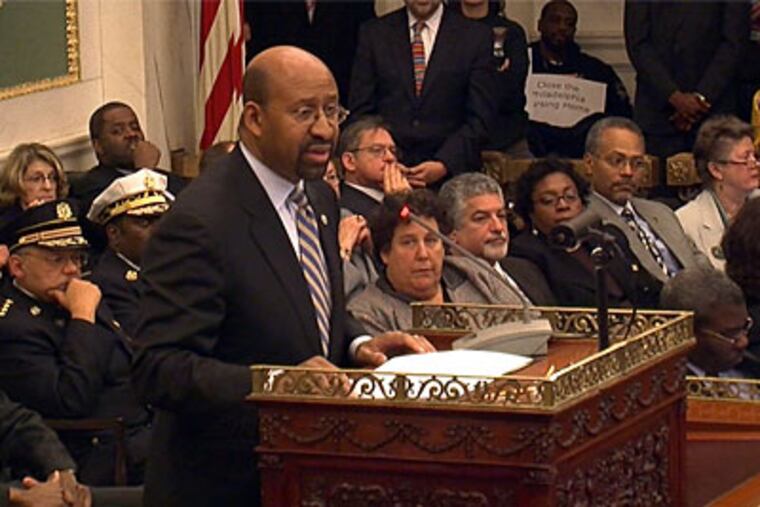
City Hall retirees shouldn't be the only Philadelphians worried about the latest report outlining the sorry state of funding for municipal pensions. Anyone who relies on city services has to be just as concerned that the mounting pension debt eventually will hit them where they live.
With a growing chunk of the city budget going to fund pensions, there will be fewer tax dollars to put police on the street, keep firehouses open, pick up trash, and provide other key services.
That's why pension reform can't be put off any longer. Mayor Nutter, City Council members, and the city's municipal unions have to meet the challenge - or risk the city's continued fiscal decline.
Economists at Northwestern University and the University of Rochester depict pension systems here and in several other major cities as a runaway train. In only a few years, nearly 20 cents of every $1 Philadelphia raises in tax revenue will go toward annual payments to keep pension benefits flowing, according to the economists' report, issued last week.
No great surprise there: The city's pension contribution from its general fund more than doubled in the last five years, and will rise again by nearly 50 percent in several more years.
Those increases may not mean the city will stop sending retirees their monthly checks. But they do depict a downward trend, with the city clearly headed in the direction of going broke.
How the city reached this point is well-known. For decades, elected officials and pension trustees have failed to assure adequate reserves to cover the city's pension obligations. Meanwhile, benefits have been increased. Then came the mortgage and stock-market debacle of 2008, which wiped out 20 percent of the value in the city's $3.5 billion pension fund.
If ever there was a time to get serious about making the structural reforms necessary to stave off the coming fiscal crisis, this is it.
For its part, Council can help ease the city's pension woes by scrapping the costly and controversial deferred-retirement program known as DROP. Saving the city more than $25 million a year won't restore the pension fund to full health, but it's a start.
To his credit, the mayor has been pushing for more broad-based pension reform since he took office. He needs to redouble those efforts.
In the arbitration award for a new police contract nearly a year ago, Nutter in December won a key victory by establishing an optional 401(k)-type pension plan that reduces costs for employees and city taxpayers. A similar pension reform was announced Friday for city firefighters.
That leaves only the city's blue- and white-collar workers insisting on defined-benefit pensions the city simply can't afford. But given the latest study on the city's pension-fund red ink, municipal union leaders have even less justification in holding out against reasonable pension reform.