DN Editorial: If the public gets involved in the budget, the whole process will benefit
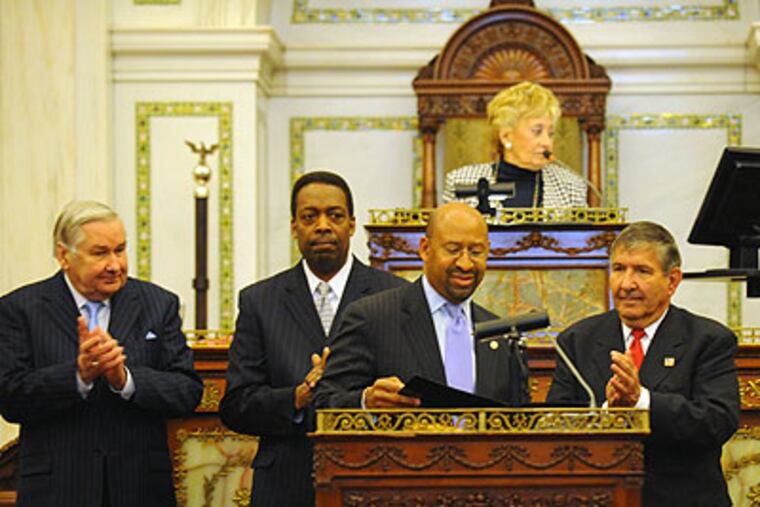
TODAY, City Council starts consideration of Mayor Nutter's proposed budget in marathon hearings that will run through May 11. Some people might be tempted to tune out the entire process. But given the enormous challenges facing the city, the stakes are too high for the public to stay on the sidelines.
TODAY, City Council starts consideration of Mayor Nutter's proposed budget in marathon hearings that will run through May 11. Some people might be tempted to tune out the entire process. But given the enormous challenges facing the city, the stakes are too high for the public to stay on the sidelines.
We wish we could've ignored much of the last three years. Thanks to the recession, a sudden drop in local tax revenue created a multibillion-dollar hole in city finances. The mayor and Council used a mix of revenue measures and cuts to fill the gap, resulting in higher property and sales taxes and reductions like delaying two scheduled police-cadet classes and fewer library hours.
But things could have been worse. In 2008, Nutter proposed closing 11 libraries, prompting community protests. The mayor eventually found savings in other areas. But preserving services wasn't the only way public input had an impact. The next year, Nutter proposed a tax on retailers who sell sugar-sweetened drinks and a $300 annual fee for residential trash collection. Both ideas generated an intense response from the public and were eventually dropped.
So what about the current budget? The news is decidedly mixed. According to the Pennsylvania Intergovernmental Cooperation Authority, the city-budget overseer, revenue collections have increased by $141 million since this time last year. Tax revenue had dropped by nearly $186 million from FY08 to FY10, so any increase is good news. But there are still major issues. Instead of the national recession, the new danger comes from Harrisburg, where Gov. Corbett has proposed major cuts to education, human services and other programs for which the city relies heavily on state funding. The city got nearly $1.8 billion in state aid last year, much of which will be affected by whatever budget eventually passes the Legislature.
Whatever happens in Harrisburg, the city will need some kind of response - either more cuts or even higher taxes.
So what's a concerned citizen to do? For starters, get involved in the traditional City Council budget process. Members of the public are also able to submit email testimony throughout the hearings (maranda.garcia@phila.gov), which will be distributed to all members of Council. Still, the first real opportunity for public testimony at a hearing won't be until April 6, nearly three weeks after the formal process starts. (Contact Maranda Garcia at 215-686-3407 to sign up). And, currently, Council has no plans to hold hearings in the neighborhoods on nights and weekends, as it did last year.
We need more. That's why "It's Our Money (a joint project of the Daily News and WHYY funded by the William Penn Foundation), will be covering many of the budget hearings live. The first hearing on the five-year financial plan will be today, with coverage starting at 11 a.m. on ourmoneyphilly.com.
Besides news and opinion, we'll also be using social media like Twitter and Facebook to solicit questions from the public and bring those directly to Council members and the mayor. You can tweet your comments to @ourmoneyphilly. We'll also be taking questions by email (waxmanb@phillynews. com), regular mail (It's Our Money/Daily News 400 N. Broad St., Phila. 19130), or by phone (215-854-5307).
Council President Anna Verna has promised to include any questions or comments submitted via It's Our Money in the official record. Based on the last few years, it seems pretty clear that this kind of input can have a big impact. But it'll happen only if members of the public continue to stay engaged in the budget process.