DN Editorial: As roads, transit fall apart, Congress once again stalls
THE EISENHOWER Era ended 50 years ago, but the nation's federal transportation policy still largely adheres to its agenda, says former Pennsylvania Gov. Ed Rendell.
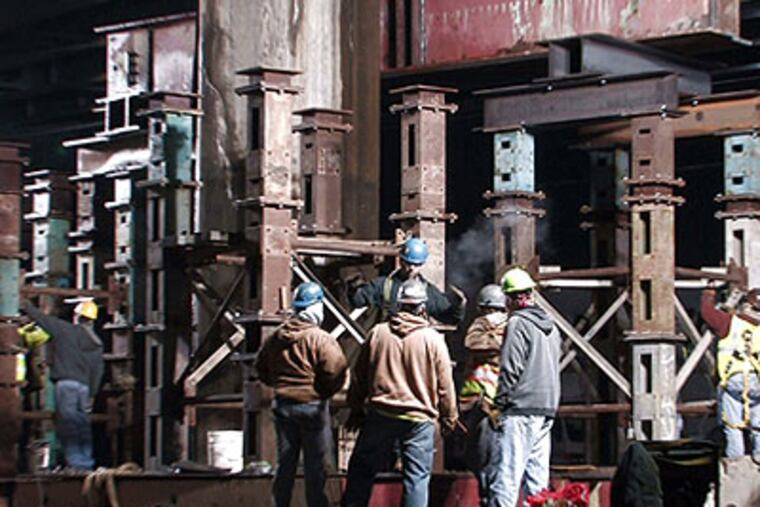
THE EISENHOWER Era ended 50 years ago, but the nation's federal transportation policy still largely adheres to its agenda, says former Pennsylvania Gov. Ed Rendell.
Our unwillingness to plan for the future and other countries' embrace of innovation has resulted in a decline in our ability to compete, according to yet another depressing report last week detailing the United States' continued neglect of its infrastructure. In 2005, America was ranked No. 1 in "infrastructure economic competitiveness." Since then, it has fallen to 15th.
Now, when the economy needs jobs so desperately, it's the perfect time to invest in infrastructure improvements, says the bipartisan advocacy group Building America's Future - cochaired by Rendell, Arnold Schwarzenegger and Michael Bloomberg. Rendell even ventured to hope that the congressional "super committee" that is tasked with cutting trillions from the federal deficit by Christmas will also recommend investing in infrastructure improvements. At least that's what he said.
Aptly titled "Falling Apart and Falling Behind," the report noted that six of the world's 10 busiest ports are in China - not a one is in the United States. Of the 15,000 miles of true high-speed rail in operation around the world, America can boast of zero. America has the world's worst air-traffic congestion and, unlike most of the world's leading nations, it doesn't have a public-private plan like a National Infrastructure Bank to finance big projects.
But, just when it's critical to move beyond the Eisenhower-era mind-set, some conservatives in Congress are resisting support for more efficient and innovative modes of transportation. And they apparently also want to undo Eisenhower's greatest achievement as president: the interstate highway system.
Some of the same congressional characters who threatened a government shutdown in the spring and a default on U.S. debt a few weeks ago - and who left for summer recess without re-authorizing the Federal Aviation Administration - still are making noises about refusing to renew the federal 18.4-cents-per-gallon gasoline tax due to expire Sept. 30. That would bankrupt the already insufficient Highway Trust Fund that is used to make repairs on bridges, highways and mass transit systems.
Anti-tax dictator Grover Norquist has exempted renewal of the gas tax from the "no tax" pledge that nearly every Republican has signed, so the crisis could be averted, but the Republican transportation bill in the House of Representatives would slash transportation spending by 35 percent over six years, threatening even basic highway upkeep. (A bill in the Democrat-controlled Senate would modestly increase spending and deserves support.)
Pro-business conservatives should support investing in infrastructure since business reaps major benefits. But so should anyone who cares about America's future. Or did the responsibility to leave our grandchildren a working country end in the Eisenhower Era?