Memory Stream: Musical Fund Hall
The Musical Fund Society of Philadelphia was established in 1820 with the goal of promoting musical performance and aiding musicians in need. The society purchased the Fifth Presbyterian Church, on Locust Street near Eighth, in 1824. Society member and architect William Strickland designed alterations, and the Musical Fund Hall opened in December of that year. Musicians from around the world performed at the hall, including pianist Louis Gottschalk and singer Jenny Lind, "the Swedish Nightingale."
The Musical Fund Society of Philadelphia was established in 1820 with the goal of promoting musical performance and aiding musicians in need.
The society purchased the Fifth Presbyterian Church, on Locust Street near Eighth, in 1824. Society member and architect William Strickland designed alterations, and the Musical Fund Hall opened in December of that year. Musicians from around the world performed at the hall, including pianist Louis Gottschalk and singer Jenny Lind, "the Swedish Nightingale."
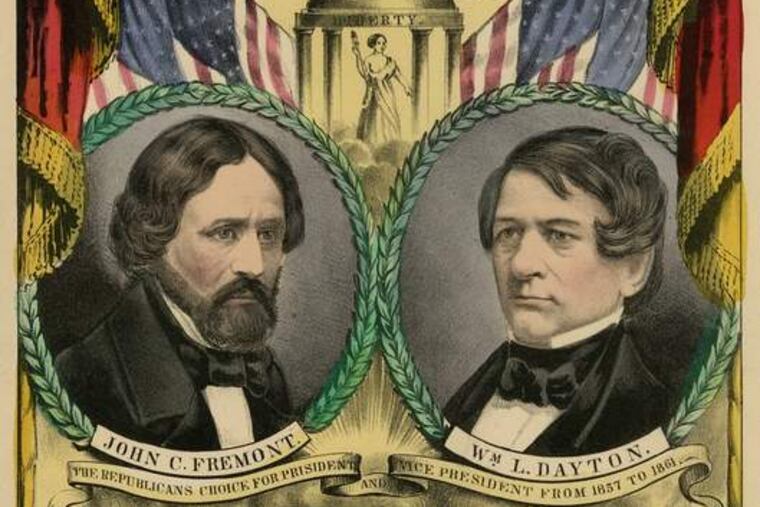
The first Republican National Convention was held at Philadelphia's Musical Fund Hall in June 1856. The Republican Party had been formed in 1854 in opposition to slavery, especially in the western territories.
Abraham Lincoln was proposed as a vice presidential candidate at the 1856 convention, but the party nominated William L. Dayton for vice president and John C. Frémont for president. One of the campaign slogans was "Free Speech, Free Press, Free Men, Free Labor, Free Territory, and Frémont." The Frémont-Dayton ticket was defeated by Democrats James Buchanan and John C. Breckinridge.
The Musical Fund Hall went through further alterations by Napoleon LeBrun, Addison Hutton, and others. Over the years, the building has been used for social and athletic events and rented to a boxing promoter and a cigar company. Today, the hall (now 810 Locust St.) houses condominiums.
The Musical Fund Society is still active, with a focus on supporting the careers of emerging artists, and it maintains a membership of amateur and professional musicians.