DN Editorial: Fix the charter situation
The SRC vote was prudent, but a reform bill is needed more than ever
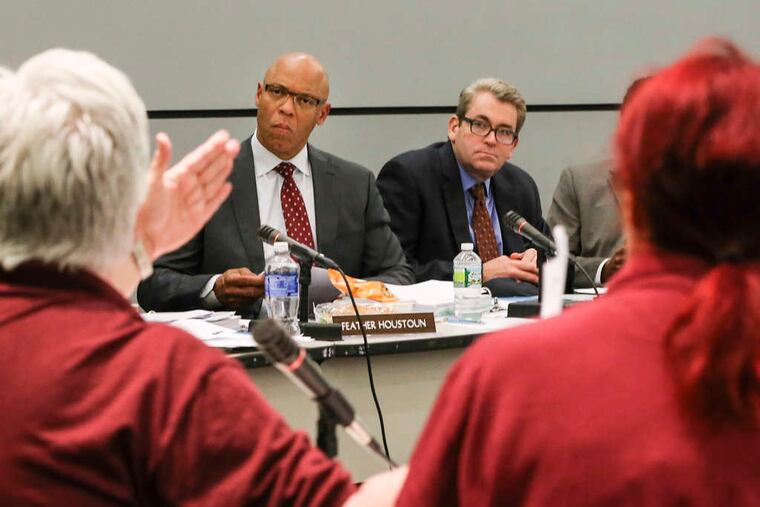
EVEN FOR a school district that has essentially set up permanent residency between a rock and a hard place, last week's vote by the School Reform Commission to approve five new charter schools was notable.
Faced with 39 applications for charters, pressure from Harrisburg lawmakers and Philadelphia School Partnership to approve as many as possible, pressure from Gov. Wolf to approve none, vocal protesters at the meeting on both sides of the issue, and a deficit that can only be worsened with more charter schools, the SRC took what looks to be the most prudent path: five approvals, 34 denials.
Anything more would have been irresponsible. Anything less would have been hard to justify.
At least the commission is taking action. The SRC is faced with hard choices, and navigating issues that don't always skew in its favor, or have little public support. Harrisburg lawmakers should not only pay attention, but also feel ashamed at their own lack of guts and action.
Ever since state lawmakers authorized charter schools in 1997, the growth of such schools - and the public funding supporting them - has grown dramatically. Philadelphia now has 86 schools that educate more than 64,000 students, for nearly $800 million.
In that time, there have been hard choices at the local level. Harrisburg lawmakers have done nothing to help - and often, much to harm, such as decreasing funding levels. They've done nothing to alter the original language of the charter bill, nothing to hold public school districts financially harmless while this major expansion was going on - Philadelphia alone has opened an average of five new schools every year for 18 years. They've done nothing to provide stronger oversight and accountability for charters.
Some attempts at reform have been made, but failed. Their failure is not necessarily a bad thing, since they wouldn't have helped the situation - and in fact, could have made it even worse.
Why do we continue to allow politicians who have no background or business in education to play such a large role in the policies and programs that directly affect education?
It's long past time for a charter reform bill, one that takes district requirements into account instead of blind devotion to more and more charters without consideration of their overall success rate. Such reform should include a return to some reimbursement formula so that districts don't harm themselves by approving new charters. The special-education funding calculation needs to be recalibrated, too. It now overpays charters - $23,000 per student - even though charters typically have students with less severe disabilities than public schools. State Auditor Eugene DiPasquale also has argued for more transparency and oversight.
Harrisburg: Time to take action on charter schools. The issues aren't easy, and some choices will be tough. But schoolchildren are living with tough issues and choices every day. You should be able to handle it.