In Lenfest's gift, much potential for media
By Jackie Soteropoulos Incollingo With a bold and innovative plan, H.F. "Gerry" Lenfest - now the former owner of the company that runs The Inquirer, the Daily News, and Philly.com - has put Philadelphia at the forefront of exploring a new economic model for struggling metropoli
By Jackie Soteropoulos Incollingo
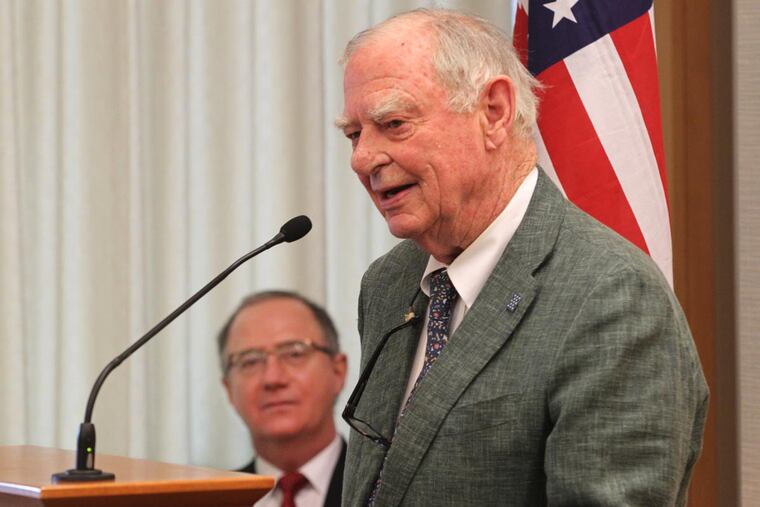
With a bold and innovative plan, H.F. "Gerry" Lenfest - now the former owner of the company that runs The Inquirer, the Daily News, and Philly.com - has put Philadelphia at the forefront of exploring a new economic model for struggling metropolitan newspapers. Lenfest's decision to donate the properties to a nonprofit institute is a gift to the region's citizens, but it is an even larger gift to the future of journalism, given the critical role that news and information play in our democracy and the troubled economic times facing many media outlets.
As a former Inquirer reporter who now teaches aspiring journalists, I am excited by this deal's potential.
For the last several decades, newspapers have been fighting precipitous drops in circulation and advertising. In addition, the technologies of this journalism industry combat zone keep changing. Traditional print newspaper readers continue to migrate to the digital world and increasingly get their news on smartphones and tablets. Philadelphia's newspapers - along with every other big-city American newspaper - have struggled to make meaningful innovations in the digital realm in order to bring in the revenue to sustain award-winning public-interest journalism in the tradition of The Inquirer and Daily News.
I hope that transferring ownership of the newspapers and their digital home, Philly.com, to a nonprofit journalism institute will ease the economic demands on both journalists and business managers. But there are still bills to pay, and the newspapers and website will continue to operate as for-profit enterprises.
There are notable examples of nonprofit journalism, including the Pulitzer Prize-winning investigative newsroom ProPublica.org; the Marshall Project, a digital site that focuses on the criminal justice system; and the Tampa Bay Times newspaper, which has operated under the Florida-based nonprofit Poynter Institute for decades.
A nonprofit designation won't protect newsrooms from the disruption wrought by technology and shifting audience preferences, but the change could liberate journalists and digital innovators to experiment with content and its delivery, as well as seek alternative funding sources. Lenfest's plan will free these news outlets to seek more grants and donations to support specific journalism projects and investigative reporting by allowing a tax deduction for donors, which wasn't possible before. Lenfest's gift could even usher in a new newsroom profession, grant-writer and fund-raiser, to seek support for the often costly and time-consuming work of public-affairs journalism.
Finally, I am encouraged by Lenfest's decision to include academic leaders on the institute's board of managers, including the deans of journalism and communication schools at Temple, Penn, Columbia, and the City University of New York. Professors and researchers in universities across the nation conduct extensive studies on journalism, digital communication, and news consumers. But few studies are conducted collaboratively among scholars and journalism professionals. By connecting his institute to academia, Lenfest could provide new impetus for journalists and researchers to work together to understand what brings users to public-affairs news content; what structures and formats are best at conveying news; and how audiences use and share news in their daily lives.
Thirty years ago, two professors - William R. Elliott of Southern Illinois University and William L. Rosenberg of Drexel - studied news audiences during the September 1985 Philadelphia newspaper strike. They, like others before them, suggested that readers turned to the newspaper in part out of a powerful daily habit. Perhaps researchers today, working in tandem with Philadelphia media and newsrooms in other cities, can help news organizations better adapt to changing technologies and audiences. Together, they might find the path to make reading news - either printed or digital - continue to be a powerful habit, and one worthy of financial support.
Journalists, industry analysts, and academic researchers like me should be excited by what's happening in Philadelphia. We will be watching Lenfest's new media institute closely.
Jackie Soteropoulos Incollingo is an associate professor of communication and journalism at Rider University in Lawrenceville, N.J. jincollingo@rider.edu