KENNEY'S BIG, BOLD IDEA$
YOU CAN'T accuse Mayor Kenney of thinking small. In his first budget address to City Council, the mayor said that what the city needed were "serious, radical, ambitious policies." And he delivered lots of them.
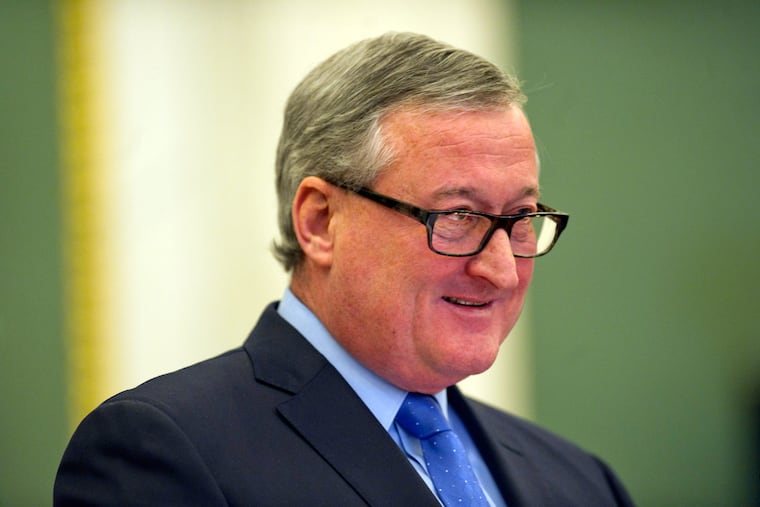
YOU CAN'T accuse Mayor Kenney of thinking small. In his first budget address to City Council, the mayor said that what the city needed were "serious, radical, ambitious policies." And he delivered lots of them.
The two likely to get mentioned the most are Kenney's call for the city to spend $60 million a year in providing slots for quality pre-K, at about $8,500 per child.
It would, for the first time, put the city in the business of providing subsidies for early childhood education, supplementing the $237 million in annual subsidies now given to poor parents by the state and federal government.
The second, and surely the most controversial, is a plan to generate funds by imposing a 3-cents-an-ounce tax on sugary drinks, not only soda but also non-carbonated drinks, such as iced tea and sports drinks. A 3-cent tax on a 20-ounce drink equals 60 cents.
Kenney has already incurred the wrath of the "soda lobby," the bottlers of major brands, plus the unionized drivers who deliver them. Those groups ganged up on Mayor Nutter's earlier plan for a 2-cent-an-ounce tax and defeated it in City Council. Councilman Kenney voted against that tax.
Nutter touted his tax as a health initiative. Kenney has pinned his to millions to make pre-K available to more children, plus an ambitious $600 million plan to make major repairs to city facilities, such as recreation centers.
At this stage of the game, we have more questions than answers. The administration needs to offer details as the budget debate advances. One overriding question is this:
Can a city, already challenged in meeting the costs of existing programs, afford new ones? As admirable as the goal is, do we want city government to move into the field of subsidizing pre-K?
As much as we'd like to see rec centers and library branches get major redo's, can city government afford the additional payments that will have to made on $300 million worth of bonds? Our debt, which already is high, will go up 40 percent in the next five years.
Kenney says he will be careful to consult with Council members about what facilities are repaired or renewed in their districts. Does that mean the allocation of money will be divvied equally among Council districts, even though one may have more need than others?
Kenney does face a dilemma. In order to be the activist mayor he pledged to be in his campaign, he wants new programs. New programs cost money. There is not enough natural growth in revenue from existing taxes to afford them. So, he resorts to seeking new taxes.
Minus the sugary drink tax, city revenue would go up only about $60 million in the next year, and most of that money would be quickly eaten up by increases in employee pension and health care costs. The average cost of providing these benefits now costs about $45,800 per city employee.
And even though the city will contribute $620 million to the pension fund in the coming year, the fund still faces a staggering $4.5 billion long-term deficit.
So, a final question: Can the mayor do anything to slow down the growth - or, better yet, lower the costs these $1 billion-plus items in the city budget?
That would be truly radical.