Commentary: Two activists with ties to Philadelphia
Jamie Stiehm is a Creators Syndicate columnist and public speaker who wrote her history thesis on Lucretia Mott at Swarthmore College
Jamie Stiehm
is a Creators Syndicate columnist and public speaker who wrote her history thesis on Lucretia Mott at Swarthmore College
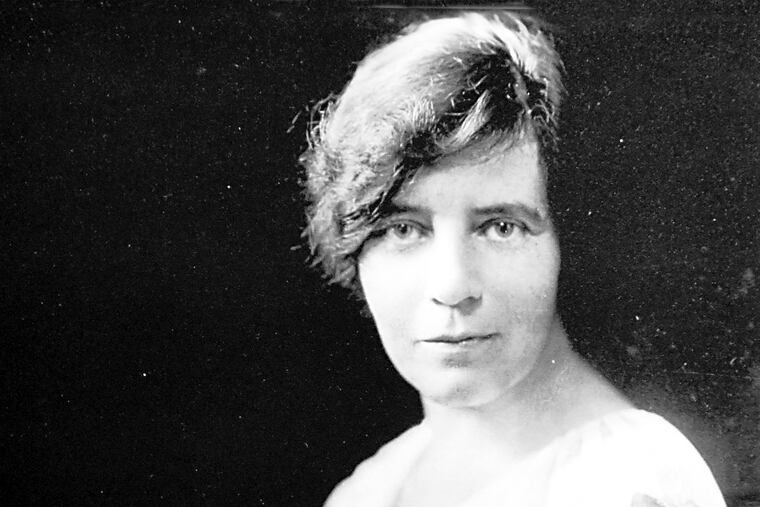
One Philadelphia Quaker started the women's rights movement in 1848 and another Philadelphia Quaker took it home to victory in 1920.
That's a 72-year journey.
Lucretia Mott and Alice Paul were revolutionary bookends, a fact about to gain national currency. The Treasury is now in on the secret of their virtual sisterhood in the City of Brotherly Love and Sisterly Affection, and will include both women on the redesigned $10 bill.
A hint: Don't be fooled by the bonnet when you first meet Mott on the new money. The tiny firebrand was a famed champion of the great 19th-century human-rights causes: fighting against slavery and for women's rights. And she was afraid of no man. I feel sorry for any mob that tried to burn her family house down, as one almost did in 1838.
Congratulations, Philadelphia! You have a lot to be proud of when it comes to the new $10 bill. Alexander Hamilton stays out front - appropriate for the first Treasury secretary and now a headliner on Broadway. But on the back will be a suffrage montage featuring Mott, Paul, Elizabeth Cady Stanton, Susan B. Anthony, and Sojourner Truth.
Together they enlarged American democracy. But only Paul lived to see the day that women voted at last in 1920. President Woodrow Wilson, the focus of the first American mass movement, didn't have a chance against her, though he resisted woman suffrage for years.
Also sharing the stage with Philadelphia on this new money will be the Society of Friends, a.k.a. Quakers, the earliest practitioners of nonviolent resistance. Anthony was also a Friend.
Mott was the main speaker at the first American women's rights convention in Seneca Falls, N.Y., in 1848. About 400 people gathered that summer - including her husband, James; her protegee Stanton; and abolitionist orator Frederick Douglass - with the radical idea of full equality and citizenship for women. Douglass later wrote that he'd never forget the first time he saw and heard Mott speak in public in Lynn, Mass. - "bearing a message of light and love." Armed with a remarkable presence and moral authority, Mott became the voice of the fledgling movement.
Her voice had already been heard all over the republic, as she crisscrossed from Ohio to Virginia, Boston to Washington, speaking against slavery. Sadly, the nation's capital was teeming with enslaved people. In 1843, an aged John Quincy Adams, a House member after his short presidency, invited Mott to speak to Congress - especially the Southern slave owners he did battle with regularly on the floor.
On a winter night, Mott packed the pews of the Unitarian Church bridging the bitter "sectional divide" with an uplifting speech in the Quaker manner: in the moment, inspired by an inner Light. Because she was a speaker, not a writer, her extraordinary gift has been lost in translation. As a contemporary observed, "her thoughts seemed to gather strength and pour upon her like a summer flood."
Her emancipation sermon to lawmakers made the newspapers and moved one listener, Ralph Waldo Emerson, 39, to write home to Concord, Mass., that Mott was the "flower of Quakerism." The Philadelphia lady with the shining gaze was 50 that auspicious night. In 1863, President Abraham Lincoln freed the slaves in the Confederate states, knowing he owed a debt to the Quaker community that moved the public mind over decades. In 1864, the Motts and other Friends founded Swarthmore College.
Born in Moorestown as a birthright Quaker related to William Penn, Paul graduated from Swarthmore in 1905 and did her graduate work at the University of Pennsylvania. Her political education came across the Atlantic from the British suffragettes who made street scenes a theater of protest.
Paul learned on the ground in London and changed the game completely in Washington, taking a new strategy out to the streets. Wilson, a cultural Southerner, hated the parades, vigils, and signs outside the White House and once called the women in for a talking-to. Paul and others were later arrested and force-fed, which moved the nation's social conscience toward suffrage. Thousands were mobilized, the first wave of college-educated women who came to claim their place in the 20th century.
Mott started what Paul finished. And Paul, author of the Equal Rights Amendment, started something still undone. She named the ERA the Lucretia Mott Amendment to honor her foremother's legacy.
These major figures in American history - not just women's history - were always right on the money. It's just taken time for society to catch up to them.