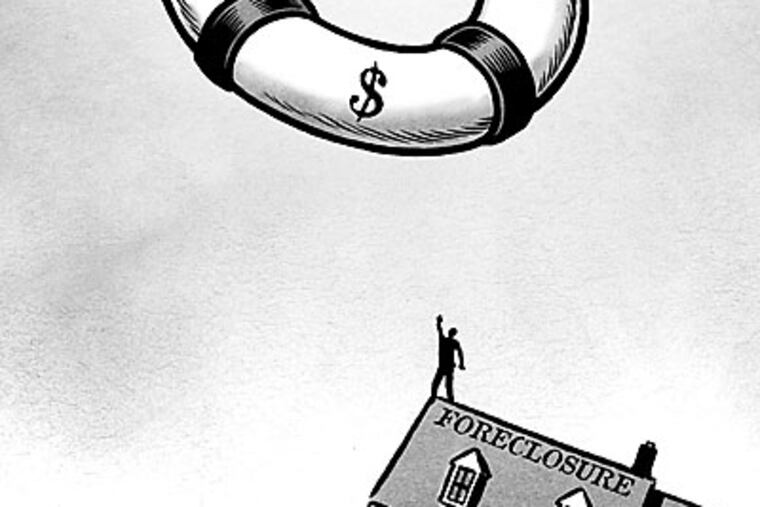
The federal government's dizzying series of bailouts finally has taken aim at the industry where the cash can do the most good - housing.
The Federal Reserve's decision to buy $500 billion of mortgage-related debt from Fannie Mae and Freddie Mac was unprecedented. Essentially, the Fed decided to bypass the banking system and inject money directly into mortgage markets to spur economic growth.
The move had an immediate positive impact. Overnight, rates on 30-year fixed mortgages dropped as much as a full percentage point, to as low as 5.25 percent. People who've worked in the industry for 20 years couldn't remember such a sharp one-day drop in rates.
Plunging interest rates should spur housing sales and help to stabilize home prices, the dilemma at the core of the economic crisis.
Mortgages have been scarce as lenders retreated from all but the safest loans. Some homeowners also should be able to refinance their mortgages, freeing up extra cash each month for some and potentially helping others avoid foreclosure.
Foreclosures, which are soaring in the Philadelphia region and across the nation, have pushed down housing prices. A nationwide survey showed housing prices had dropped 17 percent in September from a year ago. In Phoenix, prices were down 32 percent; Washington, 17 percent; and New York, 7 percent. New-home sales decreased 5.3 percent last month.
The sale price of homes in Philadelphia has remained relatively stable. (In Lancaster, which has a conservative lending market and a diverse economy, housing prices actually rose 1.6 percent in the last year.) But homes locally are staying on the market longer, as nervous buyers sit on the sidelines and as sellers hold out for prices that may no longer be realistic.
Lower property values mean reduced wealth for homeowners, who are responding by cutting back on household spending. Consumer spending in the third quarter fell 3.7 percent, the worst drop since 1980. That slowdown is sending ripples throughout the economy - orders for durable goods such as computers and cars fell 6.2 percent in October. Unemployment rose to its highest level in 14 years. The burst housing bubble is hurting every corner of the economy.
Another option being pushed by the housing industry may be worth exploring by President-elect Barack Obama: tax credits for home buyers of up to $22,000 that wouldn't have to be repaid.
Congress offered first-time home buyers a tax credit of $7,500 earlier this year, but real estate brokers reported it wasn't a strong incentive to buy. It's not clear if that was because the credit wasn't large enough, because the money had to be repaid, or because potential home buyers were already feeling less confident about the economy.
One risk of the Federal Reserve's latest action is that it could contribute to inflation. But many economists believe inflation won't come into play in the short term.
Federal Reserve Chairman Ben S. Bernanke correctly recognized that he needed to do something else to repair broken credit markets. Until home prices settle, the rest of the economy will have huge difficulties getting back on track.