Charter school's success strategy
Lower Northeast's First Philadelphia adopted a culture of caring - which set the stage for its focus on reading.
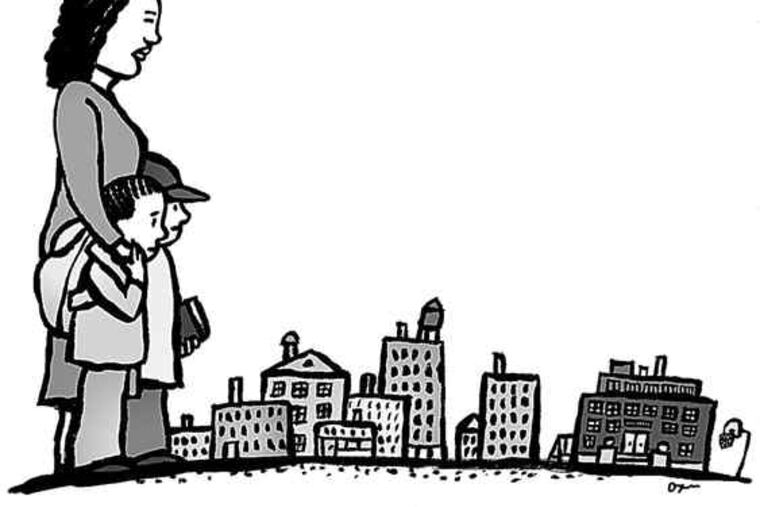
We had a simple goal when First Philadelphia opened its doors in September 2002:
Create a caring school environment where our students feel safe to learn and achieve.
It's certainly not a radical educational vision, but it's one that too many inner-city students are denied.
First Philly, in the Lower Northeast, was founded to help meet the growing parental demand for safe and academically challenging educational alternatives in our city. We feel we are meeting that demand, in part because our students and their needs come first.
Founder Gerald Santilli, former executive director of finance for the School District of Philadelphia, believes the love of reading starts during the primary years - and that too many schools are unable to instill an appreciation of this primary skill among students. Santilli and his board of trustees knew that to succeed where others fail, they had to provide a common ground for learning for a diverse student body and their families.
Achieving this goal would be a daunting task, as many of our students came to us struggling with reading.
Keep in mind that First Philly does not get to handpick its students. Our 730 prekindergarten through eighth-grade students are chosen by lottery. They come from mixed-income families; represent our city's ethnic, religious, and cultural diversity; and live in 31 zip codes. Our school community is 36 percent black, 34 percent white, 24 percent Latino, and 17 percent Asian and biracial children.
The first step, we decided, was to create a school where students care about one another and about learning. We collaborated with the Developmental Studies Center of California to develop a program designed to promote fairness, personal responsibility, kindness, and helpfulness.
Many of the basic practices we adopted in those early years have become traditions. They include class meetings, all-school celebrations, after-school events for families and the community, and a "buddy" program in which older students mentor their younger peers.
Over the years, we have also developed a school code of conduct. Our code is strict in supporting the school climate that students and staff have worked hard to establish.
For example, there are consistent and progressively more serious consequences for bullying, racial slurs, and starting rumors. Students who need help with behavior can participate in weekly social-skills groups. If a suspension is warranted, a family meeting is held to work toward a resolution.
The word choice is always used in helping our students take ownership of their behavior. We want them to understand that they are in control of the good and poor choices they make.
This culture of caring and respect doesn't just influence our instructional practices. It laid the foundation for student achievement. It is essential to our success.
This culture also sets the stage for our primary academic focus: teaching every child how to read. Without this basic skill, students cannot succeed in life. So our teachers work hard to strengthen students' ability to make sense of what they read. Reading specialists or special-education teachers are available for struggling students.
Most of our students have become confident, skillful readers. One example of their success is their showing in last year's seventh-grade state assessment. Collectively, First Philly students outperformed their peers across the state. For example, 79 percent of the white students, 81 percent of the black students, and 58 percent of the Latino students scored as proficient or advanced, compared with state averages of 70 percent, 48 percent, and 48 percent, respectively.
Our efforts have been noticed. As a result of our young scholars' gains in closing the achievement gap in reading and math, we earned an "adequate yearly progress" designation under No Child Left Behind. And recent national acknowledgment of our safe and caring school environment reinforces our belief in the wisdom of the Rev. Dr. Martin Luther King Jr., who said, "Intelligence plus character - that is the goal of true education."
This month, our first class of eighth graders left our school to attend more than 20 different high schools across the city. Many of them have spent the last seven years at First Philly. Our expectation is that they will use what they have learned to change our world - just as First Philadelphia is changing public education in the city.