In praise of Samuel Barber, a Romantic in a 12-tone era
Jay Nordlinger is a senior editor of National Review and a music critic for several publications Residents of Greater Philadelphia can take particular satisfaction in the centenary of Samuel Barber. He was born in West Chester on March 9, 1910. He grew up there, too. He died at age 70 in New York. And he was a great composer.
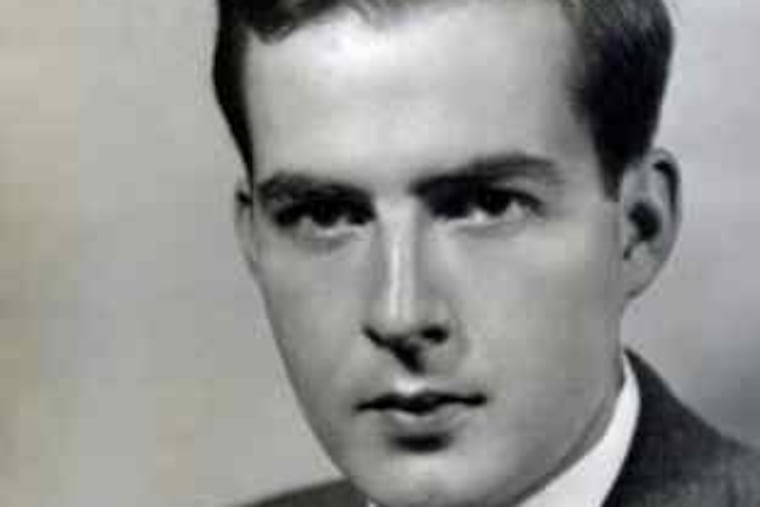
Jay Nordlinger
is a senior editor of National Review and a music critic
for several publications
Residents of Greater Philadelphia can take particular satisfaction in the centenary of Samuel Barber. He was born in West Chester on March 9, 1910. He grew up there, too. He died at age 70 in New York. And he was a great composer.
Is he the best America has ever produced? You could make a case for this. Some would advance Aaron Copland, others would have their own candidates. And we are talking about the classical realm only. Irving Berlin, Jerome Kern, and those boys are in a realm - a glorious realm - of their own. George Gershwin was a genius with a foot in each world.
I think we can say this, without too much hesitation: Barber is as good a classical composer as America has yet had.
He studied at the Curtis Institute - where else? - and went on to write a great variety of music. For the piano, he wrote a formidable sonata. Vladimir Horowitz, for one, recorded it. Ignat Solzhenitsyn, the pianist and conductor who is now concluding his tenure with the Chamber Orchestra of Philadelphia, offers a bold proposition: Barber's sonata is the greatest piano sonata of the 20th century.
For orchestra, he wrote the School for Scandal overture, a delightful and shrewd piece. And he took the slow movement of his string quartet and transcribed it for string orchestra. That gave us the Adagio for Strings. It is Barber's most popular work, and one of the most popular works by anybody. Are you sick of it? I always say, if a work is hackneyed, it's not its fault; it's ours.
Barber was versatile, but his heart seemed to lie with the voice, and with vocal music. He himself was a singer - one of the few composers in history to be that. Usually, they are pianists or violinists. (And Hector Berlioz, interesting man, played the guitar!) Barber's aunt was Louise Homer, an important contralto of the day. His uncle, her husband, was Sidney Homer, a composer of art songs.
Barber wrote two operas, the first of which was Vanessa, a moving score and a moving piece of lyric theater. It includes the short, potent mezzo aria "Why must the winter come so soon?" His second opera was Antony and Cleopatra, written for the opening of New York's Lincoln Center in 1966. The premiere was shaky, in part because the production had technical problems. Critics were ungenerous. But the opera contains much excellent music, some of which Leontyne Price, the soprano, took around the world.
Dover Beach is a work for baritone and string quartet. Knoxville: Summer of 1915 is a work for soprano and orchestra. The first is haunting and affecting, just like the Matthew Arnold poem it sets; the second is purely, almost definitively, American.
And then there are art songs - songs for voice and piano - which are models of their kind. Singers in every generation have been drawn to them, and audiences have never failed to respond.
Barber composed against the grain of his time, which was modernist. He could not turn his back on melody, harmony, and the other essential elements of music. His fellow composers, and many critics, scorned him as "neo-Romantic" and worse. He was charged with writing "pretty" music, not intellectually challenging enough, too ear-friendly.
Elliott Carter, the high priest of modernism, turned 100 in December 2008. I interviewed him on that occasion. Asked whether he could respect Barber and other "neo-Romantics," he said, "Well, some of us felt that the kind of music Sam wrote had already been done, only done better than anybody could do it now. Therefore there was no reason to do it now." With a grin, Carter added, "What Sam did was deplorable," but the music, nevertheless, "is rather good."
That's putting it mildly. As for whose music will last longer - Barber's or Carter's - I advise you not to bet the ranch on Carter's, brilliant as that composer is.
Barber was a dedicated craftsman, a hard worker. He told his friend Lee Hoiby, the Wisconsin-born composer, "When you learn a Beethoven sonata, you must play the notes on the page. Anything else is wrong. Writing music is the same. You have to find the right notes." Besides craftsmanship, Barber had inspiration, a priceless ingredient. Melodies and other ideas seemed to come to him as flowers come in spring.
At the top of this column, I called Barber "great." Great like Bach, Mozart, and Beethoven? No, of course not. But if we are more liberal in our attribution of greatness - yes, indeed. His music has enriched lives and will live forever. That is pretty good for a West Chester kid, and for anybody else.