The final shot of an American revolutionary
A musket at Yorktown did not discharge the final shot of the American Revolution. That distinction belongs to the cannon of the USS Alliance.
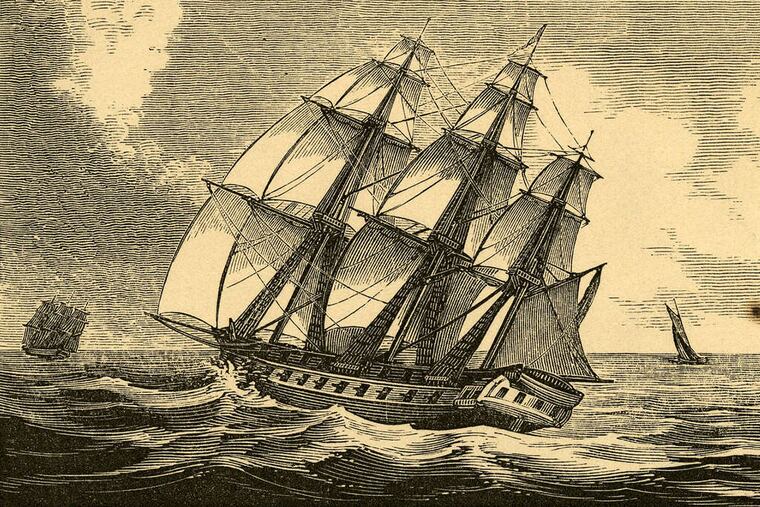
A musket at Yorktown did not discharge the final shot of the American Revolution. That distinction belongs to the cannon of the USS Alliance.
A flagship of the Continental Navy, the Alliance was a 36-gun frigate built in 1777. Claimed by the Continental Congress to be "the finest warship built on this side of the Atlantic," it captured a number of prizes and was involved in several battles.
Setting sail in 1778 as the Hancock, the ship was later renamed Alliance in recognition of the new Franco-American partnership - it carried Thomas Paine, among others, to France to secure loans for the war effort.
The Alliance was initially under the command of Pierre Landais, a former French navy officer, who fancied himself the naval equivalent of Lafayette.
Landais did not share his compatriot's military acumen, however. Benjamin Franklin, then America's first ambassador to France, wrote: "If I had 20 ships of war at my disposition, I should not give one of them to Capt. Landais."
During a battle of several American vessels against the HMS Serapis and HMS Countess of Scarborough in 1779, Landais indiscriminately fired into the hulls of ships from both sides. He was quickly relieved of his command.
The Alliance's subsequent commander was John Barry, the father of the American Navy. An Irish-born Philadelphian whose statue stands in Independence Square, Barry considered the Alliance his favorite ship.
One of the Alliance's most ferocious encounters occurred in 1781 off the coast of Newfoundland and involved two British sloops. Barry was severely wounded after being hit by what was known as "grape shot," a type of ammunition typically consisting of nails, scrap metal, iron, and sawdust. He fell in and out of consciousness due to blood loss, but refused to surrender.
After a grueling battle, the British were overwhelmed. As their commander presented his sword in surrender, Barry proclaimed, "I return it to you, sir. You have merited it, and your king ought to give you a better ship. Here is my cabin, at your service. Use it as your own."
In March 1783, Barry and the Alliance encountered a number of British ships in the West Indies while escorting a supply of silver bound for Congress. A skirmish ensued, with Barry defeating the British Sybil. The Treaty of Paris had been ratified some weeks prior, making this incident the final battle of the Revolution.
After the war, the Alliance was eventually bought by Robert Morris and retrofitted as a merchant vessel. It was later abandoned on the shore of Petty's Island. Until the Delaware's dredging in 1901, some of its timbers could be seen in the sands at low tide.
The Historical Society of Pennsylvania possesses a ledger of the Alliance, which chronicles prize money distributed to the crew.