Long before Indego, a dandy Phila. club
May is National Bike Month, and the new Indego bike-share program is reaping the rewards of spring. As squadrons of the cerulean-colored bikes cruise down the city's sunny streets, consider an earlier period in Philadelphia's bike history: the 19th century.
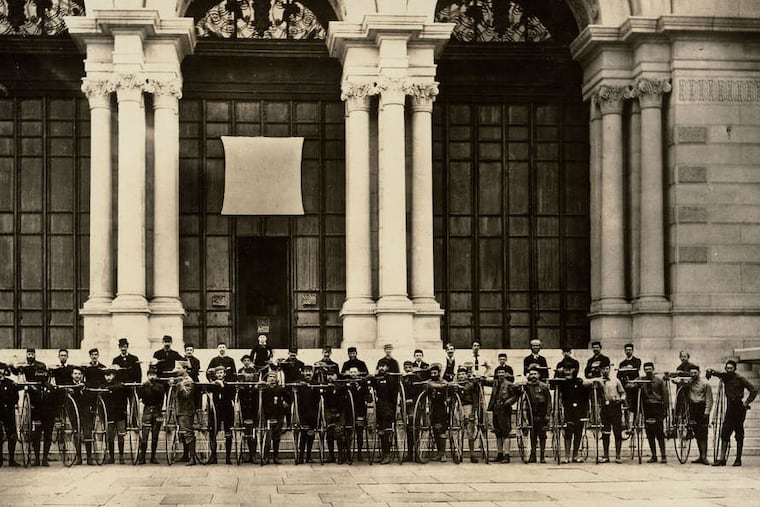
May is National Bike Month, and the new Indego bike-share program is reaping the rewards of spring. As squadrons of the cerulean-colored bikes cruise down the city's sunny streets, consider an earlier period in Philadelphia's bike history: the 19th century.
Some scholars attribute the idea of a rider-balanced two-wheeled vehicle to a follower of Leonardo da Vinci, but the first bicycle recognizable to modern eyes is a bit younger.
Created in Paris in the early 1860s, the first mass-produced bicycle sparked a brief craze in Europe and the United States. Still officially called "velocipedes" at this time, these early bikes were referred to by another name by riders: "boneshakers," due to the stiff wrought-iron frame and wooden wheels. Other road users - then as now - were not welcoming. Pedestrians, wagon-riders, and horsemen vehemently complained and the craze soon died down.
It wasn't until several improvements and inventions later - chain-drive transmissions, pneumatic tires, relative affordability, and safety - that the United States shifted into its first bike boom in the 1890s. Many consider a social revolution to have followed.
Bicycles provided everyone - professionals, laborers, men, women - with a democratic means of travel, recreation, and sport. Many amateur cyclists gathered to socialize and formed cycling clubs. So many sprang up throughout Philadelphia that a Handbook of Cycling Clubs became necessary in 1891.
The Philadelphia Bicycle Club is one of the city's oldest. Organized in 1879, the club promoted "the proper use of the bicycle and similar machines [as] a benefit to good health" and fellowship among cycling enthusiasts - including women.
Many of the Philadelphia club's records contain advice for new members, illustrating the vastly different transportation network of the late 19th century. Before automobiles, many roads were gravel or dirt. They were also filled with erratic ungulates and edgy pedestrians.
What to do when passing a horse on the road?
"It is not always wise to dismount at once. To dismount suddenly is more likely to frighten a horse than continuing to ride slowly by, speaking to the horse as you do."
What is the best method for avoiding conflicts and collisions with pedestrians?
"Foot passengers on the road should not be needlessly shouted at, but should always be given a good wide berth."
Still good advice today.
Members of cycling clubs often donned dandyish livery, and the Philadelphia Bicycle Club was no exception.
"The uniform shall consist of shirt, breeches, stockings, and cap. The shirt is to be of navy-blue flannel with linen down the collar and two or more breast pockets. The breeches to be of brown corduroy and to be buttoned around the leg just below the knee. The stockings are to be the same color as shirt and to be of wool or cotton as preferred."
The club's sartorial choices might have gone well with the new Indego bikes.