Jawnts: Nomadic family, wandering writer
In 2013, longtime war correspondent Anna Badkhen spent a year traversing Africa's Sahel belt, the liminal space between Sahara and savanna. Accompanying a family of nomadic Fulani cattle herders, she walked with them along an ancient route altered by climate change and encroaching urbanism.
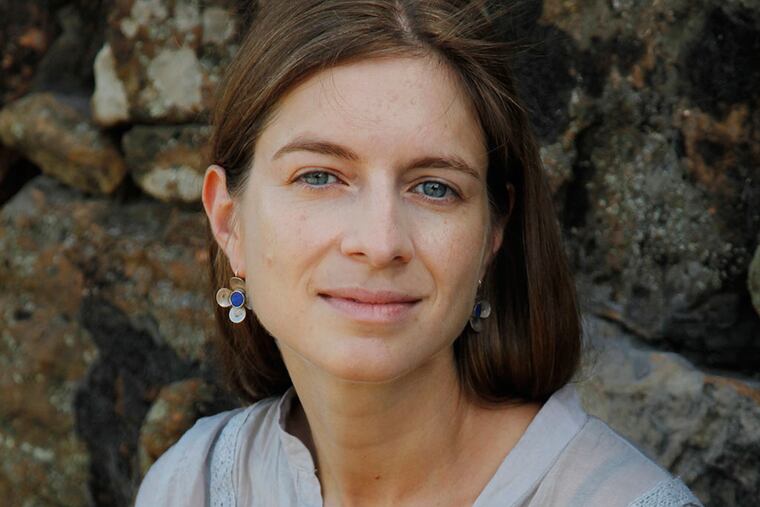
In 2013, longtime war correspondent Anna Badkhen spent a year traversing Africa's Sahel belt, the liminal space between Sahara and savanna. Accompanying a family of nomadic Fulani cattle herders, she walked with them along an ancient route altered by climate change and encroaching urbanism.
The resultant book, Walking With Abel, will be released Tuesday. It is an engrossing look into an alien world from the perspective of a writer with a unique story of her own.
Badkhen was born in the Soviet Union during the waning years of communism. She found a job at a St. Petersburg newspaper in the 1990s and has since covered America's wars in the Middle East and Central Asia for U.S. publications.
Walking With Abel is her fifth book and a marked break from her previous four entries, which mostly focused on Afghanistan.
"I was thinking about that landscape of never-ending desert [in Afghanistan] and I wanted to know what it would be like to move through a landscape like that," Badkhen says. She read up on the world's remaining nomadic populations, including reindeer herders of Alaska and the Russian Far East and the Mongolians of the steppes. "The problem is I grew up on the 60th Parallel in snow and I hate the cold," she says. "So that left me with the Sahel."
The Fulani make up about half of the world's 40 million nomads and they travel in family units across this central belt of Africa from the Indian Ocean to the Atlantic. They have herded cattle for millennia and although they long ago converted to Islam, traces of their former religious beliefs are still found in their almost spiritual reverence for cows. In one scene, as Badkhen and her hosts discuss the universe under the stars, the old Fulani origin story is recalled: "In the beginning there was nothing. Then there was a huge drop of milk."
Badkhen says it was hard to blend in because of her white skin and blue eyes, but her hosts accepted her easily, insisting that being Fulani was more a way of living than an ethnicity. They even gave her a name, Anna Ba.
"It is never hard to get accepted," Badkhen says. "It surprises and astonishes me every time. People embrace you when you walk into their lives, if you are nice. So . . . I never felt not accepted with any of my hosts in Afghanistan, Iraq, Chechnya, or Mali."
Walking With Abel is set at a steady, deliberate pace, interweaving Badkhen's firsthand experiences with liberal quotes from anthropologists, historians, poets, and the travel writers who have come before her. Badkhen gives her readers an accounting of the Fulani, the bloody history of Mali, and a subtle analysis of current affairs, from climate change to the wars she has covered for 15 years.
Walking With Abel's release party starts at 7 p.m. Tuesday at the Penn Book Center, 130 S. 34th St. It will be catered by West Philly's Kilimandjaro Restaurant, which is Fulani-owned.