From Titanic to tennis court
Maritime disaster and lawn tennis have more in common than one might suppose. Consider the quiet confidence of Richard Norris Williams, Titanic survivor and tennis titlist.
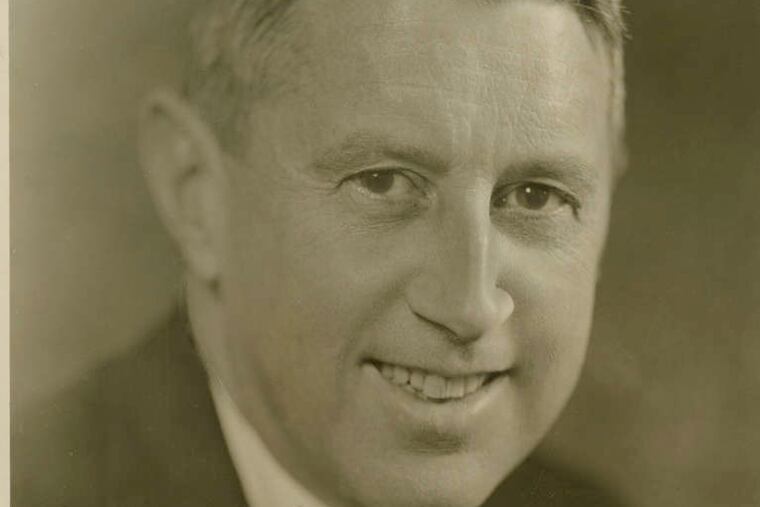
Maritime disaster and lawn tennis have more in common than one might suppose. Consider the quiet confidence of Richard Norris Williams, Titanic survivor and tennis titlist.
A descendant of Benjamin Franklin, Williams was born to American parents in Switzerland. Acceptance to Harvard in 1912 readied the 21-year-old for his first trip to the United States. With first-class passage booked on the RMS Titanic, Williams and his father boarded in Cherbourg.
The luxury liner's meeting with an iceberg on April 14 rocked the Williamses from sleep. Father and son helped passengers into the few life boats available before making their way to the bridge. Soon water was lapping at their feet.
"Jump!" was the last word shared between them.
"He started toward me just as I saw one of the four great funnels come crashing down on top of him," Williams reported in his memoir, CQD - the radio call sign for "Come Quick Disaster." "Just for one instant I stood there transfixed . . . then I jumped to the rail; the water was about two and a half to three decks down."
After nearly five hours waist-deep in the icy Atlantic water, Williams and others were rescued and sent aboard the Carpathia. When a physician recommended amputation of Williams' frostbitten legs, fearing gangrene, Williams returned, "I'm going to need these legs." For the remainder of the voyage, Williams trudged across Carpathia's deck, forcing circulation back into his frozen limbs.
Williams walked off the boat and, despite his injuries, entered the United States doubles championship that year. And he won. In 1914 and 1916, Williams drubbed his challengers in the U.S. men's singles championships.
In all but one year from the Titanic's sinking in 1912 to 1925, Williams was ranked among the top 10 U.S. tennis players.
After the United States' entry into the First World War in 1917, Williams quickly volunteered for the Army. Between fighting at Belleau Wood, becoming the personal acquaintance of Gen. John Pershing, and serving in the Allied headquarters during the Paris peace conference, Williams seemed to always find himself courtside with history.
During the Second World War, Williams became "active director" of the Historical Society of Pennsylvania, a position he would hold until the last few years of his life. He died in 1968 at age 77.
"Watching Williams at his best gave the equivalent pleasure a music-lover would receive from listening to Jascha Heifetz play his violin. He was truly a genius," observed George Lott in The Fireside Book of Tennis. Lott, like Williams, is a member of the International Tennis Hall of Fame.
"You'd never even know he played tennis if you talked to him," reported Williams' widow, Sue W. Gillmore, in a 1987 issue of Tennis USA.