Inquirer Editorial: The game isn't over
Gov. Christie's self-congratulatory tone in his "state of the state" speech was reminiscent of Eagles wide receiver DeSean Jackson celebrating before crossing the goal line.
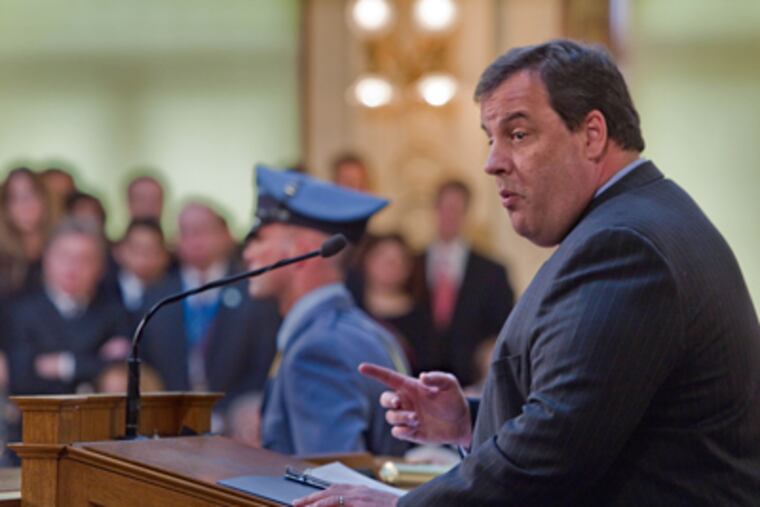
Gov. Christie's self-congratulatory tone in his "state of the state" speech was reminiscent of Eagles wide receiver DeSean Jackson celebrating before crossing the goal line.
Headed in the right direction, but a victory dance is premature.
Christie did acknowledge there is more work to be done, and that the state's finances still are not healthy. But his assertion that he balanced New Jersey's budget and cut spending 9 percent without raising taxes just ain't so.
And as for his claim of shared sacrifice, Christie should recognize the burden of his policies so far is falling disproportionately on low-income residents. That pattern needs to be adjusted when he looks at more budget cuts this year.
To cover an $11 billion budget gap last year, Christie skipped a $3 billion pension fund payment and cut aid to schools and towns. He cut property-tax rebates for seniors and eliminated $45 million in earned income-tax credits for the working poor.
Those actions amounted to average local tax increases of more than 20 percent last year, said Senate President Stephen Sweeney (D., Gloucester). A cap on property-tax increases had not yet taken effect.
Also, Christie cut mass-transit subsidies, causing commuters to pay higher fares. The state may be turning a corner, but the little guy is footing the bill.
The governor inherited a state in fiscal shambles, and austerity was needed. But it would be nice, as Christie talks of his political courage and his belief in a "culture of truth," to at least acknowledge the heavy impact on lower- and middle-income residents. Especially after he rejected the legislature's attempt to reinstitute a higher tax on the wealthiest wage earners.
New Jersey will have a budget shortfall again this year; it could be as much as $10 billion. Christie is vowing to cut taxes, which would mean even deeper spending cuts. That's bound to put more pressure on the budgets of towns and schools.
His flawed plan for education reform would divert money from poor-performing public schools for private-school tuition for students who are lucky enough to be accepted. Christie would do better to focus on his proposal to expand charter schools. In Camden, for example, there are 2,500 students on waiting lists for admission to charters.
Christie is right that New Jersey cannot recover in one or two years from decades of fiscal mismanagement. A far worse path was on display this week in Illinois, where the legislature raised income taxes 67 percent and business taxes by 45 percent, and the budget still isn't balanced.
But as Trenton heads into another lean budget season, the governor should emphasize avoiding deeper cuts on residents who have already sacrificed more than their fair share.