Inquirer Editorial: Can NFL make the game safe for quarterbacks?
Three starting quarterbacks in the National Football League were sidelined Sunday by concussions. Their injuries have bolstered the claim by former players that NFL games continue to pose "the gravest health crisis in the history of sports."
Three starting quarterbacks in the National Football League were sidelined Sunday by concussions. Their injuries have bolstered the claim by former players that NFL games continue to pose "the gravest health crisis in the history of sports."
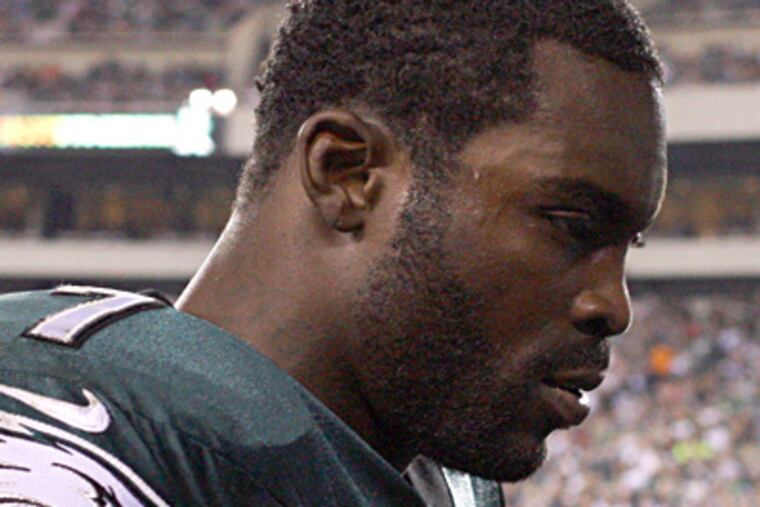
Head thumpings suffered by the Eagles' Michael Vick, Jay Cutler of the Chicago Bears, and Alex Smith of the San Francisco 49ers were only the latest in a long string of players' brain traumas that - despite extensive league precautions - appear as relentless and unstoppable as the best linebacker.
Vick's injury with what coach Andy Reid called a "pretty significant" concussion should take him out of the lineup for some time, since this isn't his first concussion and leaves him more susceptible to increasingly dangerous head injuries.
At least, the league's recently imposed requirement that an injured player like Vick be cleared by an independent neurologist offers increased assurance that concussed NFL players will get a better chance to heal.
But the persistence of concussion injuries calls into question whether any current rules changes can safeguard professional athletes in all contact sports from suffering brain injuries in the first place.
For pro football players, in particular, it's clear something isn't working - not the tough fines and sanctions imposed for illegal hits and coaching staffs' embracing rough play, not supposed improvements in helmet design, and not the constant reminders to players themselves that it's in their best interest to get on and off the field in one piece.
So what will make a difference? Former players in the thousands who have suffered injuries are banking on the avalanche of lawsuits filed against the NFL that allege the league purposely did too little to prevent head injuries known to produce life-threatening risks.
Indeed, sometimes it takes a direct hit on the pocketbook before there is systemic change - whether it's in the field of product safety or other public-health arenas.
As it happens, that potentially costly litigation soon could reach a turning point in a Philadelphia federal courtroom, where more than 100 concussion lawsuits have been bundled and brought before U.S. District Judge Anita B. Brody.
Despite all the progress made by the NFL in acknowledging the risks of head trauma shown to trigger dementia and other devastating problems in former players, the league wants to see the players' case dismissed. It made that pitch in a recent filing, contending that the legal claims should be resolved as a labor matter under the players' union contract.
The league also contends it never hid medical links between concussions and brain disease.
Both claims were blasted by the players, not surprisingly. That said, it's hard to see how the sweeping problem of head injuries in pro football can be pigeonholed as if it were a union grievance.
Even if the former players' lawsuit is bounced by Brody, that won't solve the real problem, which is whether pro football can be made safe without taking away the very nature of its appeal to millions of NFL fans: violent physical contact.