Inquirer Editorial: Lessons from the fire
The battle against the 11-alarm fire that ravaged a Dietz & Watson warehouse in Delanco last week was hampered by the building's 7,000 solar panels. Fire Chief Ron Holt refused to allow firefighters on the roof for fear that they would be electrocuted. Other fire officials said the chief made the right decision given that the panels continue to generate electricity as long as they're exposed to light, and many models lack an emergency switch.
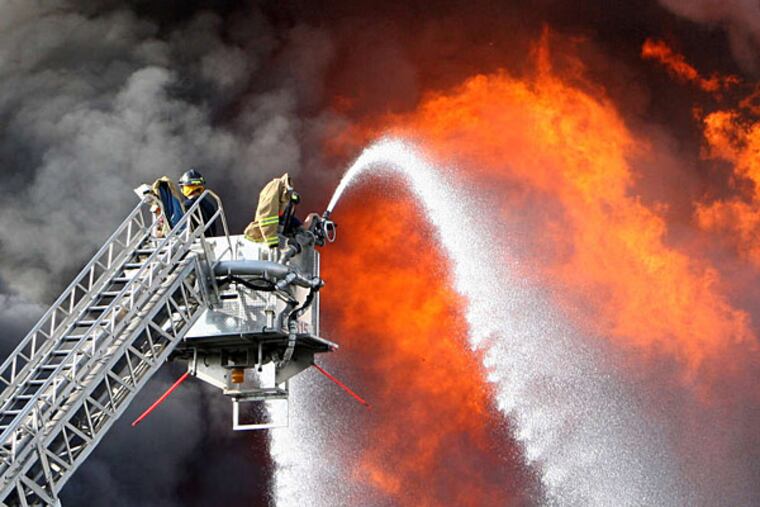
The battle against the 11-alarm fire that ravaged a Dietz & Watson warehouse in Delanco last week was hampered by the building's 7,000 solar panels. Fire Chief Ron Holt refused to allow firefighters on the roof for fear that they would be electrocuted. Other fire officials said the chief made the right decision given that the panels continue to generate electricity as long as they're exposed to light, and many models lack an emergency switch.
None of that should become an excuse to bash solar power. The safe development and use of clean energy can wean the country off dirty, climate-changing fuels. But the blaze in Burlington County can yield important lessons about fighting fires in solar-powered buildings.
Such lessons are essential considering that more and more homes and commercial structures are being fitted with solar panels. The technology is more widely used in New Jersey than in any other state besides California.
The Sept. 1 Dietz & Watson fire drew responses from 40 fire departments, took 30 hours to contain, and continued to smolder for days afterward. Three firefighters were injured, and the 260,000-square-foot building was destroyed. The cause remains undetermined. Dietz & Watson's chief executive, Louis J. Eni Jr., told The Inquirer this week that employees had been working to make up for two weeks' worth of lost meats and cheeses.
Experts on fire safety and solar energy say a combination of better firefighter training and improved technology can help reduce the damage from future fires. William Kramer, New Jersey's acting fire marshal, is confident that the challenge can be met, but he said it's going to take time, study, and technological progress.
Firefighting has already evolved from extinguishing blazes in wooden structures to today's efforts in buildings containing complex materials that emit toxic fumes when ignited. It can evolve again to handle fires in buildings with solar arrays and other green technologies.
New Jersey already requires anyone installing solar panels to report their presence to local fire departments, and some training is available to help fire departments deal with the technology. But industry officials say firefighters need to be trained more thoroughly on the nuances of solar energy. They have a point.
The solar industry is also developing two promising safety technologies. One stops transmission of electricity from solar arrays when power is cut off, though the solar panels themselves would still maintain a charge. Another advance could reduce the voltage in panels to less dangerous levels.
Once these technologies are reliable, buildings with older solar panels should be retrofitted. And training for firefighters should be strengthened. As the Dietz & Watson fire showed, the cost of such measures is outweighed by the danger to lives and property.