'I'm __ , and I'm a bad mommy'
Shannon Lelli, a Quakertown mother of three, confesses that even though she dearly loves the little ones, she has moments of colossal grumpiness and imperfection.
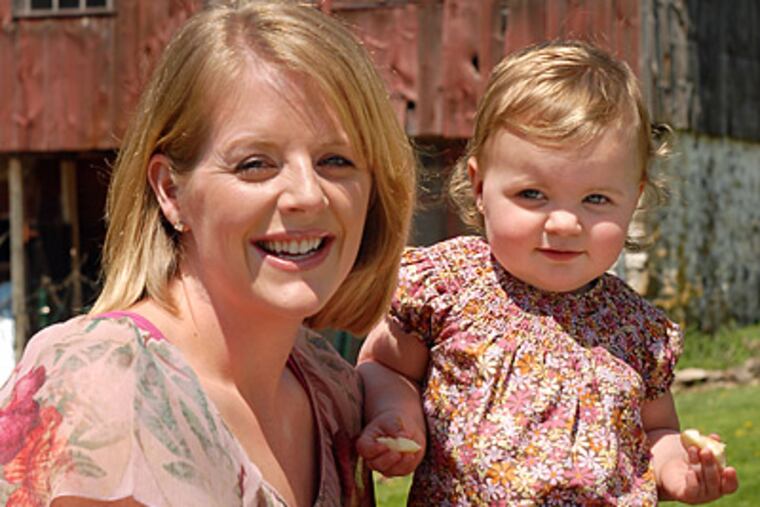
Shannon Lelli, a Quakertown mother of three, confesses that even though she dearly loves the little ones, she has moments of colossal grumpiness and imperfection.
That's how it can feel, anyway.
More than once, the 30-year-old has left home for the day with her pint-size entourage - all under age 5 - and forgotten diapers. She even has owned up to the creative use of paper towels.
Lelli is the founder of Grumpymoms.com - part of the "bad-mommy" confessional genre, both online and in print, that has exploded in popularity in recent months as it exposes the less-than-blissful side of motherhood.
"All moms are not perfect," said Lelli, who owns Planet Smoothie in Doylestown. "We all make mistakes."
In blogs and books, on Facebook and Twitter and message boards, mothers (and a father or two) are broadcasting their foibles, faults, and failures. Often, a hint of society-be-damned pride lingers over the admissions of guilt.
A parent looks the other way while her kid munches doggie biscuits. Another bribes her toddler with Happy Meals. And who hasn't passed off store-bought cupcakes as homemade?
"It's honesty," said Doylestown mother Claudine Wolk, 41, who bares all (about motherhood) in It Gets Easier!. . . And Other Lies We Tell New Mothers, due in June.
"Moms have been hiding behind the perfect-life scenario," said Wolk, also a freelance CPA. "Everybody forgets it's a huge job."
She recalls coming home from the hospital with her baby boy 15 years ago. Immediately, she said, she realized "how clueless I was. I was a little angry. This is so hard, and no one tells you. It's not all peaches and cream. You do feel frustration and resentment."
Public mea culpas on sites such as Truuconfessions.com provide a place to commiserate anonymously and take solace - as well as useful tips - from mothers who have had their own bad days. While some are poignant ("I cry in my car," says one. "A lot."), most confessions don't seem terrible. That mothers feel compelled to come clean over innocuous infractions only highlights the unrealistic demands on them. Still, some (the perfect ones, no doubt) will dismiss the rash of revelations as just Generation Whine.
Parenting experts, however, see the reality check that sharing maternal woes can offer, even as they wonder whether more serious concerns lurk below the surface.
"It will help us readjust the myth of the perfect mother," said Marsha Weinraub, chairwoman of the psychology department at Temple University, who specializes in parent-child relations.
"These women have been reluctant to speak out in public for fear of being labeled a bad mother," she said. In an online community of "bad mothers," who cares what others think? In fact, the response is always supportive. "It allows you to laugh at it."
Child development specialists Elaine Frank and Denise Rowe agree that confession Web sites are a way to connect and vent, but the codirectors of Parenting Services for Families & After Adoption in Philadelphia have concerns.
"How much are people really honest?" Rowe wondered. One mother on Truuconfessions says she can't believe she got so angry at her toddler that she wanted to hit him; did she? "We don't know." Advice from others isn't always ideal; "There is no referee."
Whatever the faults, mommy confessionals appear to be here to stay, part of the evolution of American motherhood - a response to the expectations of super-perfect parenting of super-perfect kids.
In the Fifties, the mother image was the flawless stay-at-home hausfrau that Leave It to Beaver epitomized. By the Seventies, the working mom who could do it all (remember the Enjoli commercials?) was the goal chased by any woman worth her high heels.
By the Nineties, the mommy wars raged full blast. In this decade, more husbands help at home, but the good-mother standard has crept ever higher: fresh-made organic baby food, hand-sewn Halloween costumes, attendance at all games, recitals, and extracurriculars.
Enter mommy confessionals. "It's not about flaunting bad parents," said Romi Lassally, founder of Truuconfessions and author of True Mom Confessions: Real Moms Get Real, which came out last month. "It's about being honest about motherhood - not lowering our expectations, but changing them. . . . One woman's secret can be another woman's solace or solution."
This is also the age when everyone (from experts to strangers at the mall) has an opinion on how you should parent - and feels free to express it. What once was just a scolding look at the mother spanking her unruly child in the Target aisle is now a viral post on the Internet.
That same technology, however, allows pushback.
The other day, Citizen Mom blogger Amy Z. Quinn of Mullica Hill shouted a status update to her 649 Twitter followers that she gave her nearly 8-year-old his morning O.J. in a plastic cup decorated with Blue's Clues characters. He was horrified. She was in a hurry. "That doesn't mean you're a baby. JUST DRINK IT," she tweeted about the exchange.
The "daughters of Erma Bombeck" - Quinn's term for the generation of mommy bloggers who chronicle daily life, as Bombeck famously did - could relate.
"We're seeking reassurance," she said. "Thirty years ago, we sat around the kitchen table with sisters."
One confession at a time, modern motherhood is being reinvented, say Trisha Ashworth and Amy Nobile, co-authors of Dirty Little Secrets from Otherwise Perfect Moms.
"We're expected to be happy all the time," especially stay-at-home moms, Ashworth said. "We're all looking over our shoulders. We can't live up to it."
The women urge mothers to acknowledge imperfections. "Then it's about realigning our expectations," said Ashworth, "and making peace with that."