Women who say we're fat, that's that, get used to it
They're big on self-esteem, and on fighting weight discrimination.
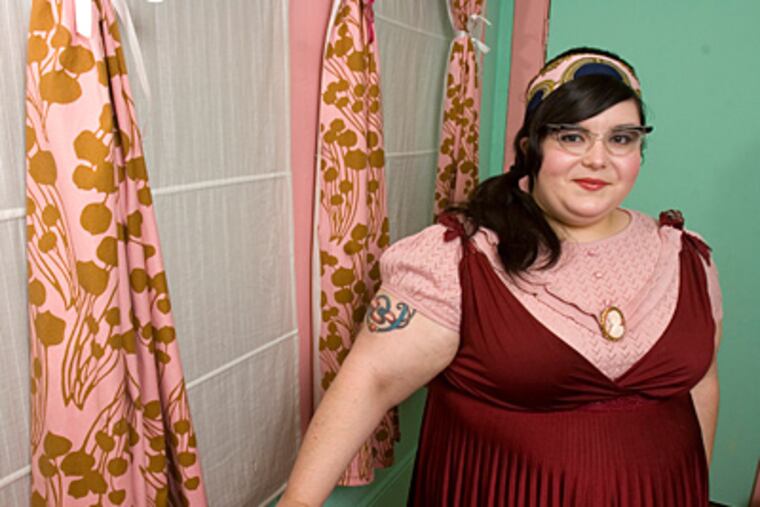
WALNUT CREEK, Calif. - Alyssa Russell of Pleasant Hill, Calif., went through what she calls the "whole hating my body thing" when she was a teenager. But, these days, the 20-year-old student has shed those negative feelings. She's big, beautiful, and proud.
"I've actually prayed for bigger hips," says Russell, who used to be 257 pounds, but, through healthy living, has found her comfort zone at 216. "I don't want to lose weight because I don't want to lose my curves."
Despite a national war on obesity and a culture obsessed with weight loss, there are many women who love their bigger bodies and don't apologize for them.
Most actually prefer "fat," the term size-acceptance activists first reclaimed during the civil and women's rights movements, says Marilyn Wann, San Francisco author of Fat! So? Reclaiming the word fat is about getting rid of shame and moving on with your life, says Oakland's Amanda Piasecki, founder of the community blog Fatshionista.
While the self-actualization is not new, it comes at a moment when researchers are touting weight-neutral health, and images of big women are more prevalent in mainstream media. Last week, Fox debuted its plus-size dating reality show More to Love, and recently Drop Dead Diva, about a vapid model who dies and comes back to life in the body of a larger woman, premiered on Lifetime. Fat activists have mixed feelings on the messages behind such programming, but plus-sized women such as Amanda Tobias, 23, of Pleasant Hill, Calif., think they are great.
"In all dating shows, the women are thin and look the same," says Tobias, who works at a plus-size clothing store. "At least in this one [More to Love], we see a variety of sizes. We see the average American woman."
Wann's book was first published 10 years ago after, she says, she was denied health care for weighing 235 pounds. And it has been almost 10 years since she and other fat activists fought for and successfully added weight and height to the anti-discrimination laws of San Francisco.
Much has changed since then. Fat-friendly resources, including plus-size clothing retailers and specialized fitness groups, have helped fat women advance, Wann says. Community blogs such as Fatshionista also provide a forum where women can talk about their fat bodies in a way that is safer than normal conversations, says Piasecki, who founded Fatshionista in 2004. Plus, women say, big clothes are simply cuter now.
"Everything used to be shapeless or boxy," says Dana Roeting, a Millbrae, Calif., plus-size model who has worked for Liz Claiborne and Jones of New York. "Now there are trendy clothes available for people up to size 30."
It is this process of self-actualization that is at the core of Jeanne Courtney's work. The marriage and family therapist runs Love Your Body at Any Size workshops out of her El Cerrito and San Francisco offices. Through nine steps similar to the stages of grief, she helps women let go of internalized fat phobia and self-hatred to accept and love their bodies.
"When you exude confidence, people are attracted to that," says Courtney, who has worked through her own issues of size acceptance. "We're all neurotic and scared enough about being attractive. But for women who are actually fat, there is a real exhilaration when they find people who are truly attracted to them."
Size acceptance started at a young age for Margarita Rossi, 26. She credits her parents, who laid a foundation for her to question the status quo, she says.
"They helped me realize that there's nothing wrong with me, and I don't need to change myself to make other people feel more comfortable," says Rossi, who is a size 26. She lives in San Francisco and is a moderator on Fatshionista. "In our culture, people think women's bodies are subject to comment. But I have lots of people who are supportive of me and a loving boyfriend. I know that I'm not alone."
While size acceptance is important, the risks associated with being overweight or obese aren't going anywhere, doctors say. The American Medical Association defines a person of normal weight as having a body mass index between 18 and 25.
"If you're in that range, you are far less likely to suffer from hypertension, coronary artery disease, or diabetes, which are leading killers of people in this country," says Amanda Williams Calhoun, a Richmond gynecologist and medical director of the Women's Health Research Institute at Kaiser Permanente Northern California.
But, Williams Calhoun adds, BMI is a starting point. When she meets overweight patients, she tries to understand what - genetics, a sedentary lifestyle - led to their weight issues. Then she asks women five questions: Are you exercising four to five days per week? Are you eating a balanced diet? Is your blood sugar normal? Is your cholesterol normal? Are your periods normal?
"If they answer yes to all those questions, then I am really not that concerned about how much they weigh," she says.
The answer to disease reduction and size acceptance may be health at every-size programs, which are based on adopting good habits for the sake of health and well-being rather than weight control. Respecting the natural diversity of body sizes, eating by honoring internal cues, and finding joy in physical activity are all tenets of the movement, says Linda Bacon, nutrition professor at City College of San Francisco and author of Health at Every Size: The Surprising Truth About Your Weight.
"Lots of people feel like they have to lose weight to be happy," Bacon says. "The change comes when people start to value themselves. And the way you're going to start adopting healthy habits is when you think you're important enough."
Ari-Asha Castalia of San Francisco knows this kind of self-love. Over the last year and a half, she has lost 84 pounds through healthy living, and she continues to lose. Yet Castalia, 48, has always believed in self-esteem at any size, she says.
"Long ago, I decided that I was going to wear nice clothes, have a cute haircut and nice makeup. I was going to walk around the world like I belonged here," Castalia says. "So many of us are waiting to be a certain size so we can do something. If I want to go to the beach, I'm not going to deny myself the pleasure of being in the water until I reach a certain weight. I do not feel disempowered as a fat person."