Mike Missanelli: Remembering Steve Fredericks, friend and mentor
I lost a friend and mentor April 7, and on the same day we put away one of the great sports soundtracks of our lives.
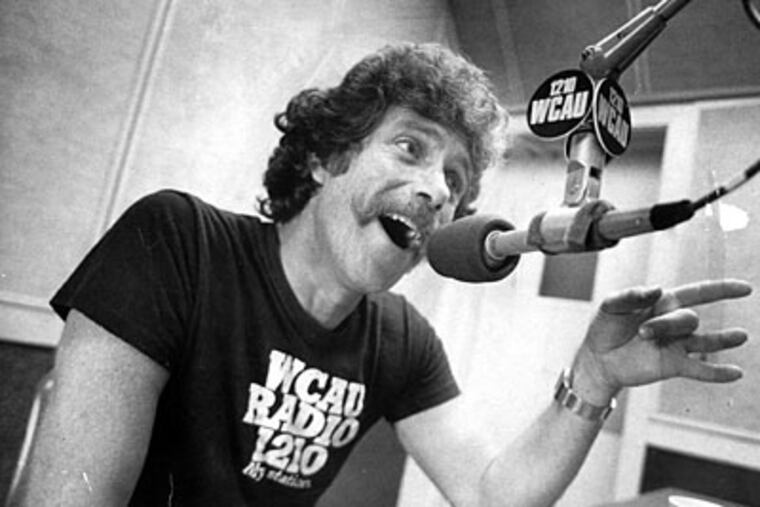
I lost a friend and mentor April 7, and on the same day we put away one of the great sports soundtracks of our lives.
Steve Fredericks died after a battle with pancreatic cancer.
He had called me about a month ago, out of the blue. Steve was a guy who, in retirement, was all about enjoying his solitude, so I knew something was amiss.
He never talked about his illness that much with me, though I knew about it. He was a guy who never wanted to burden anyone else with his problems.
The way it was told to me by his wife, Nancy, Steve waited for his oldest daughter, Robyn, to arrive from Spain, where she lives. And then, about an hour-and-a-half later, with Nancy, Robyn, and Debbie, his other daughter, at his bedside, he peacefully let go.
In the 1990s, Steve and I worked together as a sports-talk team. Judging from the abundance of e-mails I received after the news of his passing, our little radio show meant a great deal to many. Any success I have had in the sports radio business can be attributed to the time I spent working with Steve Fredericks, who more than anything, taught me how to be a professional.
We were thrown together on the air, in an important evening drive-time slot. I was making a transition to full-time radio from newspaper journalism, and he was trying to achieve one more triumph in a legendary radio career.
Truth was, I was scared. Listening to Fredericks over the years, I didn't mind that he was abrasive. I wondered how he could be so abrasive with the wrong opinion. (A sports talker is nothing unless he thinks he's right about everything.) I thought our show would be a constant wrestling match, with me getting bulldozed by the savvy veteran. But magic happened.
We didn't even consult one another about our subject matter the first day on the air, and the show somehow flowed with the ease of running water. Steve saw it right away - the show would be much better with him being the straight man and me being the tempestuous kid he could rein in with a deep-voiced chuckle.
We talked about sports but also about life, and about modern culture and about politics. We had fun, and in doing what we did, the audience also seemed to have fun.
Steve Fredericks was a wise and learned man. He knew a lot about a lot, and could hold an intelligent conversation with you on most any subject. We were never at a loss for material. He was a man in full, and the stories of his life experiences flowed regularly.
We were in a commercial break one day and I was reading a newspaper story about Fred Grandy. The actor who played the character Gopher on the 1980s television show The Love Boat was running for the U.S. House of Representatives from Iowa. Here was our conversation:
"Hey, Steve, look at this - Fred Grandy is running for the House."
"I partied with Fred Grandy."
"Huh?"
"Yeah, we were friends. When I was up working in Boston, he was a member of this acting troupe up there - I was dating Jane Curtin at the time and she was with the troupe."
"Ah . . . Jane Curtin? From Saturday Night Live?"
"Yeah."
Fredericks recalled that he, Grandy, Curtin, and others would sometimes revel all day while idling around Boston Harbor on a borrowed boat.
"Steve, you have the key to his skeleton closet!" I exclaimed.
"Ah, let him be a politician," Steve answered. "Would he be any different?"
And by that time, we were back from commercial and I had to re-program myself back into complaining about the Eagles or something.
On another break, Fredericks might tell me about an evening of carousing with his buddy, Boston Bruin Wayne Cashman, where the two of them didn't get back to their homes until about 5 a.m. The Bruins were playing that night and Fredericks went in to see Cashman after a pregame skate.
"How you doing, Hoss?" Steve asked him. And Cashman proceeded to throw up on his skates and Fredericks' shoes.
Of course, those were the wild days of Steve Fredericks.
The last 30 years of his life, he lived as a sober man - a response to his embarrassing arrest on a Kensington street corner, caught trolling for heroin. Thieves who had seen him get pinched later stripped his car and stole his golf clubs from the trunk.
After his release that morning from jail, Steve saw his photo on the front page of the Daily News and knew rock bottom. He had to finally admit he was an addict, and he faced his addiction head-on.
During our working days together, if he didn't answer his phone when I called, I knew he was at an Alcoholics Anonymous meeting. He never missed a day. That fateful day in Kensington, he reasoned, actually saved his life.
We did many remote broadcasts from bars, and I felt bad that he had to be there. Steve told me the gigs in the bars in a way helped him. The occasional inebriated fan who would scream for our attention, he said, reminded him of what he had been and how he never wanted to be again.
And we continued to have fun.
One April Fools' Day, in the middle of Curt Schilling's halcyon days with the Phillies, I decided to punk the audience and Steve at the same time by announcing that I had it from a good source that the Phils were about to trade Schilling to the Cleveland Indians for prospects. Steve loved Schilling. "That is a tough and competitive SOB," he would say.
To cement the gag, I had Schilling call into the show and confirm the trade. On the air, Fredericks was apoplectic.
"Schill, I gotta tell ya, I'm outraged," Steve said in his well-known basso profundo. "I . . . just . . . can't fathom what the Phillies are thinking!"
When Schilling and I finally pulled the plug, Fredericks looked as if he had lost a quart of blood.
The best thing a man can be to another is a confidant, a trusted friend. And that's what Steve Fredericks was to me. He counseled me through some life things, like a divorce, the passing of my folks, and the job. I wasn't sure how long I wanted to be a sports-talk host. I yearned for deeper callings.
"You have a gift for conversation," he would tell me. "Do you know how many people you entertain every day? Can you put a price on that?"
In the end, Steve Fredericks' only wish was to be cremated and have his ashes scattered under two trees he loved in the backyard of his Florida retirement home. He would have been embarrassed even by the obituary that ran in last Tuesday's Inquirer. He was a simple man. But he left a legacy that was anything but simple.
Rest in peace, Steve-O.
