Temple renders foes defenseless with old-school offense
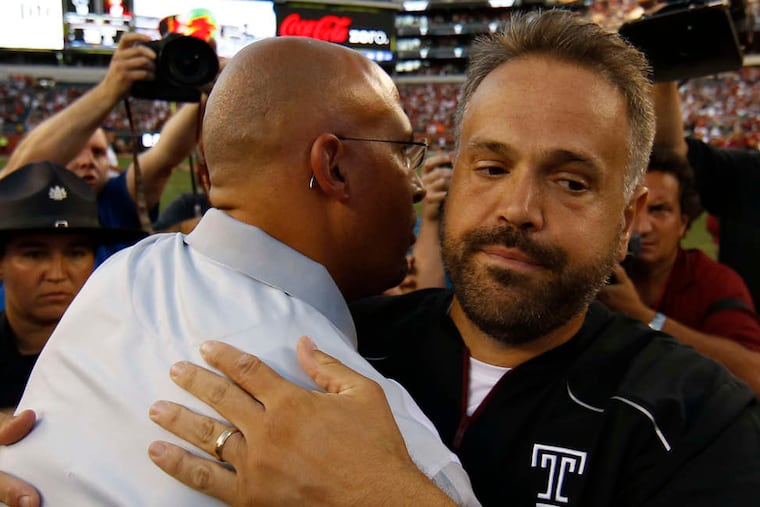
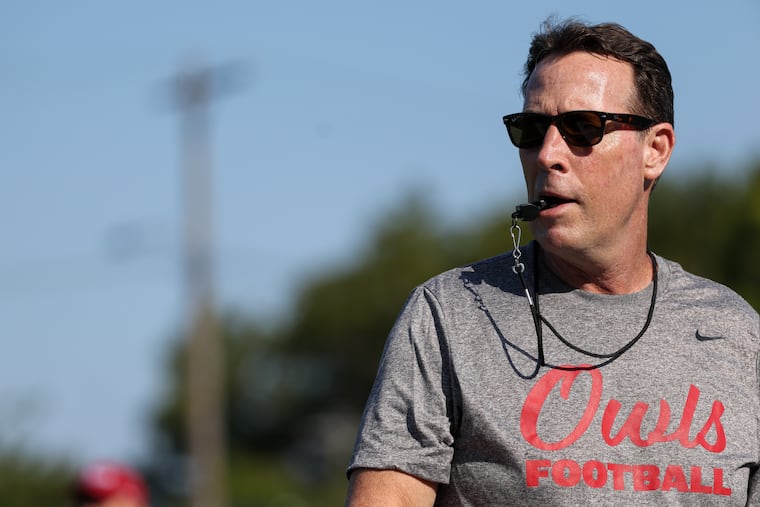
When Matt Rhule was introduced as Temple's new head coach, there was a suggestion that razzle-dazzle offensive football would be part of the package. Even the school's president began talking about "a much more open offense than we've had in the past."
When Matt Rhule was introduced as Temple's new head coach, there was a suggestion that razzle-dazzle offensive football would be part of the package. Even the school's president began talking about "a much more open offense than we've had in the past."
That wasn't a song and dance. That was the plan in 2013 and it was executed. But on the list of reasons why the Owls are 7-0 and ranked 21st nationally, scaling back on the razzle-dazzle is pretty high. It turned out there was razzle without the dazzle.
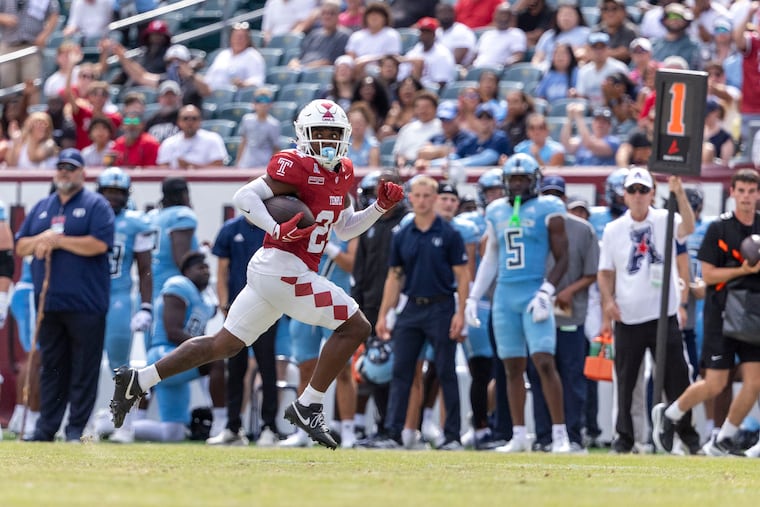
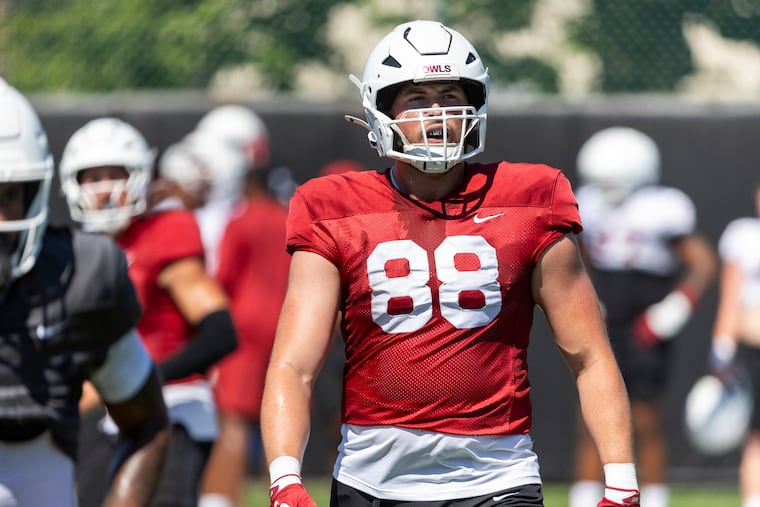
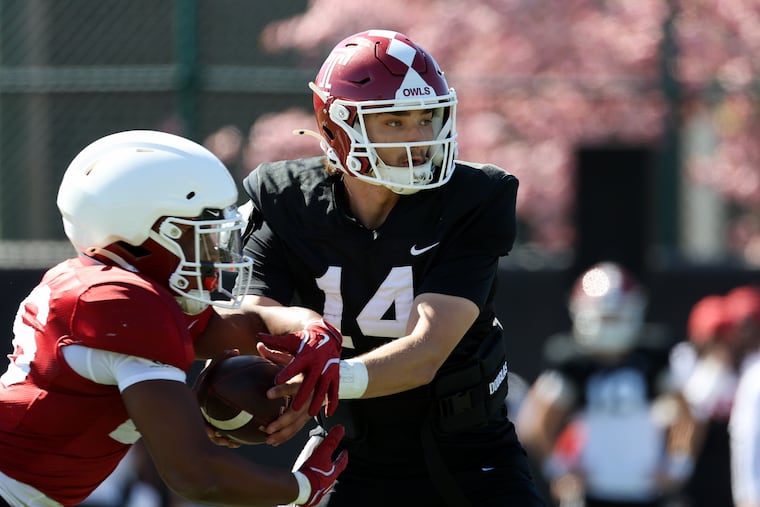
Watch Saturday night's Temple-Notre Dame game, watch the Owls offense, you'll often see that endangered species, the fully padded fullback. You'll notice tight ends. You'll see the reasons why Temple might start slowly but has taken charge of a lot of fourth quarters.
"We're averaging over 30 points a game - it's not like we're winning 17-14," Rhule said. "It's just sometimes it takes us a little while."
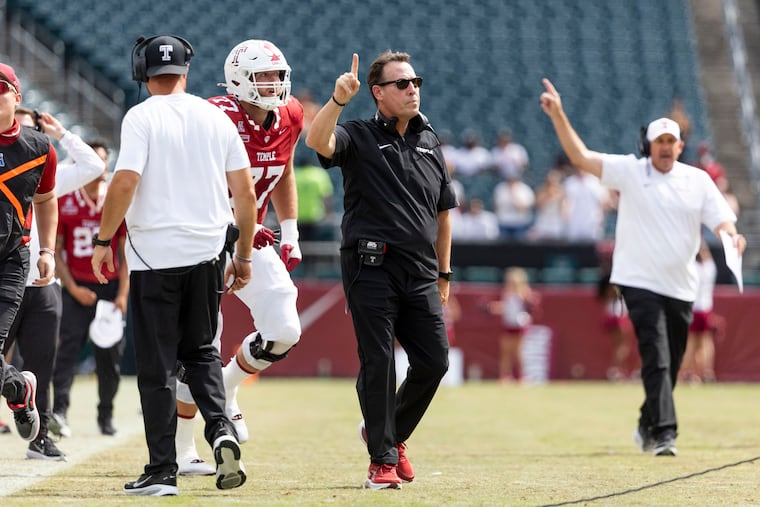
Rhule did come in two years ago and install a spread offense. Some of its principles remain and the Owls passing game is plenty sophisticated. Owls offensive coordinator Marcus Satterfield said it's always been Temple's philosophy under Rhule to be more physical than the opponent on each side of the ball.
"We lost that last year trying to be more spread," Satterfield said this week. "Pretty helpless feeling in the middle of the year when you start to struggle and you can't just run the ball, getting power sets, being able to slow the game down and control the tempo."
Toward the end of that 6-6 2014 season, after a 2-10 2013, Satterfield said the staff "started trending toward this, going into the spring . . . [to] physically just try to deliver body blows for four quarters and hopefully at the end of the fourth quarter they've dropped their hands and we've knocked them out. At least I think you've been able to see at the end of games this year the teams have been worn down a bit, we're able to get those surges at the end of games."
Right after Temple beat Tulane 49-10 on Oct. 10, Owls defensive coordinator Phil Snow said, "That defense we played today is a very good defense but they don't see that type of offense. As the game went on, we pounded them with our fullback. We're playing one style of football and the rest of the league is really playing another style."
Having basically the same offensive line for most of the year has been a factor, too. Satterfield remembers how Temple went seven straight weeks last season with a different starting unit on the offensive line.
Everybody steals from everybody in football. Temple didn't model itself after any one team, but naturally looked at teams such as Michigan State and Stanford and now Michigan under Jim Harbaugh. He also mentioned Alabama.
"You look at teams that win national championships - very rarely do spread teams win national championships," Satterfield said. "It's the teams that can line up and play defense, kick the ball well, and run the football. That's where we're trying to get to."
Was it a surprise that the spread wasn't more effective? It's become a prevalent offense for a reason.
"I think coaching comes into play a lot there," Satterfield said of using the spread with its multi-receiver looks. "You can't have a conscience. If you grew up like me and Coach Rhule did, in a two-back system where everything kind of has a reason for why you do it - the spread guys that put up 800 yards a game really have no conscience. They don't care if it's third-and-one, they're throwing fades. They don't care."
So Temple was trying to call those spread plays, Satterfield said, with a different mentality.
"It was kind of contradicting forces colliding throughout the year," said the man calling the offensive plays.
How it plays out against Notre Dame? To be determined. The Irish hold their own in the fourth quarter, too. Their last three games, they outscored Clemson, Navy and Southern California by a cumulative 39-3 in the final quarter.
Temple center Kyle Friend, on the watch list for the Rimington award for top center in the country, said the scheme change has resulted in blocking changes. He likes this mix?
"Absolutely," Friend said. "I definitely think we've got the guys for it."
"It's like, instead of us trying to go out there and do something new every play. . . . everybody just does their role," said Owls senior tackle Eric Lofton of not incorporating as much spread into the offensive mix. "It's definitely simpler now."
Rhule talked about how it's rare to see a team play really strong defense and also have a wide-open offense. That strong defense which really showed up last season made the scheme change a simple decision. It turns out you can dazzle without the razzle.
"I would love the day when we look like Baylor - we go out there early on and we're scoring 30 points in the first quarter," Rhule said. "But that's not us."
@jensenoffcampus