Laura Baugh a cautionary tale of fame too soon
The sports-celebrity machine has adapted to the ever-quickening pace of change. In 2014, heroes rise and fall with rapidity, like those desert flowers that emerge in the morning cool and by nightfall are dust.
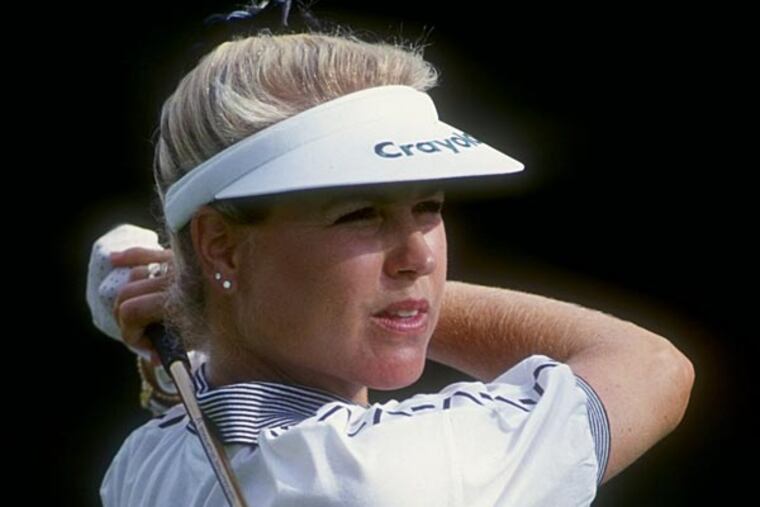
The sports-celebrity machine has adapted to the ever-quickening pace of change. In 2014, heroes rise and fall with rapidity, like those desert flowers that emerge in the morning cool and by nightfall are dust.
In a Dish TV commercial, endlessly repeated this football season, Brian Bosworth and Heath Shuler trade on their falls from fame. Terrell Owens clone Chad Ochocinco now plays football in Canada, a status synonymous with invisibility. T.O. himself was sued for divorce earlier this year, two weeks after his first marriage. And what are Kerri Strug, Gabby Douglas, and Evan Lysacek doing now?
Their moments in the sun were brief. And sometimes the shadows can be frighteningly dark.
Last week, 17-year-old golfer Lydia Ko was named her sport's rookie of the year. In citing Ko, the LPGA noted that she'd supplanted Laura Baugh, who was 18 in 1973, as the award's youngest recipient.
That reference to Baugh hit like a flashback. I'd nearly forgotten her and the phenomenon she briefly was.
A Hindu philosopher once said the world's greatest power was the youth and beauty of a woman.
Baugh had both - and plenty of talent, to boot. The combination, instead of gaining her the world, almost killed her.
In the 1970s, when she burst into the American consciousness, Baugh was the personification of everything our culture worshiped: a blond, stunningly beautiful athlete with a ready smile and a honey-sweet swing.
The native Floridian had been a prodigy. She won the national peewee championship five times, once as a 3-year-old. At 16, she became the youngest U.S. Women's Amateur champion. Offered a full academic scholarship to Stanford at 17, Baugh instead turned pro.
Once it got a look at her, the sports-celebrity machine went into overdrive.
Doors opened everywhere. Baugh did TV commercials, posed for men's magazines, appeared on day- and nighttime talk shows, became the focal point of any tournament she entered. The Los Angeles Times chose her as its woman of the year. Golf Digest named her the sport's most beautiful golfer.
It was a lot to absorb for someone who had yet to win a professional tournament.
Amid the hubbub her emergence created, no one bothered to look beneath the striking veneer. If they had, they'd have found an extremely vulnerable and damaged young woman. Her personal life was a mess. Her golf game was neglected. Her beauty was her curse.
Baugh's parents had divorced when she was 11. Without the financial resources the game demanded, she'd had to sneak onto courses. The first of her four husbands abused her, on one occasion beating and raping her, she said, then depositing her in a roadside ditch. She had a child in 1982. Six more followed.
But women's golf needed her, and the money was nice. So she smiled and swung away. Baugh never did win a tournament. Soon, in an effort to drown the failure and the pain, she turned to alcohol.
"Twenty glasses of wine was nothing for me," Baugh wrote in her 1999 autobiography, Out of the Rough. "Once, in Arizona, there was a rain delay. I went inside and had about six glasses of wine. . . . Suddenly, the clouds parted, and they called us back out to finish. I thought, 'Oh, no.' I hadn't drunk on the course before, and now I've got five holes left. So I go out and birdie those last five holes. That was the worst thing that could have happened to me.
"Seven kids and an alcoholic mother. It sounds terrible, and it was."
She would put the kids to bed and start drinking. She had to. Otherwise, she'd get the shakes. And she had to sleep. The new day, with its old problems, came quickly and relentlessly.
By then the machine had discarded her. Her game was a mess. Her life was chaos. The years were mounting. Laura Baugh's face and name faded away, and there were plenty of young athletes waiting to replace her.
By 1996, when Baugh was 41, she was drinking so much she nearly killed herself. Her platelets were badly damaged by the alcohol abuse and she started bleeding spontaneously throughout her body, even in the brain.
Rushed to a hospital, she gave up on herself. Doctors nearly did the same. Friends and family came to say their goodbyes. A priest administered last rites.
"The fact that I recovered," wrote Baugh, sober now for 18 years and a respected golf commentator, "is extraordinary."
The machine eventually chews up everyone it creates. Some are spit out in better shape than others.
Baugh's story brings to mind that of Anna Kournikova. The machine loved the blond, beautiful Russian tennis star just as much. Thanks almost entirely to her good looks - like Baugh, she never won a tournament - she too acquired fame, celebrity, and money.
Retired now, Kournikova lives in Miami, apparently spared the kind of troubles Baugh endured.
As powerful a mix as youth, beauty, and sports can be, it's also a volatile one.
And when those who possess those attributes enter the machine, it takes an extremely level head and a lot of luck to come away intact.
Because soon enough the sun goes down, the flower wilts, and the world turns away.
@philafitz