A day in the life of Citizens Bank Park
The names you know such as Halladay, Hamels and Howard are the stars of Citizens Bank Park.
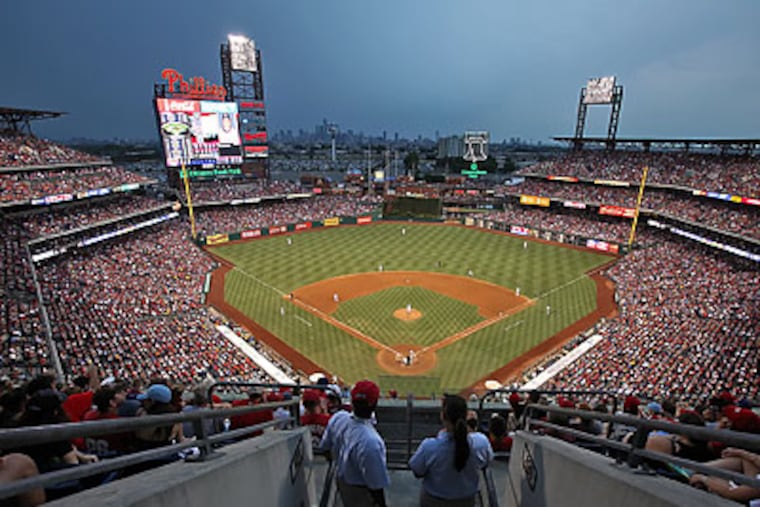
The names you know such as Halladay, Hamels and Howard are the stars of Citizens Bank Park.
The names you don't, though, help keep you coming back in record numbers and have made the ballpark an entertainment destination for baseball fans — and even those just looking for a fun night out — across the Delaware Valley.
The Phillies will sell more than 3.5 million tickets this season and are currently leading baseball in average attendance. Their sellout streak stands at 182 consecutive regular-season games.
While the Phillies players have had success on the field, more than 2,600 people from the Phillies, from concessionaire Aramark and from stadium management company Global Spectrum enhance the fan experience off the field. What they do almost round the clock helps give the ballpark its pulse.
The Daily News was given access to virtually every department in the game-day operation, including some areas previously off-limits to the media, on July 8, the first of an important three-game series with the second-place Atlanta Braves.
Daily News reporters Ed Barkowitz, Bob Cooney, Doug Darroch, Dan Geringer, Mark Kram and Lauren McCutcheon; photographers Steven M. Falk, Jarid Baringer and Jessi Melcer; and videographer Michele Tranquilli descended on the ballpark that day and night — and so did the rain and even extra innings.
8 a.m. Mike Boekholder, the head groundskeeper since July 2003, arrives at the ballpark and will not leave until the game is over. He says that because of storm threats, the infield tarp has been on all night, removed during the morning, then rolled out again at noon to remain in place until the game starts, if it starts.
"When there are storm cells in the area, I sleep a lot better when the tarp's on at night," he says. "My wife sleeps a lot better when the tarp's on at night. If there's a shaky forecast, my wife will not go to bed if we don't have the tarp on. She walks around, worrying. Why do we worry? If you don't have a field to play on, there's not a whole lot else happening at the ballpark, y'know?"
A Daily News reporter asks if Boekholder's wife works for the Phillies. "No," he says, laughing. "But she worries."
10:30 a.m. Frank Coppenbarger, the director of team travel and clubhouse services, arrives in his office, which is adjacent to the Phillies' clubhouse. On the walls are photos of former players and other pieces of memorabilia, including a row of bats. Ordinarily, Coppenbarger would arrive around noon for a night game. But with the All-Star break only days away, he has a lot to get done in a short period.
"Guys are going to scatter," he says. "We have the All-Stars going out to Phoenix. We have everybody else going to wherever they are going to go — either home, or somewhere for R&R. But on Thursday [after the break], we travel to New York. So I have to find out who is going to be with us when we go on the bus . . . who needs an extra room for their family. Because New York is so close, we always have families join us. And when we leave New York, we go to Chicago, which is also a very popular trip."
Today, Coppenbarger is just back from a six-game road swing through Toronto and Florida. "Typically, the first day back, I unpack," he says. On the floor sits a trunk with files in it. At his PC, he calls up emails he has held onto during the trip, including the travel receipts for two players who were flown home: Shane Victorino, to see a doctor; and Vance Worley, who was assigned to Triple A Lehigh Valley. He says he has "probably 100 emails" that he has saved up. "Ordinarily," Coppenbarger says, "the first day back is clean up and getting reorganized."
11:30 a.m. Clubhouse assistant Joe Swanhart, better known as "Swanny," shows up at the clubhouse kitchen, which he has stocked with food from a shopping trip the previous day. While he would not say what the bill came to, he allows, "It was up there." On the counter is a tray of chicken pot pie, which Swanhart said "a lady prepared and dropped off for us." Upon his arrival, Swanhart puts on a pot of coffee and sets out a deli tray. Players usually begin arriving between noon and 1 p.m. for a night game. Between then and 4 p.m., when they are scheduled to go out on the field for stretching exercises, they will drift in, sit down at one of the tables and have a snack. They have a variety of choices, including pieces of sliced fruit, baked goods and peanut butter and jelly sandwiches. Swanhart also whips up special orders on the grill, including turkey burgers.
"We have a diverse palate," Swanhart says. "A lot of different guys like a lot of different things. We combine what they like from the input from our nutritionist. Our players are focused on their health, so they tend to eat healthy food."
Noon: Victorino stops in and gives Coppenbarger the number of hotel rooms he will need for the All-Star Game. The previous afternoon he had been selected by the fans for the final spot on the National League roster, despite the possibility that he will not play because of a sprained thumb. Victorino is planning to go to Phoenix anyway to represent the Phillies. They also discuss his flight arrangements and the numbers of tickets he will need.
Moments after the conversation, media relations assistant Craig Hughner sends out the news that Victorino has been placed on the disabled list.
1 p.m. Trevor Cunnion and his friend James Stefano, of Collingswood, N.J., and Ian Wright, of Detroit, are first in line for standing-room only tickets near the first-base ticket window. The line will grow, but not nearly to what it might have been if the weather were better.
3:03 p.m. Press box attendant Ed Deal, a Roman Catholic/La Salle College graduate, begins writing out that night's lineup on a marker board.
3:30 p.m. Ballgirl Katelyn Klinger, 24, arrives early today to take part in a photo op. One of 17 ballgirls, she is scheduled this evening to work the leftfield line. Generally, she gets to work two or three games a month on the field. At other times, she helps out with team initiatives such as "The Green Team," a program that invites community groups to collect used plastic bottles and other recyclables during the game. In her second year with the Phillies — and her last, given that ballgirls are only allowed to serve for 2 years — Katelyn was one of 100 applicants when she applied for the position.
"I sent in a 2-minute DVD — which was required — and explained why I should be a ballgirl," says Katelyn, who attended Kutztown University and is a middle school music teacher. "I said I was personable, I loved being around people, I was athletic and I was educated. And I sang, 'Take Me Out To The Ballgame.' I was called in for a tryout. I had to show I could hit and field, because we play charity softball games. We had to do a live TV interview. And we had to take a test on general baseball knowledge."
Were the questions hard?
"Some of them were tricky," she says, "like one of them was, 'Name five retired Phillies players and their numbers.' "
4 p.m. Manayunk native David Akers — yes, he has heard all the jokes about having the same name as the former Eagles' longtime kicker — is a 14-year Phillies employee who started out running the message tower in the parking lot that used to announce upcoming home games. He now coordinates PhanaVision and the ballpark's 12 other scoreboards. The control room is right behind first base on the Hall of Fame Club level.
Creator of the wildly popular Bongo Cam, Akers spends his pregame hours surrounded by computers in his Star Trek-like control room, deciding whether to treat fans to the Kiss Cam, the Robot Cam, the Air Guitar Cam or the Baby Cam after the game starts, while tracking all out-of-town scores and evolving statistics in his high-tech aerie above the playing field.
4:02 p.m. A brief break of sunshine offers some hope for those milling around outside the ballpark. Unfortunately, it was just Mother Nature playing a gag. Minutes later, it is raining again.
4:30 p.m. The Majestic Clubhouse Store is open year-round, but game days provide a totally different environment. About 2 1/2 hours before game time, the staff locks the doors. They have an hour to change the store's orientation, moving prominent merchandise from the outside entrance to the ballpark entrance. When the store opens, the outside doors will stay locked. Only ticketholders will be able to shop.
4:30 p.m. Christine Connors, the stage manager of Phillies' TV broadcasts since 2001, arrives at the ballpark to arrange her index cards of the game's sponsored segments — from Coors' Cold Hard Blast to New York Life's "Safe and Secure" to the Dodge Stump the Fans Trivia Question — and to organize announcer Tom McCarthy's schedule of voiceovers promoting Phillies sponsors and upcoming home games.
4:35 p.m. Ashburn Alley opens, though fans are prevented from entering the main concourse of the ballpark for another hour.
4:40 p.m. The Phanatic appears at the unveiling of a new 3D mural . . . Can't stay out long, though. It's raining, and he can't get his head's feathers wet.
4:45 p.m. In the clubhouse, Coppenbarger sits at his desk with a pile of cab reciepts and a blank expense form. Coppenbarger says, "This is for Charlie Manuel . . . his taxi reimbursement for the first half of the season." One by one, he goes through the receipts and jots down the charge on the sheet.
The phone rings. Coppenbarger picks it up, listens and replies. "We have been getting them from a new place called the Emblem Source," he says. "The guy is really good . . . Hold on, let me give you his phone number." Coppenbarger later explains that the caller was the San Diego Padres' equipment manager. With the death of former Padres manager Dick Williams, the equipment manager wanted to know where he could go to have memorial patches made for their uniforms. "Unfortunately," Coppenbarger says, "we have had a lot of need for those."
Coppenbarger then places a call to his counterpart with the Dodgers. The Phillies are scheduled to play in Los Angeles for a three-game series in August before returning home.
"I always have two or three trips in the back of my mind."
Coppenbarger has been in baseball since he was a boy. As an 11-year-old, he was the batboy for the San Francisco Giants' affiliate in Decatur, Ill. "The year was 1967," he says. "The first game I ever worked, in April 1967 — and the only reason I know this is because my dad compiled a scrapbook of all the articles from the local paper. That first game, we lost to the Wisconsin Rapids Twins, and Charlie Manuel hit two home runs for Wisconsin Rapids."
4:45 p.m. Chris Long, the director of entertainment, is getting a good workout curling two phones to her ears. It seems as though every time she hangs up with someone on her Blackberry, her office phone rings. The problem she is encountering can be seen right out of her office window, which overlooks Pattison Avenue and sits just above the entrance to McFadden's — rain.
This is a particularly hectic night for Long. It is Veterans Night, and reserves and vets from as far back as World War II are on hand for the pregame festivities that include, weather permitting, unfurling an American flag that will take up all of the outfield.
The rain fell so hard earlier in the day that traffic is snarled all over the Delaware Valley due to flooding. "This is Chris," she says, endlessly upbeat while answering call after call after call. "The game is still on. I know there are delays all around, just get here as soon as you can."
"We have so many people coming in from all around the area and they are getting nervous that they won't be able to get here," she tells a reporter. "You can't control the weather. Hopefully everyone will get here safely and we will be able to get all of our on-field stuff in. We might have a delay, is what I'm hearing. We might be starting the game closer to 8."
Director of Fun and Games John Brazer, whose office is next to Long's, ducks his head in to lament the fact that it took him 4 hours to get to the ballpark from the shore area after an appearance there. He also notes: "As much as Ryan Howard means to the Phillies' lineup, that's as much as Chris Long means to this organization." Long appears to not have heard the comment, but she did.
4:50 p.m. No stretching for the players today because of the rain. Consequently, some of the players are hanging out in the kitchen, which is usually off-limits to the media. Standing behind the counter, Swanhart is peeling a mango and arranging the slices on a plate. He will also prepare cheese and vegetable plates. Behind him, a pot is simmering on the stove: a chicken, rice and bean concoction, which will be available as a pregame meal. The postgame spread will be provided by Davio's, the local Italian restaurant. Swanhart says the executive chef will come in around the fifth inning to prepare the fare for the evening: roast pig.
"We often have restaurants come in and do our postgame meal," Swanhart says. "Tonight, we'll have a whole pig laid out and cut up for the guys."
5 p.m. Long, 62, has gotten the script for the night together and now needs to make copies to give to various people. The script is everything that is going to occur on the field before the game (who is throwing out the first ball or balls, national anthem singers, etc.). Long oversees everything on the script and somehow has instantly transferred it all to memory. With every step, she is stopped and asked who should be where and what time this or that is going to happen. She calmly answers every question, all the while moving around at a 22-year-old's pace. If she doesn't know an answer, she gets one immediately.
The Phillies announce that the 7:05 p.m. game will be delayed an hour. The white infield tarp — with a single electric fan on the third-base line blowing air under the tarp across the infield to first — remains on the field.
5:05 p.m. For each game, the players get four family seats and two friend seats. "If they need more than that, they can transfer seats between each other," Coppenbarger says. Until 5:05 on game day — 2 hours before the first pitch — players can secure these tickets on a computer in the clubhouse lobby. Coppenbarger prints out a list of requested tickets. With a stack of tickets in front of him, he places the correct number in each envelope with a label affixed to them. Coppenbarger says, "Whatever I have left over, I take them to a ticket office." Only 15 players asked for tickets, possibly due to the poor weather.
Once the tickets are done, Coppenbarger will circulate among the players and speak with them concerning their needs for the upcoming New York trip. He said he has secured the cash per diem for each player — $92.50 per day, which the players receive in full for the whole trip. "That is just for food," he says. "We also pay for the hotel. Everyone on the team gets their own room." Over his desk, he keeps reminders of each duty he has to perform before the club goes on the road again: He has to send an itinerary to the clubhouse managers in New York and Chicago; get tip money for truck drivers, bellmen and so on; distribute the itinerary to the coaches and players; arrange a truck to pick up the equipment; arrange for buses; and reserve fields for early batting practice.
"We are like family," says Coppenbarger, who still will be seeing to "a lot of little duties" until after the game. "We are with each other even more than our own families during the season."
5:07 p.m. Outside, a ticket scalper named Darien (as in the nearby street) laments that the rain is going to kill his day. He has been at the ballpark for 3 hours. A Chickie's and Pete's omnipresent Crab Van blares the Drifters' "Under the Boardwalk" as it drops off fans outside the 11th Street Gate. A passenger shouts out that B.J. Thomas' "Raindrops Keep Fallin' on My Head" would be more appropriate.
5:09 p.m. The Phanatic hangs out in his beneath-the-Diamond Club dressing room, where he has been doing laundry in his tub, reading fan mail and deciding what skit he'll do tonight. He can't use his four-wheeler when the field is wet. Will he launch T-shirts or smash a Braves helmet?
5:15 p.m. Nattily attired, as always, public address announcer Dan Baker arrives at his office in the scoreboard room at the Hall of Fame level. Though he won't officially start broadcasting that oh-so familiar voice to the crowd for about 90 minutes or so, Baker is a stickler for detail, so he arrives early to look over the names of the opposing players that he will be announcing that day or night.
"I usually like to get here at least 2 hours before the game, just to familiarize myself with everybody on both teams, make sure there are no names on either roster that I haven't seen before," he says.
And if there is?
"I make sure how to pronounce their names," he says. "I will go to the other teams' announcers and find out from them, or go to the players on the team and ask or go directly to the player.
"Growing up, my parents were always on us about speaking clearly and making sure that we enunciated our words properly. It is something that was instilled in me at an early age and obviously has helped me throughout my career."
While his trademark inflections change, his routine does not. In his right breast pocket is his comb and pencil; in his left pocket are the script and lineup card.
Baker, who also serves as the PA voice of the Eagles, glowingly recalls his interview with Bill Giles that got him his current job in 1972. "Mr. Giles was asking me a ton of questions. I think it wasn't so much for my answers, but I think he was listening to how I spoke.
"Back then, the public address announcer also put up on the scoreboard the balls and strikes and outs during the game. It wasn't anything complicated, basically just pushing a button. But I told Mr. Giles that if I got the job I would be the best and fastest in the league. His reaction really made me feel as if I had gotten the job. And I did. And I became the fastest in the league. I would study umpires and their movements and could tell when they were going to call a ball or strike before they actually did."
He laughs when he tells the story about how his two children were born in 1980 and 1983, both years the Phillies went to the World Series. He relishes in the fact that he's employed by two of the teams he idolized as a child.
5:15 p.m. The copies of the script made, Long returns to her office, which has the All-Star Game jerseys for the five Phillies all-stars hanging on her door. "We'll present them to the players on Sunday, have them sign them, then give them away later in the year during Fan Appreciation Day," she says. Also neatly strewn about her office are different Phillies items: the lineup card from the last game at the Vet, accommodations, pictures, paintings. Before exiting the office, Long grabs two brand-new baseballs out of a bottom drawer. "These will be thrown out as tonight's first balls." She stuffs them into her warmup jacket pocket. "OK, now it's time to start really moving." Huh?
In a constant slow jog, Long makes her way to the Scoreboard Room. Before climbing a set of steps, she looks at a reporter and asks if he wants to take the elevator instead. The reporter tells Long to do as she normally does, so the steps are it. Long hands out scripts to all in the Scoreboard Room, including veteran Baker. Questions are answered and Long darts out as quickly as she entered.
5:20 p.m. Eric Tobin, the director of event operations, addresses the host and security staff in the briefing room. He says the heat makes water availability a priority, both for workers and for fans. There is ice available for coolers. "The weather is bad and we still have quite a few puddles. Make sure nobody slips and falls." In other business, "Those tchotchke Phanatics are almost gone and we're going to be out of those this weekend [collective 'Awww']."
Another thing: "If there is an incident in your section, let's make sure we get an incident report. Even if someone gets hit by a ball and declines first aid, get their information. Document what happened."
He then references the death of a fan who fell out of the stands in Texas the night before.
"We've had it happen here, but fortunately the boy was OK," he says. "If you see someone leaning over a rail, being aggressive leaning, don't yell at them, but go up to them carefully and say, 'Folks, we don't want anyone to fall here. Safety comes first with us.' Another thing: Please do not push people out of here when the game is over. We've had a rash of calls complaining that we're telling people that gotta go even before Harry's finished singing. [Harry Kalas' rendition of 'High Hopes' follows victories.] Let's make sure if people want to take those last few pictures before they leave, they can get that done."
After the game-day briefing, the hosts and hostesses (they're no longer called ushers) report to their positions about 15 minutes before the main gates open. The night begins by taking roll call. There are 21 sections with two hosts per section. They work in 10-game rotations, so after each 10 games they move to another section. Hosts get either an early break or a late break of a half-hour. The early break is 1 hour after the starting time, the late break would usually be at 8:35 for a 7:05 game. After roll call, the supervisor goes over the daily activities.
5:35 p.m. Long makes her way to the elevator (yeah!) and heads down to the front office reception desk. Many of the veterans have found their way to the park and are asking questions about where to go and how to get their tickets. Long seems to know just about everyone by first name, though she has dealt with many of them only by phone. She directs each one to the proper areas, then heads back to the elevator to check on those singing the national anthem and the ROTC members who are gathered near the media interview room.
5:42 p.m. Typically, this is when the Majestic store would hold a pregame meeting, when all 28 employees hear what's new (All-Star jerseys), what's on sale (not much, but player Ts are, as always, two for $40), who's pitching (Halladay), why tonight's game is important (the Phils are 2.5 games ahead of the Braves), and other team news (Victorino has been placed on the DL). The rain delay changes all this. Tonight: no meeting.
5:42 p.m. When the gates open, so does the Majestic Store. In less than 5 minutes, it's packed. "The difference between '07 and 2011? Every game is like Opening Day," Francis Winkey, new business manager, says, predicting, tonight is "gonna be wet. We're gonna sell a lot of ponchos."
5:59 p.m. It's nearly 20 minutes since the gates opened and Brewerytown concessionaire Kristel Woehlcke, of Northeast Philly, finally sells her first beer: a cup of Sly Fox ale to Fr. Roland Slodogin from St. Charles Borromeo Seminary in Drexel Hill. Shame the good father can't help us out with the rain.
6:10 p.m. Walking briskly through the hallways of the bowels of the stadium, where the humidity has seemingly gathered along with the hundred or so reserves in charge of unfurling the giant flag, Long says that it is going to be a while before they will be able to get onto the field due to the rain.
6:23 p.m. Chris "Wheels" Wheeler, now in his 35th season as a Phillies broadcaster, reads his Daily News sports section and promises Connors, the stage manager, that he will give it to her to read during the breaks in the game, as he always does. Everybody stares out at the rain and the surreal brightness of PhanaVision in the somber ballpark.
Carl Grader, the statistician, shows up late and wet, and announces that it took him an hour and 15 minutes to drive from the Vine Street Expressway to the ballpark because the downpour wreaked havoc on traffic. He gets no sympathy.
"That's why you have KYW [Newsradio]," Wheels says, laughing.
6:25 p.m. Lines to get in the store and lines to pay. Customers shake their heads, but join in anyway. Winkey points out the headless mannequin posed at the end of the line for the registers. "Manny," as he calls him, is wearing the buyer's own jersey, a pair of pants on loan from the Phillies clubhouse, and Manuel's red shoes, "size 11 triple-wide, with number 41 inside," Winkey says.
6:25 p.m. This is about the time when Long would make her way onto the field, strap on her headset and make sure that all the on-field pregame festivities go off without a hitch. On this night, however, as she stands overlooking the field from the rightfield tunnel, there is no reason to head out into the rain, which is now falling at a steady pace.
"Normally what we would be doing now is meeting with everyone on the field to make sure they are where they need to be and that they know precisely what time they get to do whatever it is they are doing," she says. "Everything pretty much happens exactly the way it is scripted — usually. Nights like this make you have to change things up in a hurry, but we will get it done."
On a "normal" night, once the national anthem hits its last note, Long heads up to the press box dining room and grabs dinner. She will coordinate with the Phanatic about his on-field appearances during the game, and anything else that might go on between innings on the field. Once all that is pretty much completed after the seventh inning, Long's day is just about over.
"I love it, absolutely love it," she says of her job. "Sure it's busy and sure it's hectic, but to me, that's the great part about it."
6:26 p.m. "It's a rain delay, and we have an early game tomorrow . . . I'll bet you 50 cents we're going into extra innings tonight," says Winkey, at the store.
6:27 p.m. Stephan White, the head chef for concessionaire Aramark, is in full frenzy mode. "Hold on for one second," he says, "I have to take this call." He then calmly instructs an underling to simply take a batch of pita chips to the Alley Grill for cooking before dropping them off to the Philly Fresh Stand.
6:28 p.m. McCarthy does a dramatic prerecorded promo for the Braves series, raising his voice to a fan-in-the-stands intensity that is startling in the pregame quiet of the booth. It's as if McCarthy suddenly decided to do "King Lear," then receded into his normal, calm self.
6:29 p.m. White spots a regular. "Hey Big Guy," he shouts. "We got those turkey legs back for you. I know you love them." The guy is the bus driver for Phillies' opposing teams.
6:32 p.m. As McCarthy and Wheels, both wearing black Phillies shirts, turn their backs to the ballfield and face the booth camera to prepare for their live pregame comments, McCarthy sees himself on a monitor, looks worried and says, "I went with the white \[crew neck\] undershirt instead of the V-neck."
Longtime cameraman Charlie O'Gara reassures McCarthy that he looks "just like Elvis," then adds, "Michael Jordan wears the white undershirt."
McCarthy brightens. "Jordan couldn't score against me," he fantasizes, blocking an imaginary Air Jordan shot that is, in reality, just air.
Somehow, McCarthy segues from Michael Jordan to Wendy's: "Ever have The Baconator?" McCarthy asks the crew. "Three burgers! The bacon! The cheese! The mayo!"
McCarthy gives it everything he's got, as if The Baconator is a walkoff home run. It is clear to everyone in the booth that, like themselves, this man desperately needs a ballgame to broadcast. And soon.
6:35 p.m. The stadium security staff numbers 120, along with members of the police department. Tonight, someone tried to pass a counterfeit $50 bill at the Majestic store. The store called security. The person said they got the counterfeit bill from a scalper to whom they sold extra tickets. Security turned the matter over to police.
6:42 p.m. Winkey, the buyer at the store, has become an expert at telling real from bootleg merchandise. He points out a retro Halladay jersey, "See how the '3' looks weird?"
6:52 p.m. Dressed in rain-resistant ponchos that are really being tested, fans Matt Minnich and Gary Reph start clapping loudly in an attempt to pep up the dreary mood of the crowd. The game is supposed to start in 13 minutes, but that's not happening.
6:55 p.m. "We're not worried about the storm," said Matt's mother Sharon, showing a ticket for Section 413. "We're above the clouds." The group is in from Palmerton, 60 miles north of Philadelphia.
6:55 p.m. Winkey "takes a lap." He has to check on the 12 other retail locations for which he's responsible, from the trendy new '47 shop to the kiosks in the Hall of Fame and Diamond clubs.
6:57 p.m. Did you ever hear that police squelch and siren in the background, particularly during Phillies' radio broadcasts? Well, it's a golf cart with an ambulance-type stretcher attached to it. It just went zooming through the crowd.
7:45 p.m. During the delay, the Orioles-Red Sox game is being shown on the new mega-scoreboard in leftfield and a smattering of boos just went up after Orioles pitcher Brad Bergesen gave up an RBI single to Adrian Gonzalez to cap off an eight-run first inning for the Red Sox. Booing a guy playing in a game 260 miles away. That's Philadelphia, baby.
7:55 p.m. The crowd cheers as the grounds crew begins to take off the tarp. Unbeknowst to them at the moment, it would be premature elation.
8 p.m. Rain delays are not good for much, least of all security. "It gives people more time on their hands, and what do they do? They drink," says security supervisor Rob DiGregorio, who is in his 10th year on the job. "Friday night and rain do not mix."
8:03 p.m. Roy Halladay begins to stretch as catcher Carlos Ruiz and pitching coach Rich Dubee mill around the bullpen.
8:07 p.m. Baker's booming voice finally rings from the public address speakers. "Welcome to Citizens Bank Park for tonight's National League game between the Philadelphia Phillies and the Atlanta Braves," he says.
8:08 p.m. Cunnion, our standing-room-only warrior, reports that he and his friend found some Good Samaritan-tailgaters with a tent who have offered them shelter. He's having a good night.
8:15 p.m. Five minutes before the pregame military presentation, the Majestic store nearly empties. The fans have waited this long for the game. They're not missing the first pitch.
8:17 p.m. Gary "Sarge" Matthews, the former star outfielder for both the Braves and Phillies who has been doing color commentary for 5 years, enters the broadcast booth and launches into the story of opening a birthday card from radio broadcaster Larry Andersen and being assaulted by the sound of "the longest, wettest fart I ever heard."
As he watches Connors, McCarthy, Wheeler and the camera crew dissolve into laughter, Sarge launches into a theatrical presentation of the gaseous sound effect, which ends abruptly when he spies an unmanned camera and puts a move on it. McCarthy exclaims, "Oh, dear God!" as Sarge says, "I can do this," peering through the camera and aiming it at the field.
"We're going to get a great view of the Comcast building, that's about it," Wheels says, as the camera's red light goes on and the fans start to notice who the new cameraman is. Sarge tips his porkpie hat to the cheering crowd. "Hey, Sarge," McCarthy says, "if you work the camera, you can wear shorts again."
"You did it," Connors tells Sarge, relieved when the real cameraman, Charlie O'Gara, returns from a break and reclaims his post.
"I did it," Sarge says happily.
"Everybody wants to be a cameraman," O'Gara says.
8:18 p.m. Armed with a chamois to dry off a seat, hostess Nancy VanSant arrives with a smile. "Look at the tip I got — the person folded it into an elephant!"
She says that the fans seated upstairs aren't up and down as much as the ones in the lower bowl. "People stay in their seats and really watch the game. In the 300 section, it's mostly season-ticketholders."
"Tips have been really poor this year. I think it has a lot to do with the economy — $25 to $30 is a good night."
She says pay ranges from $60 to $70 per game.
8:19 p.m. Baker is at his familiar spot behind the mic behind home plate. The Phillies have representatives of the armed forces holding flags from each of the 50 states march to the edge of the infield grass. The unfurling of the giant flag in the outfield has been canceled. The crowd stands and recites the "Pledge of Allegiance."
The Phillies always have something going on before the game, and Baker is the man who sets the events in motion for the crowd. Some days the script comes later than others, but Baker says, "I always want to make sure that I thoroughly look through everything that I am going to say on the field, so that I give the right inflection, raise my voice at the proper time and keep it softer when I have to. I will underline words that I think are important and always make sure that I am saying the names correctly."
On Sundays, for example, Baker meets with the nine children who are that day's "Starting Nine," as they wait to get on the field. Each child will have their names announced by Baker and stand next to a player during the national anthem.
Baker gets the name of each child and the position where they will be standing. "At first base," Baker says, raising that familiar voice. He announces each child in the back room, afterward asking each if he is pronouncing the name correctly. He does not head to the field until he is assured that he has each one right.
8:24 p.m. Baker introduces the singer for the national anthem. Usually, just as the last note ends, he literally runs up the clubhouse steps to the elevator, gets off at the press-box level and speedwalks the few hundred yards to the Scoreboard Room just in time to announce the opposing team's second hitter.
"I usually make it up in time for the second hitter," Baker says. "Sometimes the first, but almost always the second."
No need to rush on this night. During the pregame salute to veterans, the rain resumes falling.
8:35 p.m. After Boekholder confers with the umpires, his grounds crew puts the tarp back on the infield while the water-logged crowd boos its displeasure. The tarp remains on for only a few minutes. The rain, it seems, will subside.
8:45 p.m. The four umpires walk single-file through the hallway toward the field. As they near the entrance, they stop. One needs a very last-minute restroom break. He's in there 27 seconds, and emerges zipping his fly.
8:47 p.m. They're stomping back inside. They've delayed the game.
John Stewart, a retired school teacher and rec center director who watches over the star dressing room (where the performer of the national anthem hangs out) and provides the last line of security before the field, watches the umps file back in. He sighs and crosses his arms. It's going to be a long night. Tonight, like every night, he'll watch the game on TV, and will be able to hear the crowd cheer 3 seconds before he knows why. (He says he's pretty good at telling single from a double from a triple from a home run, based on the cheer he hears.)
8:50 p.m. The rain subsides. The grounds crew rolls up the tarp, grooms the mound, and towels off the pitching rubber and the bases.
8:53 p.m. Katelyn walks down to her position along the leftfield foul line. In a red Phillies cap and jacket, she carries her plastic bag with her gear in it, including cards with her picture on it that she will autograph for young fans who have gathered along the railing between innings. As the game finally begins, she sits down in a folding chair, her gloved hand on her lap. She is wearing an old Jose Canseco model, one that she has had for years. With her eyes on the batter, she says that there have been games where she has gotten eight or nine foul balls and others where she has gotten none.
"Certain players seem to hit a lot of foul balls," she says. "On the rightfield line, you want to look out for [Ryan] Howard and [Raul] Ibanez. Over here, you want to look out for [Carlos] Ruiz and [Jimmy] Rollins, when he is batting righty."
But through 3 innings, nothing has been hit in her direction. There, she sits . . . waiting.
8:54 p.m. With the tarp tucked away, Phillies coach Pete Mackanin and the Braves' Carlos Tosca finally exchange lineup cards.
8:55 p.m. After a 1-hour, 54-minute rain delay, the Phillies take the field to loud cheers.
8:59 p.m. Halladay throws the first pitch for Strike 1.
Shortly thereafter, McCarthy praises the efforts of Boekholder and his grounds crew on the air, Wheels gives his Daily News to Connors, who reads it during breaks.
9:05 p.m. Most fans have settled into their seats, or found their spots along the railings in Ashburn Alley or behind sections in the 100 level. They have been waiting long enough for some baseball.
Still, the concourse is rarely devoid of action, and someone is always hungry. Especially for Tony Luke's, it seems.
The lines have gotten shorter almost everywhere along the Alley, except in front of the cheesesteak impressario's stand, which sells about 1,600 sandwiches every game. A couple makes their way from leftfield toward Tony Luke's, the man craning his neck to see where it is. "There it is," he says, excitedly as his steps quicken. "Holy bleep!" comes next when he sees the length of the line, but he is undeterred.
9:18 p.m. Halladay and Ruiz seem unusually out of synch in the early going. Seconds after Connors quietly says to herself, "They're not communicating very well," McCarthy tells the TV audience that "it's not often that you see Roy Halladay and Ruiz not on the same page."
9:40 p.m. The Phanatic rides the elevator to the 100 level, speed-walks through the concourse, pausing for very fast cell-phone photos along the way, and erupts into Section 130. Samantha Chu, age 3 of Paoli, who's waited out the delay with her dad Kevin, spots him. At first, her eyes widen and she squeals with delight. Then, she grabs hold tight of her dad. The Phanatic is big!
A minute later, the Phanatic is traversing sections — stepping on seats, sitting on fans — to reach a row of 8-year-old boys — Nick, Martin, Shane, Garrett, Dominic and Brett from Harrison Township, N.J., celebrating Shane's birthday. The green guy greets each boy before speeding back to his locker room. As soon as he's gone, these kids appear stunned. "He sneezed on my head!" says one. "He rubbed my stomach!" cries another. "He kissed me on the lips!" "He smelled like a cherry!" "He kissed him . . . on the lips!"
9:49 p.m. When Sarge shows up to broadcast the fourth through sixth innings with McCarthy, he is wearing a white Phillies cap with his black Phillies shirt which, McCarthy is quick to point out, is a fashion faux pas for the sartorially splendid Sarge.
"The man has played professionally," McCarthy tells the crew, as if narrating a documentary on Sarge's entrance, "and he doesn't know how to wear a baseball cap."
McCarthy leans over and gently curves the bill of Sarge's new cap so it will look more broken in, like a ballplayer's. Sarge gives him a look that says, "Payback time will come, my friend."
9:52 p.m. Phanatic helper Christine Keller Powers, who has worked here for 16 years, removes the plastic fitting inside a Braves batting helmet in order to line the helmet with masking tape, so when the Phanatic smashes it, she won't have to run all over the field to pick up the broken pieces.
10:06 p.m. Ruiz steps to the plate in the bottom of the fourth. With the score tied 1-1, he lofts a pitch from Braves starter Brandon Beachy high in the air. It lands just over the leftfield fence and bounces back onto the field. Leftfielder Nate McLouth retrieves it and rolls it over to Katelyn, who walks the ball over to a young fan she has spotted.
The boy is Will Kelley, a fourth grader from Broomall.
Katelyn hands it to him.
And the boy beams.
10:13 p.m. Connors exclaims, "Here we go!" as PhanaVision focuses on a nervous-looking young man proposing to his girlfriend. She says yes. Connors says, "This guy was probably sitting around for an hour and 54 minutes thinking, 'Oh, my God! What am I going to do if they cancel the game?'
10:35 p.m. The Phanatic takes the long walk beneath the ballpark from his locker room along the third base handicapped ramp to the field. Seconds after the inning ends, the loudspeakers blast the Braves' tomahawk-chop theme song. The crowd begins to boo. The Phanatic dashes onto the field in front of the visitors dugout. He places the helmet atop a T, and obliterates it with a baseball bat. Victory! The crowd erupts into cheers.
On his way out, he hugs Kristina Gorel, age 10 from Simpson, here with her brother and parents. It has been quite a couple of days for her. "Last night, my softball team won the championship!" she beams. (She plays second base.)
10:50 p.m. Tom Burgoyne, the Phanatic's best friend, calls to the booth to confirm: The Phanatic has decided to perform "Minnie the Moocher." The mascot won't, however, be bringing fans atop the dugout with him: Too slippery tonight.
11 p.m. "The rain delay took the sting out of this game," says DiGregorio, assessing the security situation. "The whole ballpark was kind of quiet tonight. They stopped selling beer at 10 o'clock. That helped. Normally they sell it up to the end of the seventh inning."
That does not mean it was without any incidents. "A female fan came up and complained that two intoxicated guys were harassing a family for leaving the game early," he says. "The eye in the sky [security system] called for me to come, and they started harassing a second set of fans. One of them came up and cooperated with us. The other refused to leave his seat. So another security officer and a police officer had to go down and physically pull him out of the seating area. It ended up taking three police officers. They were ejected out the leftfield gate. They were close to getting arrested because they tried to come back."
11:08 p.m. Through the Diamond Club lounge, over another row of seated fans, the Phanatic mounts the dugout, swings his belly, incites a rousing competition between "hi-dee-hi-dee-hi-dee-his" and "hi-dee-hi-dee-hi-dee-hos," and flattens himself out, stomach side down, head propped on elbows, to watch the game. (That's when the Phanatic is resting, says Burgoyne. Being such a large island species, the Phanatic is prone to a rare form of Galapagos Island heat stroke, so he's careful to stay cool between havoc-wreaking sessions.)
11:12 p.m. A husband and wife, with six kids in tow, decide that is enough for the evening and head for the exit. All eight are wearing some verson of Phillies gear. Two other hearty fans are ready for more, but they find the escalators that were going up to the 200 level have been turned around and are coming down. They scramble around looking to figure out how to get back to their seats.
11:15 p.m. The line for ice cream behind Section 126 is at 10, with cones and helmet dishes still being sold. Across the stand, a lonely basket of chicken on top of fries sits under a heat lamp. "We only got one thing left — chicken fingers and fries. That's it," the cashier on that side of the stand says. Another pass of the stand about 20 minutes later finds the final item gone, the heat lamp off and a worker sweeping up behind the counter, but the ice cream is still selling, just not as quickly.
11:32 p.m. Back in his locker room with Tom and Christine, the Phanatic cools off in front of a fan while slurping down a glass of water. He'll stick around until the game is over, and might even appear again, if the game goes into many extra innings.
11:48 p.m. A long night gets longer. The Phillies are threatening in the bottom of the ninth, but Chase Utley lines out to shortstop Alex Gonzalez, and we go to extra innings. Little-used reliever Juan Perez strikes out the side in the top of the 10th on nine pitches, only the second pitcher in baseball history to do that in extra innings.
Midnight: Raul Ibanez hits a walk-off home run to win the game, 3-2.
In the aisle between Sections 109 and 110, hostesses Anna DiFlorio and Mary Anthony cheer and give high-fives to every fan as they head for the exits. "If I turn my back, they hit a home run," says Anthony, who has worked at the ballpark for 6 years. "It started last season." Asked how many times, she says, "I don't know, but I know it works."
Kalas' rendition of "High Hopes" plays on the giant scoreboard, as a wet but happy crowd exits. DiFlorio and Anthony sing along, too.
On the field, Sarge, who has traded his white Phillies cap for a bright yellow porkpie hat and has been standing by at field level since leaving the TV booth in the top of the seventh, interviews Ibanez as the star of the game. McCarthy and Wheels do the postgame wrap. Connors' long, wet Friday finally comes to an end.
Cunnion, our SRO warrior who hung in there with thousands of others, sends a simple text message to a Daily News reporter: "RAAAUUUULLLLL"
The Majestic store is busy again. The end of the night's big seller: Anything Ibanez. (For the record, the top-selling players right now: Halladay and Lee.)
Winkey will leave the park about 90 minutes later. He'll get home in a little under an hour. If he's lucky, he'll sleep 5 hours, and do it again . . . today.
12:05 a.m. Moments after the game, members of the grounds crew are back on the field. Three are working on the mound, three more are around home plate. Another is raking and then dragging the infield from the third-base line. Over at the first-base line, two are cleaning some loose dirt from the grass around the base and beyond.
12:10 a.m. The cleaning continues for the postgame crew of about 130 to 150 staff members. What is 17 tons of trash, 2 tons of cardboard and 1.5 tons of recyclable material? The amount of stuff cleaned up after every Phillies game.
"People think 45,000 people walk out of here and magic elves come in and take care of the trash," says Bram Reynolds, the general manager for facilities at the ballpark since its opening. "Cleaning the stadium during a homestand is a 24-hour-a-day job."
The process begins as groups of employees in vests descend into the stands, their vest color indicating the crew they belong to — red for picking trash, blue for recycling, black for collecting and transporting full trash bags. Reynolds explains, "The first wave of 35 people cleans the recyclables out of the seating bowl. The next wave picks up peanut shells and small papers and debris that remains. The "backpack crew" comes in with blowers and blows everything down to the first row. The pressure washers rinse the seats and stands. They rinse every seat and wash down whatever debris the ballpark blowers don't get.
By 9 a.m., all the trash is gone and two-thirds of the ballpark is pressure-washed. The balance is pressure-washed during the day, from 6 a.m. to 2 p.m. Reynolds says getting the entire stadium pressure-washed after every game is the goal. "We think it takes us over the top as a pristine facility," he says.
During the day, the window and glass partitions cleaning is done. Detail sweepers go in and get the corners and edges clean. There also are crews in charge of cleaning restrooms, the Diamond and Hall of Fame clubs and the suites and scrubbing the concourses.
The picking crews work 4-hour shifts and arrive in waves. The backpack blower work 6-7 hours and the power washers 7-8 hours. The pay is $8-10 an hour for general workers, $10-11 for supervisors.
Like most every facet of the operation, there are benefits of the Phillies' success. Night manager Theo Laws says, "At one time, there was a lot more turnover, maybe 20 a week or so. Now it's more like five. Everybody wants to work here now that they're winning."
However, the cleaning crews are discouraged from arriving early to take in the game.
12:55 a.m.: Jim Jackson, who began the radio broadcast with the pregame show more than 6 hours earlier, signs off. "This is Jim Jackson, wishing you a pleasant good morning on the Phillies Radio Network."
The gates at Ashburn Alley open again in less than 14 hours for the second game of the series with the Braves.
Another game, another sellout. Another day of work for the team behind the team.