For NBA refs, it's a whole new ballgame
NBA GAMES used to be so much easier to officiate before the three-point line came into the league in 1979. Teams would have some capable outside shooters, but the main goal was to get the ball to the basket. If you were blessed with a dominating big man, that is where the ball mostly ended up. If you weren't, then getting in the paint other ways was the game plan.
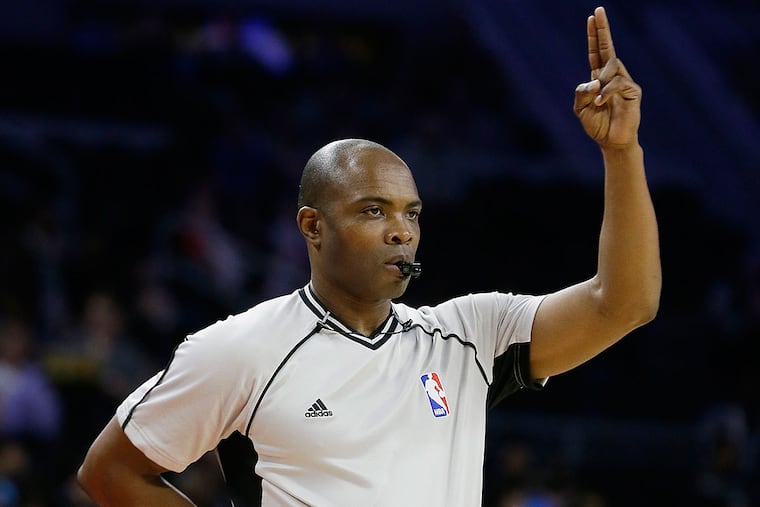
NBA GAMES used to be so much easier to officiate before the three-point line came into the league in 1979. Teams would have some capable outside shooters, but the main goal was to get the ball to the basket. If you were blessed with a dominating big man, that is where the ball mostly ended up. If you weren't, then getting in the paint other ways was the game plan.
But gone are the days of dumping in the post and bullying to the basket. Offenses have expanded like Pablo Sandoval's waist, with teams spreading the floor wider and wider every year due to the influx of great shooters. So while the concentration area offensively used to be on the 15-by-16-foot area of the paint, it is now every inch of the 47-by-50-foot halfcourt.
The game has changed tremendously over the years, and so have referees. And while the amount of time and energy they put into keeping up with the changes isn't as spectacular as any Steph Curry three or Aaron Gordon dunk, it is almost as impressive.
On most nights when you walk out of an NBA arena following a game, the topics of conversation will involve the players' athleticism, the coaching decisions and, perhaps, the performance of the refs - though they, of course, would hope to remain anonymous.
The game is over for fans once that final horn sounds and they head out into their cars. Players will shower, meet with media and find their mode of transportation to get to wherever they need to go. Coaches will glance at tape for a bit, then will have to move on to get ready for the next game.
For NBA officials, the night is really just half over at the final buzzer. The postgame requires cool-down stretching to keep their bodies healthy for the long season, placement of ice packs here and there, and hours of watching film. There could be a meeting right after the game with a director who was in attendance, and there most surely will be a conversation with the league's replay office, which opened last season in Secaucus, N.J. Then, when they finally get to their hotels, they'll watch the game again, stopping and starting plays like Jon Gruden.
It is a job that goes so much further than the two-plus hours spent on the court. And as the game has changed through the years, the reffing has, also.
"People think we just roll it out there," said Mark Wunderlich, who officiated more than 1,100 regular-season NBA games and close to 100 playoff games and is now the league's director of referee performance and development. "But there is so, so much more that goes into it. We work really hard on using the pause button on video when we're evaluating our refs. We make sure everybody has the right guy, make sure everybody's heads and eyes are in the right spot. We try to wear out the pause button."
In 2012, the NBA named Roman Catholic and Saint Joseph's product Mike Bantom as executive vice president of referee operations. He quickly established the Referee Operations Development/Performance Group, a collection of former NBA refs overseen by Bob Delaney and including Wunderlich, Bennett Salvatore, Joe Forte, Eddie Rush and Bernie Fryer. The goal is to use modern technology to help the current group of referees grow with the game and make it easier for them to be in the right positions to make accurate calls.
"When I joined in 2014, we had such good people in place with the former refs," said Delaney, who officiated for 24 years and also was a New Jersey state trooper. "They all had successful careers and we wanted to take that experience and share it with current staff as well as boltser the vets and share with the next generation. We wanted to be able to hone in on mechanics.
"To us, there are three teams on the floor: the two playing against each other and the refs. We have our plays, just like them. Positioning is the key to our plays. How do we create those proper vision angles? With today's game, we decide to make some tweaks. We spent hours with Mark and the guys in the video room to figure out how to best tell the story on mechanics. My belief is that we learn through emotion. Create learning and it stays in your head longer. We need to reinforce positive. Refs are mostly hearing negative. We need to reinforce positive. If they're getting 92 percent correct, if we start chasing 8 percent we'll lose that 92 percent. So let's tweak it. If we can get to 93 or 94, that's good. You can't get all that 8 percent at once. There's no perfection. We're chasing excellence, not chasing perfection. We'll never be perfect.
"The maturing of a ref takes place when we as officials learn to interact with the will to win on the floor. The will to win is so strong. Players and coaches see refs getting in the way of that. It's not personal by them, it's the will to win. As a ref, we have to be professional, not personal, and have ways to defuse a situation. A technical foul is the last resort. We have to use life skills to create an environment on that floor. We need to put fires out, not enhance them."
The work is really never-ending. The season is the grind that it is, with refs carrying a workload of 65-70 games (not including playoffs), traveling from city to city, with just a few days off. The offseason consists of more training, conditioning and attending summer-league meetings. It goes far beyond the 48 minutes of a game, but that is where it all counts.
"A director will be at a game and right after go in and look at plays they'll have questions on," said Wunderlich. "We'll call the replay center, who can bring up at all angles six or seven of the calls in question. Then we'll review. Oftentimes what we're looking at is what we call reaction plays, when players and coaches react on certain calls or noncalls. They have questions, maybe didn't think they saw the whole play. We could look at 14 plays. We give them 10 or 15 minutes to cool down after the game.
"Doing it, you need some time to decompress a little bit. They'll be icing down and we'll have a general conversation. I calm them down and then I start. Sometimes, if the event didn't warrant a lot of postgame analyzation, you don't want to wear them down. It's mostly about positioning and posturing. You want them wider on the floor. Golden State shot, like, 45 threes recently. I noticed before the season that we were diving down late on threes and then you have to referee the defender's line but also screeners. Screeners, defenders, line. We work all summer on advanced positioning. Read if you have a shooter next to you. You can see things better if you're standing still. Pre-position adjustment. Don't want you moving when the player is catching the ball. We see that the big difference is that we're reading the next play, reading the next pass. We used to wait till the pass, then react. We missed stuff that way. Bob, Mike and I decided if we can ref the three-point line and own the paint, we should be good."
As has the style of play, reffing has changed in many ways through the years. Steve Javie, like Wunderlich and so many other former and current refs, is a Philly-area guy who was a 25-year official in the league until his retirement in 2011. He then took on a role with ESPN as a referee analyst, describing to viewers what a ref might have seen, why a call was made, missed, or wasn't a call at all.
"The first time for ESPN that I went on location for the Finals, I watched the game and realized how fast it was," said Javie, who carries a whistle in his pocket every day. "When you're doing it day in and day out, it's part of what you do, you don't realize. Doing it for 25 years, now after retiring, I'm watching, and it really showed me how quick the game is. To me, when you push and fire from distance, it's easier because you don't have to decide on low-post play. You don't have Shaq (O'Neal). You don't have to decide every bump and grind.
"But no matter what, it's all about positioning and who you are looking at. Mark and Bob have it back to when Darell (Garretson) and Mendy Rudolph and Earl Strom started teaching us 30 years ago, but with the terrific help of all the technology. Reffing, you're going to go through different cycles of the game. When I came in it was showtime, 120-118 every night. That was cool. Then you go to where you didn't have as much talent, and the Bad Boys and all the banging. Now it's back to showtime. The athletes have become so talented. And so have the referees. As great as those refs were back in the day, and they knew how to control a game with the coaches and the players, I think if you took average refs from today and put them in a game back then, they would grade higher because of the technology and great teaching from people like Bob and Mark."
And the teaching never ends.
"Besides the calls, we concentrate on body language, tell them to show confidence and command, have interaction with players and coaches and be professional," Wunderlich said. "Go about your business. Keep 48 minutes of high concentration. If you have one little lull, all the sudden you miss two plays. I tell them to self-talk, keep talking to yourself and stay engaged. Bob has people come in and talk about the mind. We try everything.
"It's a little different from back in my day when after a game when we'd sit and get yelled at by Jake (O'Donnell), go to the hotel and go to the bar. But we'd learn so much. But as good as that was, it isn't close to what they get out of postgame reports or crew breakdowns now."
@BobCooney76
Blog: philly.com/Sixersblog