Though huge, Tokyo is easy to navigate
TOKYO - Tokyo is huge. If you stand on the top level of the highest skyscraper and do a 360-degree turnabout, you will see city all the way to the horizon. It has parks, but no suburbs. High-speed roadways run through canyons of architecture, but numerous side streets, large and small, define neighborhoods, and each 'hood has its own main street and koban, or police-station cubicle.
TOKYO - Tokyo is huge. If you stand on the top level of the highest skyscraper and do a 360-degree turnabout, you will see city all the way to the horizon. It has parks, but no suburbs. High-speed roadways run through canyons of architecture, but numerous side streets, large and small, define neighborhoods, and each 'hood has its own main street and koban, or police-station cubicle.
The city is dense, crowded, and clean, and the people are polite to a fault. The streets are so safe that bicycles - almost everybody rides one - are never locked, and kindergartners can walk alone to school. There is no graffiti. None. Even though the Japanese eat rice or noodles at every meal, they are lean. Must be all that biking.
The city is easy to navigate, so you needn't be Lost in Translation. Taxis are abundant and clean - the seats have washable, white, lacy slipcovers, and many drivers wear white gloves.
I was in Tokyo for almost a month in June visiting family. While my son, Jack, was at work and the kids were at school, my daughter-in-law, Umarin, was my personal etiquette and tour guide.
Best tips: There is zero tolerance for driving while talking on your cell phone and driving under the influence; tipping is never required or expected; toothpicks are on every table, but it's considered disgusting to blow your nose into a tissue in public. Prices approximate those in Manhattan.
These are my top picks for fun things to do in this most progressive of cities:
Happo-en Garden
This perfect Japanese formal garden is a cultural, other-century experience. The garden might be adorned in spring with cherry blossoms, in early summer with pink azaleas, in fall with crimson leaves, and in winter with snow.
Happo-en is a traditional circuit-style garden. For a lesson in landscape harmony, follow the path along arrangements of trees, stones, water, and earth. Some of the bonsai trees are more than 500 years old. See the stacked stone lanterns, and stop at small meditation houses. A secluded pond has waterfowl and yellow, white, and orange carp.
You probably will see a wedding party on your walk - we saw three - and they were flattered to have their pictures taken. Be sure to reserve a time at the tea house for a private traditional tea ceremony. Reserve lunch, too. The restaurant, Kochuan, overlooks the garden, and the food is exquisite classic Japanese. There is no entry charge to the garden or for the tea.
Address/neighborhood: 108-8631 / 1-1-1-Shirokanedai, Minato-ku
Takashimaya Times Square
This mother of all upscale department stores is smack in the middle of the "shoppiest" part of the city. Take yen, take plastic, and leave your will power at the door, because you will do serious damage in this commercial wonderland. If shoes are your weakness, you will be blissed-out. The bookstore Kinokuniya, on the sixth floor, has English-language books. All purchases are beautifully wrapped.
Although sensory overload is a risk, go to the food hall on the lowest level to shop and taste all manner of global cuisine from 120 Japanese and international boutique vendors. There is a vinegar sommelier and someone to guide you through the dozens of forms of salt. Nuanced soy sauces are marketed like fine wine. Pastries are gorgeous, sushi the freshest.
Buy lunch, try a snack. But know that you should never walk around eating food out of hand. All counters have seating, some with as few as three to five stools. We braked for a lunch of sauced eel on rice with miso soup and green tea.
Address/neighborhood: 5-24-2 Sendagaya/ Shinjuku-ku, Shinjuku
Convenience stores
Yes, you must see the convenience stores, which include 7-Eleven, AM/PM, and Natural Lawson. They are on every corner. At the konbini, locals pay bills, purchase lottery and baseball tickets, and buy breakfast, snacks, and dinners. Natural Lawson, an eco-friendly chain, has the best food: fresh sushi, sandwiches on whole-grain bread, and fish or pork-topped rice sets with pickles. The baked goods include croissants - plain, with chocolate, or filled with the Japanese favorite, sweet adzuki beans. Drinks are seasonal and feature limited-edition novelty flavors. Nobody in Tokyo ever risks dehydration. You can't miss the beverage vending machines in every block, stocked with juices, colas, beer, spirits, and coffee.
Butagumi restaurant
The restaurant is in a small frame house tucked away on a side street. The name means "pig gang," and the restaurant specializes in pork sirloin and filet from boutique farms. Very serious pig. The specialty of the house is tonkatsu, the ubiquitous panko-breaded and deep-fried pork cutlet and the favorite dish of Tokyo-ites. The twist? Only brand-name and heritage pork is served, such as Agoo-buta from Okinawa and Eishow-ton from central Japan (whose ancestors are from China, and whose fat is sweet and delicious). Go for the Butagumi-Zen Special: five small, juicy, thick, and delicious pieces - three sirloin and two filet - with each piggy from a different area, cooked to perfection.
With shoes off and stashed in a cubby cabinet, you sit on the floor. There are tatami rooms, but we requested a table with a deep, sunken leg space. Begin dinner with icy beer and warm sake. Tonkatsu comes with a vegetable appetizer, shredded cabbage, rice, miso soup, and Japanese pickles, for about $40.
Address/neighborhood: Nishi-Azabu 2-24-9, Roppongi Hills
Okadaya
Do you like sewing or crafting materials? Two small, connecting buildings sell nothing but. The fabrics and textiles building has five floors, where you'll find old kimono, denim, cotton, and vintage fabrics on floor one; wools, jerseys, and knits on two; costume, lace, and spangled on three; leather, stretch, and wetsuit fabric on four (who makes his or her own wetsuit?); and boa, velour, velvet, and polyurethane on five. Cross the alleyway to find seven floors of accessories and supplies: buttons, buckles, yarn, weaving, crochet, spangles, zippers, eyelets, beads, patterns, and an entire floor of threads. Buy now, and worry later about finding a dressmaker at home.
Address/ neighborhood: Shinjuku-ku, Shinjuku
Eat Japanese
Practice your chopstick skills before you go, although all restaurants keep at least a couple of forks set aside.
Unagi donburi. Donburi means "food arranged on steamed rice." Unagi is eel. Some people freak out because eels look like snakes. Cooked, it's just a piece of fish, sweet-sauced and served over rice, often with shredded omelet to the side. Delicious.
Teriyaki. These small indoor eateries often have a window on the sidewalk. Order a couple of "sticks" of chicken cubes, ground chicken balls, or chicken livers. Rice and pickles optional. Ditto delish.
Ramen. The grandma's chicken soup of the East. Noodle shops are everywhere, and a bowl of ramen is the comfort meal of choice for lunch, dinner, and late night. They also serve gyoza (dumplings) and rice bowls. The drink of choice is beer.
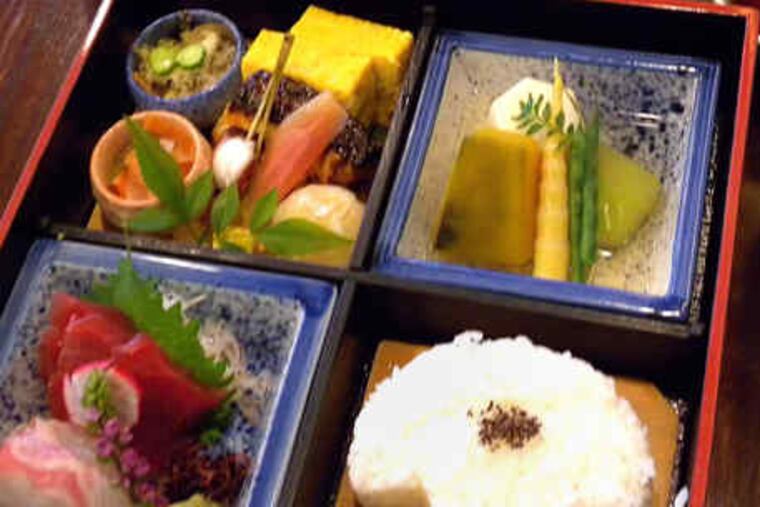
Sashimi, sushi, tempura, shabu-shabu, tofu, and soba noodles. If these specialties aren't the best and freshest you will ever encounter, I'll eat my chopsticks.
Kobe beef. This beef is amazingly tender and so heavily marbled that it looks like pink seersucker. It was cooked teppanyaki-style on a steel griddle (a teppan), the prototype for American places such as Benihana. Kobe beefiness is totally different in chew and flavor from grain-fed, Chicago-style beef or grass-fed beef from Argentina. For perspective, my meal with small Kobe steak (just under a half pound) was $230.
Kappabashi
Also called "Kitchen Town," it's Japan's largest area for wholesale cookware and bulk food. Every cabbie can find it. There are about 150 stores, side by side for about eight city blocks (and their sidestreets), selling dishes, lacquerware, chopsticks, fancy and practical kitchenware, all at bargain prices. At a knife-only store, I bought a rectangular Japanese chopping knife for my husband, the steel hand-forged in layers in the manner of a samurai sword. In five minutes, the blade was engraved with his name in graceful Japanese characters.
Address: Near Asakusa.
Kabuki-za Theater
Kabuki means song, dance, and theater. Edo-period popular theater is splendid, exotic, and colorful, even when you don't have a clue to the language. Some theaters offer English programs and headphones. Ask your concierge for details. I never attended. My bad.
Neighborhood: Ginza.
Souvenirs
Take along or buy an extra suitcase. You'll want to shop for small, wooden dolls for the girls; lacquerware and trays for the host; a traditional Japanese kite with a scary face for the boys; a handsome collapsible cane for Grandma (folds to fit in a tote bag); a kimono sash for you to use as a table runner; high wooden clogs for fun; and Japanese paper and stationery for everyone. Wonderful, too: an informal summer kimono, a paper umbrella, small fabric pouches, a sake set, ornate hair ornaments, and a good-luck cat doll. At temples, buy inexpensive wooden Buddhist prayer plaques to hang by the door to keep away evil spirits.
So far, mine works.