Pa. Attorney General Dave Sunday talks Supreme Court’s Krasner ruling, abortion appeal
The high court recently gave Sunday's office unprecedented authority over the DA's post-conviction review process. He discussed that ruling and more in an interview with The Inquirer.
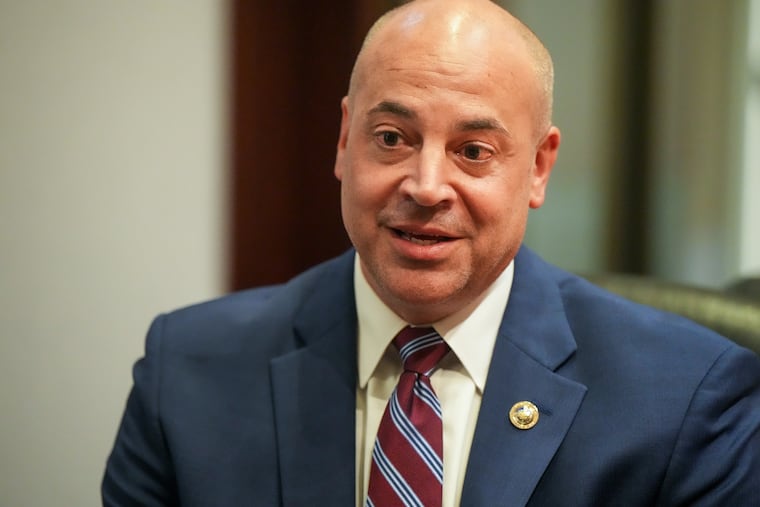
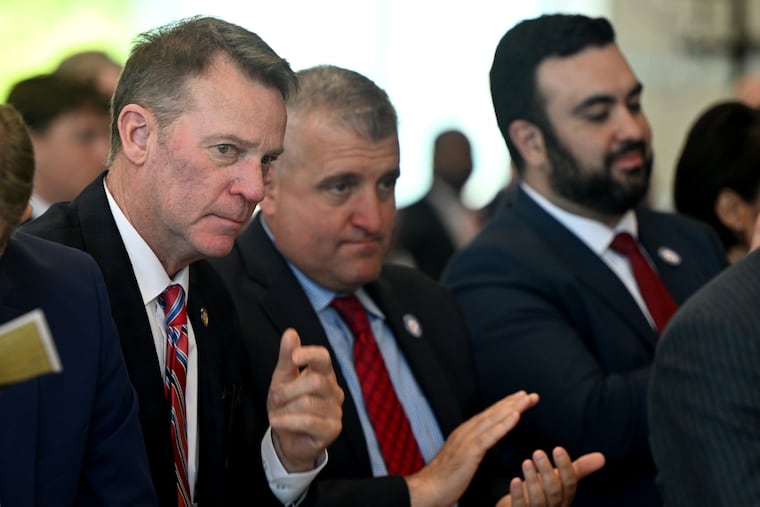
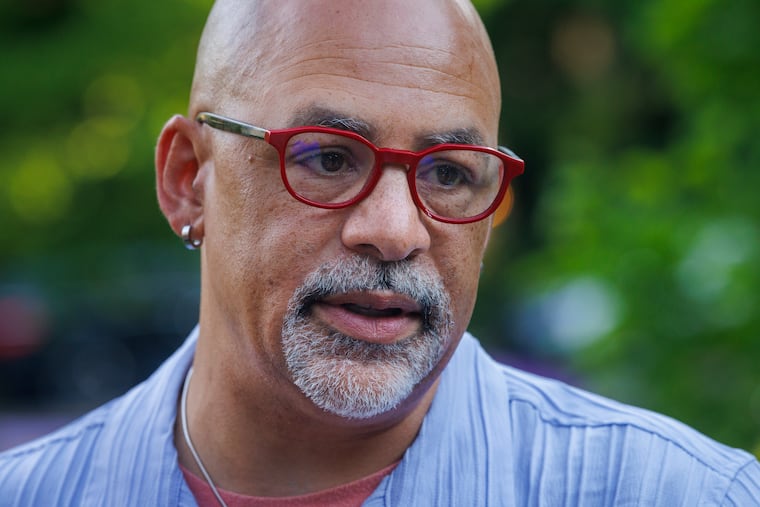
Attorney General Dave Sunday has spent 18 months as the state’s chief law enforcement officer, overseeing a sprawling office that handles criminal prosecution, civil litigation, consumer protection services, civil rights enforcement, and more.
In that time, the 51-year-old Republican and Harrisburg native says, he has taken on issues ranging from the opioid crisis to illegal crime guns. And last week, the Pennsylvania Supreme Court handed his office broad authority to review the efforts of Philadelphia prosecutors to overturn murder convictions they have called unjust, a signature initiative of District Attorney Larry Krasner’s office.
In a recent interview at his Philadelphia office, Sunday talked about that and more.
What is your reaction to the Supreme Court ruling on the work of District Attorney Larry Krasner’s Conviction Integrity Unit?
Obviously, it’s an unprecedented ruling.
Oftentimes, the best outcome is through the adversarial process. We work with the Philly DA’s office in a lot of different areas, and I viewed this ruling as any other that provides me with instructions on a way on which I have to run my office.
Moving forward, the ruling requires your office to review any post-conviction concession that Krasner’s office aims to pursue. How will that work?
There are questions. How many times will we have to intervene? What will that do to staffing? Will we have the logistics and resources to do it appropriately? I think that process will unfold over the next month or so.
There’s no other real comparison for this ruling, and so what I can say very simply is this: It is absolutely crucial that there is a voice for the families of victims, and at the same time, I think it’s crucial to make sure that we protect the rights of individuals who are charged with crimes and convicted of crimes.
That balance is found in applying the law and the facts to the issue. That’s something we will enthusiastically do.
Since Krasner first took office, his prosecutors have supported efforts to overturn around 115 convictions. Given the Supreme Court’s findings, do you now question whether some of those overturned convictions should be reconsidered?
Well, we have to look at the legal process there. For individuals who the court has already ruled in a manner in which they’re out of prison, those cases are done.
But with cases that are still going through the appellate process, individuals that are incarcerated, those are situations where we’re going to have to take a look at it. I mean, this is very serious, and when the Pennsylvania Supreme Court rules in this manner — not just the ruling itself, but the verbiage — I, as attorney general, take that extremely seriously.
We will do our job, and we’ll do our duty, and we’ll review it, but it’s also important to understand that this isn’t a quest to prove someone wrong. It’s a quest to ensure that all parties are zealously advocated for.
Krasner has strongly opposed the ruling. He’s likened this issue to the struggles of the Civil Rights Movement and said that the decision undermines the votes of those who elected him to office. What is your response to that?
I don’t think that it benefits anyone for criminal justice leaders to editorialize a lot of the work we do.
It’s critical that the citizenry knows and understands that their case will be dealt with by applying the facts to the law — and I know that’s not the most exciting answer, but there are things that are in my control and there are things that aren’t in my control, and his reaction to anything is completely out of my control.
The last thing individuals who live in the community want to hear are elected officials yelling at each other. They want to see outcomes.
Earlier this year, justices ruled that mandatory life sentences without parole for those convicted of second-degree murder are unconstitutional. What are your thoughts on that?
Third-degree murder, second-degree murder, those are cases where the acts resulting in the crime are vastly different case to case. As a prosecutor, I’ve tried horrific second-degree murder cases — one was an in-home burglary where an individual was left face down on the ground, duct-taped, and they ultimately died from positional asphyxiation, which really is torture.
At the same time, there are second-degree murder cases where you have multiple codefendants, and — this case is highlighted a lot — one of the codefendants pulls a gun out, kills an individual, and all those codefendants, because they were acting in concert and furthering some conspiracy, they’re all guilty of second-degree murder and they’re in for life.
So there are second-degree murder cases where the individuals should have an opportunity for parole, and at the same time, there are cases that are absolutely horrific, where individuals should spend the rest of their lives in prison.
The important place we’re in now is the legislative process, moving forward to ensure that the punishment is commensurate with the harm caused in the crime.
Violent crime has fallen dramatically from its pandemic-era highs in Philadelphia and across the state. Should the attorney general’s office get some credit for that?
There is no one individual or agency that can take credit for these outcomes. We’re with our federal partners, we work with everybody.
After I was elected, some of the very first calls I made were to the Philadelphia mayor and the police commissioner, and I made it very clear that we’re partners. I’m excited, let’s go. And that’s what we’ve done.
The Attorney General’s Gun Violence Task Force is a huge part. We do everything we can every day to go after gun traffickers, illegal straw purchasers. We’ve removed more than 500 crime guns off the streets [statewide] in 2025.
In addition to that, our Bureau of Narcotics works every day in Philadelphia. Last year, we removed 56 million doses of fentanyl from the streets, and a large portion of that was in the city.
The Commonwealth Court struck down a decades-old law that banned Pennsylvanians from using their Medicaid benefits to pay for abortions, and last month, your office appealed. Why?
A lot of people don’t understand the role of the AG in a lot of issues. In Pennsylvania, we have the Commonwealth Attorneys Act, the rules that dictate the job, and one of the rules in there is that the attorney general shall defend the constitutionality of statutes in Pennsylvania.
I have irritated the entire political spectrum, because I am defending statutes whether you like them or not. That’s literally my job. What a lot of people don’t understand is that the [Medicaid] law is part of the Abortion Control Act — the same law that allows abortions to occur up to six months of pregnancy, the very same law.
In that law is a subsection that also says that government funds cannot be used for abortions — so I’m defending the abortion law in Pennsylvania, just like I would any other section of that law.
Critics say that by appealing the ruling and prolonging this issue, you are denying Pennsylvanians of what the court called a “fundamental right to reproductive autonomy.” How do you respond?
Just like every law we defend — every single one — there are people that like it and don’t like it, and they will have commentary. I certainly respect their absolute right to have that commentary.
What I will say is, this decision has nothing to do with that. It is the job of the attorney general to defend the statute.
What would you say has set your tenure apart from your predecessor, Gov. Josh Shapiro, and his appointed successor, Michelle Henry?
Very simply, I came into this job as a prosecutor. I ran on public safety. I wasn’t a legislator, so when I look at the office, I view it as a place where you follow the facts in the law, and you fight hard to keep people safe.
With that being said, I have hyper-focused on issues impacting citizens. We have huge crises in Pennsylvania that need to be addressed, specifically the mental health crisis.
When I came into office, I saw our prisons are full of people that have mental and behavioral health challenges. Individuals go to jail solely because they have a mental health crisis, and what I want to see are people getting treatment.
What we did was create a new initiative that gives police a toolbox, so when they come into contact with someone in a mental health crisis [who is committing a low-level criminal offense], they can get that person into treatment [if the person chooses to do so]. At the same time, that person can be charged, and the police have the flexibility to hold that charge.
This is brand-new, and we have nine counties that are already signed up and are rolling. We have five more lined up and ready to roll over the next few months.
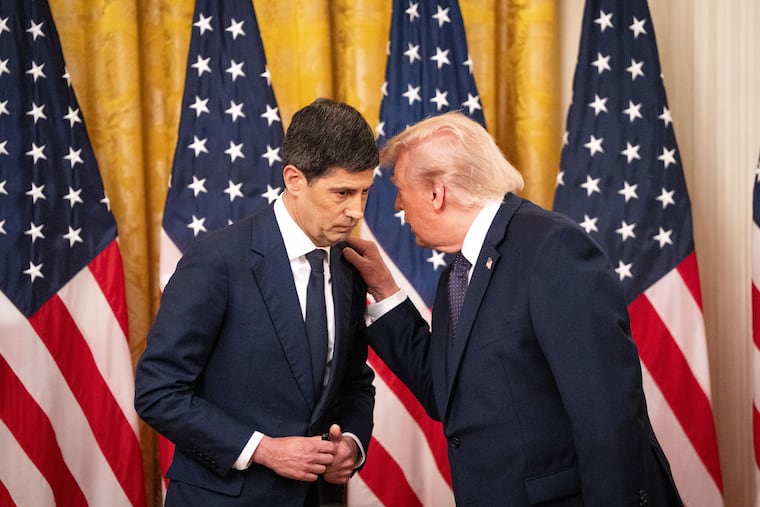
President Donald Trump held a rally in Pennsylvania on Tuesday, and he was joined by some of the state’s other top Republican officials, such as Stacy Garrity. Is that an event you would have liked to attend?
In all candor, I have events that have been scheduled for months and months, and the reality is, a lot of these [presidential] events pop up pretty quickly.
On Tuesday, I had an event with the first elected attorney general in Pennsylvania, LeRoy Zimmerman. I was with him at a fireside chat, talking about what the AG’s office has looked like, and how it’s changed over the last 30 years.