Louisiana exoneree's first day as elected clerk gets messy after court intervenes
Calvin Duncan won 68% of the vote, but Louisiana's governor and legislature raced to eliminate the position.
NEW ORLEANS — A Louisiana man who spent decades in prison for a wrongful conviction briefly began work Monday overseeing the criminal court in New Orleans after a judge blocked the state from eliminating the position.
Yet Calvin Duncan’s day soon got messy: A higher court stepped in about 9:30 a.m. and froze that decision at the state’s request.
Duncan won 68% of the vote to serve as Orleans Parish criminal court clerk. But at the urging of Republican Gov. Jeff Landry, the GOP-controlled state Legislature raced to pass legislation eliminating the position days before Duncan’s term was to start, transferring the duties to another official.
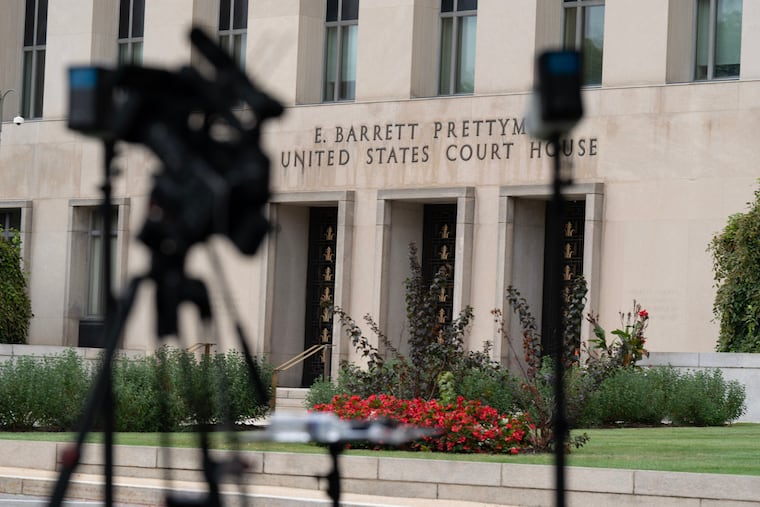
U.S. District Judge John deGravelles intervened Sunday, saying the law eliminating the clerk position was unconstitutional because it replaced an elected office with a political appointee. He granted a restraining order while the litigation continues.
“The Court is not ruling that the state lacks the authority to abolish an agency or office writ large,” said deGravelles, noting he was “simply holding” that Louisiana’s approach violated Duncan’s constitutional rights to due process.
Louisiana quickly responded with an appeal, saying the order “accomplishes nothing other than threaten chaos.” The 5th U.S. Circuit Court of Appeals granted a stay.
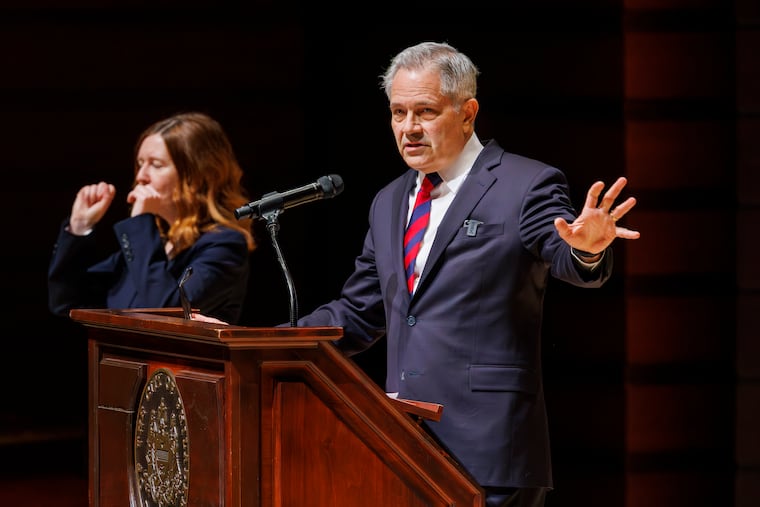
Seated inside the clerk’s office, Duncan told the Associated Press after the stay: “I am the clerk of the criminal district court, that will never change.”
A spokesperson for Duncan, Emily Ratner, later told the AP in a text message that Duncan had “ceased acting” as clerk to comply with the latest court ruling.
“He has always done his best to comply with the law and he continues to do exactly that during these unprecedented and evolving legal developments,” Ratner added.
Alanah Odoms, director of the American Civil Liberties Union of Louisiana, told reporters that Duncan’s term began at midnight and it cannot be cut short under the state’s constitution. Odoms said the ACLU would continue to make this argument before the appeals court and to the U.S. Supreme Court, if necessary.
“The state moved too slow,” Odoms said. “We don’t believe that his term can be diminished now.”
Duncan’s supporters say the attempt by a majority white conservative legislature to eliminate Duncan’s job thwarts the will of voters in New Orleans, a predominantly Black Democratic hub in a red state. Civil rights groups warn that Duncan’s case is a preview of a coming wave of the disenfranchisement of minority voters now that the Supreme Court dismantled a key provision of the Voting Rights Act in an effort led by Louisiana.
The governor signed a law Thursday to have the Orleans Parish clerk of civil court take over the responsibilities of the clerk of criminal court.
Chelsea Richard Napoleon, the Orleans Parish civil clerk, did not immediately respond to a request for comment.
Landry and Republican allies said the measure consolidating the clerk’s offices improved government efficiency and aligned the parish with the rest of the state. New Orleans leaders said they were never consulted and opposed the changes.
The nonpartisan office of the legislative auditor found that eliminating the criminal clerk of court role saves the state an estimated $27,300 but the long-term costs or savings of the consolidation were unclear. The legislation also shifted about $1.1 million in state expenditures to Orleans Parish.
In April, Republican lawmakers refused to consider an amendment to the law that would have allowed Duncan to serve out his term before eliminating the criminal clerk position.
At the start of the day, when he was still inside the clerk’s office, Duncan told the AP that he believed he would win the legal battle in the long run. He said he planned to spend the day getting to know employees and others at the court.
“I’m not just elated but overelated and happy that this day finally came,” Duncan said. “It’s something I’ve been working towards a very long time. This is a testament that God is still in control.”
Duncan, whose murder conviction was vacated in 2021, taught himself law behind bars and later became a licensed attorney. He ran for the clerk position vowing to improve access to court records, electrifying many voters with his personal experience fighting to clear his name.
Duncan said that despite the legal turbulence, the office’s employees will continue to process cases and oversee elections, “no matter who is the clerk.”