Platner’s texts with women concerned campaign as Senate race took off
Graham Platner’s insurgent bid to defeat Sen. Susan Collins has raised questions about some of his behavior.
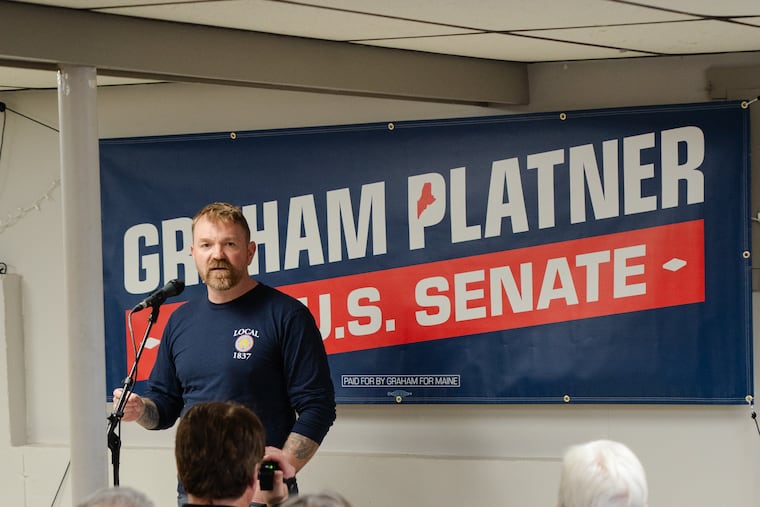
Graham Platner’s insurgent bid for U.S. Senate in Maine was gathering steam last summer when his campaign was confronted with some potentially explosive information.
Platner’s wife, Amy Gertner, told a senior campaign aide that he had been exchanging sexual messages with multiple other women.
It was the kind of revelation with the potential to damage the political newcomer just as his campaign to unseat Sen. Susan Collins, a Republican, was beginning to resonate with voters, especially in a state where female voters make up a large share of the electorate.
Platner’s exchanges with women were confirmed by current and former campaign officials, who gave different accounts of some of the details. Gertner said the couple, who had married in November 2023, according to the town clerk of Sullivan, Maine, was working through his indiscretions in marriage counseling.
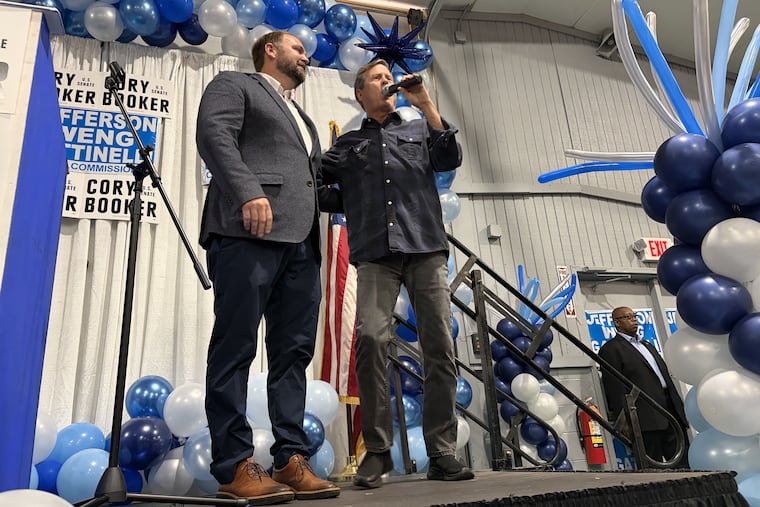
Genevieve McDonald, a former state legislator who was the Platner campaign’s political director before leaving in October, said Gertner reached out just days before a big Labor Day rally with Sen. Bernie Sanders (Ind., Vt.) and was concerned her husband’s behavior could become a political liability.
McDonald said Gertner told her that her husband had been exchanging sexual messages with as many as a dozen women.
A current Platner campaign official said Platner had been communicating with up to six women.
The current official said that the messages surfaced when McDonald asked Gertner if there was anything she wanted to share amid an internal vetting process. Gertner told the campaign that the couple had dealt with the issue in counseling, according to the official.
The revelation threatened to add to Democratic anxieties about the state of the Maine race, which the party sees as critical to its chances of winning control of the Senate in November.
In a statement released by the campaign, Gertner suggested that she had been betrayed by McDonald, saying she was “deeply hurt” and bothered by “the invasion of our privacy.”
“I confided deeply personal details about my marriage to someone I considered a friend,” she said. “I trusted this person with the most private chapter of our lives — the early days of our marriage before any campaign was on our mind.
“Our marriage today is stronger than ever before,” she added. “I know the man I married and the husband he has been to me on the best and the worst days of my life. That hasn’t changed, and it won’t.”
McDonald’s account of Gertner’s discovery of the messages and alerting the campaign to them last summer before the rally with Sanders was confirmed by another person who was told about the messages at the time. The Wall Street Journal earlier reported the existence of the messages.
McDonald shared with the New York Times what she said was a screenshot of a text message exchange with Gertner that started in the early hours of Aug. 27, 2025. Gertner had sent a message to a broader group, asking someone from the campaign to contact her, and McDonald offered to talk. In their conversation, Gertner told her about the messages, which she described as “sexting,” according to McDonald.
“The United States Senate is not a training ground for redemption,” McDonald said. “It is a place for proven leaders with moral clarity and integrity.”
McDonald was one of three campaign officials who resigned in October after revelations about controversial social media posts by Platner and scrutiny of a tattoo widely recognized as a Nazi symbol.
In the months since then, despite a barrage of headlines about inflammatory remarks Platner made about women online years ago — remarks for which he has apologized — the candidate went on to have a stunning rise to become the presumptive Democratic nominee in one of the nation’s marquee Senate races.
His campaign has become a movement in Maine, and some Democrats are already discussing Platner, a fiery populist running on his working-class credentials, as the future of the party.
Yet as he heads into a tough general election fight against Collins, the incumbent, some Democrats remain anxious about how Platner, who acknowledges having a messy personal history, will stand up to scrutiny. It is an issue that voters have already raised with him directly on the campaign trail.
Republicans, for their part, are broadcasting a steady drumbeat of old Reddit posts in which Platner insulted women, Black people, white rural people, and others.
Platner has spoken openly about struggling for years with post-traumatic stress disorder, depression, and drinking tied to multiple combat tours in Iraq and Afghanistan.
“I was just a wreck of a human being,” he told the Times.
He sought therapy and has apologized for some incendiary posts on Reddit, urging Mainers not to judge him for “the worst thing I said on the internet, on my worst day 14 years ago.”
But those online comments have continued to dog Platner’s campaign.
In 2013, he posted that women afraid of rape should not get so drunk that they “wind up having sex with someone they don’t mean to,” a remark for which he has since apologized.
In another post, he responded to a cartoon about sexual assault in the military, dismissing challenges faced by service members who bring claims of rape.
“When every whisper of a misplaced hand brings down a feature length film, anyone who actually thinks the military is purposefully covering up rape,” he wrote, “is clearly both an idiot and junior enough in rank or life experience to think it matters.”
In January 2020, he waded into a debate over whether West Coast Marines were more “chill,” arguing that “they get to bang LA chicks, whores in TJ, and hit up Vegas,” an apparent reference to Tijuana, Mexico.
Platner deleted his comment history before his campaign kickoff, though his posts resurfaced anyway.
As the primary heated up, Gov. Janet Mills, his Democratic opponent, seized on his posts, releasing ads featuring women responding to his remarks about rape with disgust.
Platner apologized for the posts, saying he was “horrified” when he reread them.
“I did not recognize in them myself or the man that I am today,” he said.
His campaign organized an online event aimed at helping its female supporters talk with their networks about Platner’s posture toward women, suggesting language they could use to allay the concerns of their friends and family.
And, in the spring, Gertner, who is on the campaign payroll, began to play a more visible role on the trail. In April, she introduced Sen. Elizabeth Warren (D., Mass.) at a campaign rally in Portland, Maine, highlighting the struggles people in the state face to receive healthcare, afford housing, and operate small businesses.
“The Maine that we love so much is under attack,” Gertner said. “And I know that he’s the right person to do the job.”
The couple has been vocal about their in vitro fertilization treatments and struggles to start a family. Gertner mentioned those treatments in her statement Saturday.
“It is no secret that Graham and I have struggled on our fertility journey,” Gertner said. “We did the hard work that marriage requires. We went to counseling. We were honest with each other in ways that weren’t easy. And we came through it.”
The ads Mills ran about Platner’s online statements did not improve her standing. In late April, weeks before the June 9 primary, she quit the contest, turning Platner into the presumptive nominee. Supporters of Platner saw his political strength as evidence that voters had processed and forgiven his past statements.
Republicans are in the early stages of testing that theory, believing they can drive an image of Platner, who is currently leading in the polls in the Democratic-leaning state, as unfit to serve.
So far, there are few signs that Platner’s previous remarks about women are hurting him. A recent poll from the University of New Hampshire showed Platner leading Collins by 9 points — and by 20 points among women.
Still, the issue is weighing on some voters.
Toward the end of a town-hall meeting in Sabattus, Maine, in April, the night before Mills dropped out, a Platner supporter named Carolyn Greeley asked him a blunt question.
“Is there anything you need to share with us?” she asked.
Greeley was bothered by his past comments about women, she said, and wanted assurances that there would not be more damaging revelations to come.
Platner was unequivocal in his response. Republicans would certainly “make stuff up” about him, he said. He had dated, had girlfriends, “gone through life.” But everything had already been “dragged up,” he promised the crowd.
“In my past, there is not some big, dark secret,” he said.
Asked in an interview how he could be so certain that there was no other information that would come out about him after the event, Platner was terse.
“I lived my life,” he said. “That’s how.”
This article originally appeared in the New York Times.