The forgotten senator who created the template for Trump’s style
Jesse Helms realized that he could use culture wars issues to redefine the fault lines in American politics to pit guardians of traditional values against elites who wanted to impose their values.

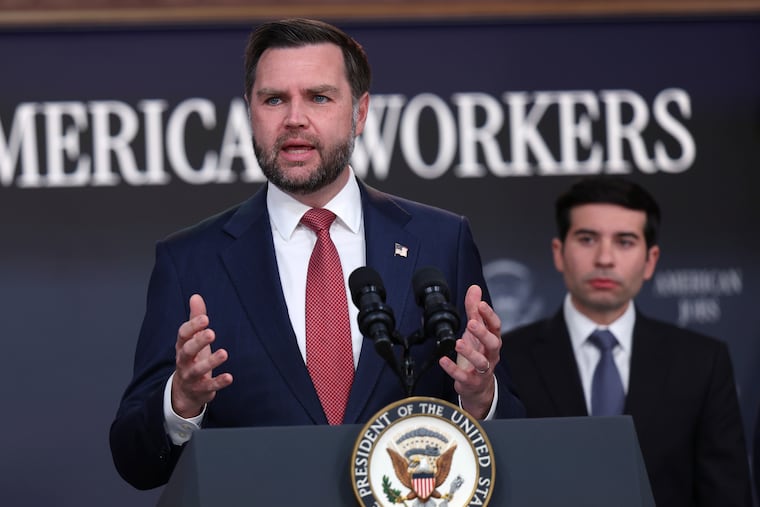
“Our country cannot be indifferent about whether its next generations live or die,” Vice President JD Vance told the March for Life in January. “We march today because you have an answer to this question about what kind of civilization we are and about what kind of civilization we are going to become in the future.”
This framing tied Vance’s remarks at the nation’s largest annual anti-abortion rally to five decades of the “culture wars.” This fight has grown to encompass just about everything in the 2020s — from library books and what gets taught in classrooms to corporate diversity programs and even the Super Bowl halftime show.
Many date the roots of this battle to Pat Buchanan’s famous 1992 Republican Convention speech when he declared a “religious war” for the “soul of America.” Buchanan urged a mobilization to “take back our culture,” bringing together a number of battles under the umbrella of the culture wars. But while Buchanan provided the manifesto, the man who moved the blueprint for the fight from the grassroots to the center of American politics was North Carolina Sen. Jesse Helms.
By the mid-1980s, Helms had pivoted from the traditional Cold War focus of the Old Right — centered on anti-Communism and fiscal restraint — toward a newer, noisier frontier: traditional morality, sexuality and the arts. He relied on a political strategy that remains the dominant frequency of American politics today: utilizing cultural wedges to bypass policy debate and strike directly at the visceral anxieties of the electorate. Helms helped to redefine the fault lines in American politics by pitting noble guardians of traditional America against a haughty elite that wanted to impose its values on a unwilling majority. Helms’s pivot laid the groundwork for the GOP to become the party of MAGA.
Helms had started his political career as a commentator on WRAL in Raleigh in the 1950s and 1960s, espousing staunch conservatism in every regard. He was a fierce anti-Communist, a segregationist and a social conservative. He joined the Senate in 1973, and quickly became known as a political brawler, willing to use hardball tactics in both campaigns and legislative fights.
Helms’s entry into the culture wars began with a fundamental realization: legislative victories were hard, but cultural grievances were easy to communicate. He understood that in a deliberative body like the Senate, a single, committed obstructionist could command the national spotlight by framing mundane administrative tasks as existential moral battles.
In doing so, Helms deployed a politics that conservative grassroots activists like Phyllis Schlafly had first developed in the 1970s in opposition to political movements on the left — especially feminism. Helms recognized the potential in the way they framed issues and moved this brand of politics from the confines of grassroots movements and newsletters directly to the center of American political life.
His first major theater of operations was the foreign aid budget. Realizing that a total national ban on abortion faced insurmountable judicial and legislative hurdles, Helms focused his ire on the State Department and the U.S. Agency for International Development. He alleged that a “pro-abortion and anti-family” network was funneling money to international groups under the guise of population control.
By holding up the confirmation of high-level diplomats over U.N. population planning funds — most notably Winston Lord as Ambassador to China for five weeks during the fall of 1985 — Helms turned the boring machinery of government into a battlefield. He wasn’t just debating the merits of an ambassador; he was using the administrative bureaucracy as a hostage to extract moral concessions. This tactic signaled a shift in the GOP’s DNA, moving from a party of managerial conservatism to a party of moral insurgency. Although for the time being Helms’ obstructionism had little policy impact, it helped to mobilize a national conservative constituency.
If abortion was the opening volley, the battle over the National Endowment for the Arts (NEA) in 1989 served as a full-scale invasion. Helms entered the fray after he saw fellow social conservative Sen. Alfonse D’Amato (R-N.Y.) rip up a catalog on the Senate floor featuring artist Andres Serrano’s photo Piss Christ, which depicted a small plastic crucifix in a transparent container filled with his urine.
Helms recognized that the issue could be a political gold mine, one that conservatives could use to unite blue-collar Democrats, especially Catholics, and evangelical Republicans under the GOP umbrella by furthering a shift in the fault lines in American politics from economic to cultural issues.
Helms’ true genius lay in his ability to frame the issue as a populist revolt against an arrogant elite. In 1989, he didn’t just argue against a photograph of a crucifix submerged in urine or Robert Mapplethorpe’s homoerotic photography; he argued against the very concept of the “expert.” He targeted the “self-anointed art experts” who expected “decent, taxpaying citizens” to fund work that mocked their most sacred beliefs.
“If someone wants to write ugly nasty things on the men’s room wall,” Helms famously told The New York Times, “taxpayers do not provide the crayons.”
This framing was devastatingly effective because it shifted the debate from freedom of expression to government stewardship. By focusing on federal funding of projects rather than their right to exist, Helms caught his liberal colleagues in a rhetorical spider web. Even his fiercest opponents found it difficult to explain to their constituents why public money should support sadomasochistic imagery or perceived blasphemy during a period of economic anxiety. By making the fight about the taxpayer’s right to choose, not the First Amendment, Helms helped to reframe the issue of public art as a struggle between culture elites and average Americans.
Perhaps the most peculiar aspect of Helms’s crusade was his role as an accidental curator of the very “obscenity” he loathed. To prove his point, Helms became a walking gallery of the avant-garde. He carried a thick black notebook containing photocopies of Mapplethorpe’s most graphic photos, which he would show to reporters, colleagues and donors — often for “shock effect.”
In a move that bordered on performance art, he would occasionally clear the Senate floor of pages and female staffers before waving the photos as evidence of a “nation sinking into an abyss of slime.” His advisers, including legendary political consultant Tom Ellis, warned him that he was bordering on the pornographic.
But Helms understood something his advisers didn’t: outrage was a renewable energy source. The more he displayed the “filth,” the more he energized his direct-mail donor base. Every time a liberal columnist or a museum director called him a “bigot” or a “censor,” Helms could include that criticism in his next fundraising letter. He wanted “elites” from The Washington Post and the art world to loathe him, because their hatred was proof to his followers that he was a brave “common man” standing at the gates defending American civilization.
Helms’s tactics during the late 1980s and early 1990s also marked a shift in how the American Right identified its enemies. With the Soviet Union collapsing, the “Red Menace” faded to the background, creating room for a series of ”internal enemies” to take center stage — the secular humanist, the radical feminist and the “militant homosexual.”
Helms’s 1990 reelection campaign against Harvey Gantt, the Black former mayor of Charlotte, became the crucible for this strategy. When the race tightened, Helms’s team released the “Hands” ad, showing a white man’s hands crumpling a job rejection letter while a narrator blamed “racial quotas.” It was a classic wedge: it ignored the policy details of civil rights laws to strike at the heart of economic and cultural fear. By blending racial anxiety with his ongoing “decency” crusade, Helms created a holistic narrative of a traditional America under siege from all sides.
While Helms didn’t win every legislative battle — the NEA survived, and courts struck down many of his “decency” standards — he won the larger war of political realignment. He successfully redefined the relationship between “Red” and “Blue” America, transforming the Senate floor into a stage for a new kind of identity politics.
Helms’s decade-long “reign of terror” against the arts and the LGBTQ+ community wasn’t merely about personal prejudice; it was a master-class in how to maintain power in a media-saturated age. He proved that you could dominate the national conversation not by passing complex laws, but by picking the right enemies and the right images.
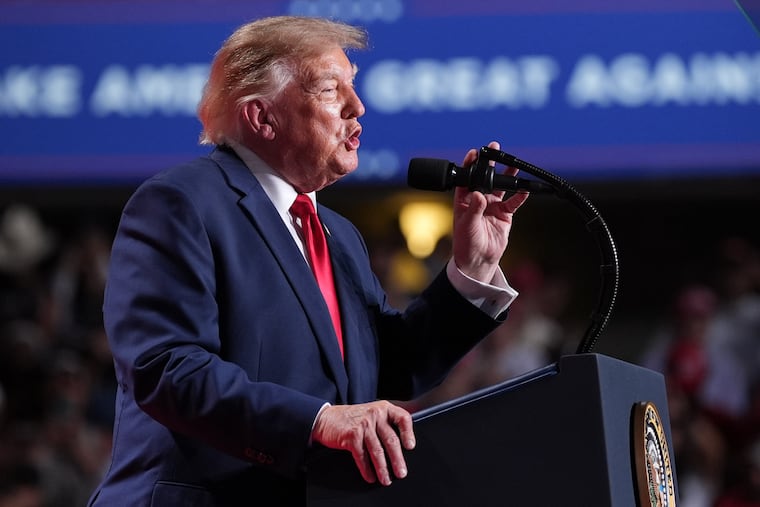
Today, as debates over “wokeism,” library books and corporate diversity initiatives dominate the 24-hour news cycle, we are living in the world Jesse Helms helped to create. He realized that in the modern era, a single provocative image, framed correctly, is more powerful than a thousand-page policy brief. By pioneering these tactics and moving the culture wars to the epicenter of American politics, Helms laid the foundation for the populist uprising President Donald Trump now commands from the White House.
William A. Link is Richard J. Milbauer Professor of History Emeritus at the University of Florida and author of Jesse Helms: Modern Conservatism and the Politics of Opposition.
Made by History takes readers beyond the headlines with articles written and edited by professional historians. Opinions expressed do not necessarily reflect the views of the Inquirer.