In apparent reversal, Mullin says Abrego Garcia could be deported to Costa Rica
Mullin’s statements came in response to questions from Sen. Chris Van Hollen, D-Md., who has long worked to support Abrego Garcia, a resident of the state.
For several months, lawyers for Kilmar Abrego Garcia, the immigrant who was wrongfully expelled to El Salvador last year, have been saying that their client would end his long-running legal fight against the Trump administration if only he could be deported to the country of his choosing, Costa Rica.
And for just as long, administration officials have refused to send him to Costa Rica, providing various reasons that was impossible and trying instead to expel him to a series of African nations to which he has no ties.
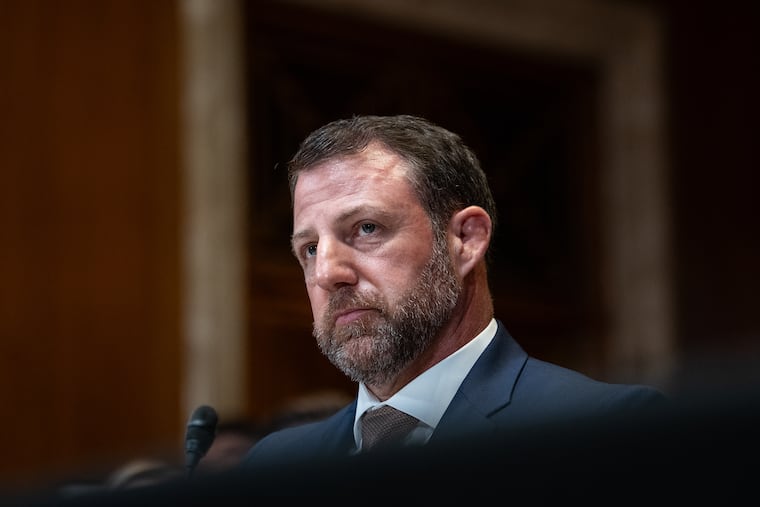
But on Tuesday, Markwayne Mullin, the new homeland security secretary, appeared to change course, suddenly telling Congress that his department had no problem sending Abrego Garcia to Costa Rica.
“If he’s willing to do that,” Mullin said, “we’ll be happy to send him.”
Mullin’s statements came in response to questions from Sen. Chris Van Hollen, D-Md., who has long worked to support Abrego Garcia, a resident of the state. It remained unclear whether the remarks reflected a genuine change of policy by the department or whether Mullin was simply unaware of the earlier position taken by other Trump officials. A department spokesperson did not immediately respond to a message seeking comment.
Either way, Abrego Garcia’s lawyers immediately sent a copy of Mullin’s remarks to Judge Paula Xinis, the Maryland federal judge handling the deportation case, who has previously pressed the administration on why it could not send him to Costa Rica.
Abrego Garcia is perhaps the best-known symbol of President Donald Trump’s aggressive deportation agenda, and his serial courtroom battles against the administration have dragged on for more than a year, reaching all the way to the Supreme Court. When he was deported to El Salvador in March 2025 with scores of other immigrants, he ended up in a notorious prison where he, like many others, claimed to have been tortured.
Last month, a federal judge in Nashville, Tennessee, took the highly unusual step of throwing out criminal charges filed against him after ruling that they were part of a vindictive effort by the Justice Department to punish him for challenging his initial expulsion.
That judge, Waverly Crenshaw, found that the indictment accusing Abrego Garcia of taking part in an immigrant smuggling scheme was “an abuse of prosecuting power” and had been filed essentially so the Trump administration could save face while bringing Abrego Garcia back to the United States in compliance with court orders.
But while Abrego Garcia is now free of the criminal charges in Tennessee, he is still fighting efforts by the administration to send him to Africa even though he declared last August that he would willingly go to Costa Rica, which has agreed to take him and give him refugee status.
Instead, the administration has tried to deport him to Uganda, Ghana and Eswatini, settling more recently on Liberia when officials in all of the other countries rejected the proposals.
At one point, the Justice Department dangled a deal in front of Abrego Garcia, saying it would agree to send him to Costa Rica if he pleaded guilty to the immigrant smuggling charges and served whatever sentence he was given in the case. But he rejected the offer and, ever since, the administration has provided a shifting series of reasons that it could not send him to Costa Rica, in a manner that his lawyers claimed in court papers last month was an “abuse of its immigration powers.”
“Just as the government unlawfully wielded its criminal powers against Abrego Garcia,” the lawyers wrote, “so it seeks to unlawfully exploit its immigration powers against him.”
The Justice Department is set to file its own papers next week laying out its reasons for wanting to send Abrego Garcia to Liberia. At that point, Xinis will make a decision taking everything into account — including, perhaps, Mullin’s remarks Tuesday.
This article originally appeared in The New York Times.