DHS pauses cuts to FEMA as massive winter storm barrels in
The Department of Homeland Security’s head of human resources sent an email saying FEMA decided that the agency would halt their process of non-renewing dozens of federally funded employees.
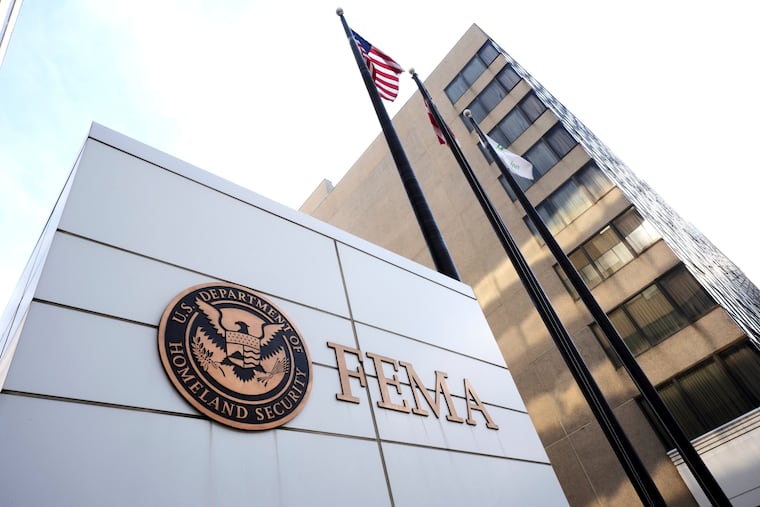
The Department of Homeland Security has paused terminations of employees working on the Federal Emergency Management Agency’s disaster response as it ramps up preparations for a massive and life-threatening winter storm that will pummel half the country this weekend.
Earlier this month, the Washington Post reported that the agency planned to terminate disaster response and recovery workers in waves. On New Year’s Eve, agency officials eliminated about 65 positions that were part of FEMA’s largest workforce, known as the Cadre of On-Call Response and Recovery (CORE) — staffers who are among the first on the ground after a disaster and often stick around for years to help communities recover.
But on Thursday night, DHS’s head of human resources sent an email notifying teams that “just a few minutes ago,” FEMA headquarters decided the agency would halt their process of non-renewing dozens of federally funded employees. These roles, hired by FEMA for multiyear terms under the Stafford Act using the disaster relief fund, have been up for renewal on a rolling basis.
Earlier that day, about 30 disaster workers received notices that their jobs would not be renewed. The pause then prompted human resources staff to backtrack, notifying those same workers that they still had jobs, according to the email and an official familiar with the process. Like others interviewed for this story, the official spoke on the condition of anonymity because they were not authorized to speak publicly about the matter.
“I didn’t even know what was happening until it happened,” the official said, adding that as human resources initially emailed people informing them that their jobs would not be renewed, senior leaders were learning that FEMA was pausing terminations.
In a statement, the Department of Homeland Security said that the agency regularly changes staffing levels for its disaster response and recovery efforts.
“The CORE program consists of term-limited positions that are designed to FLUCTUATE based on disaster activity, operational NEED, and available funding,” the department said in its statement, which included text in all-caps.
“FEMA’s National Response Coordination Center has been activated in response to a historic winter storm, in line with this mission FEMA is following standard protocol to ensure mission functions are being met,” it added.
Officials would not comment on how long the pause would last.
While states and local authorities handle most of their preparation and response to winter storms, FEMA will often deliver resources ahead of time, including generators and personnel if the potential for disaster seems high. Stafford Act employees, such as CORE members, will deploy to a state if they request an emergency or disaster declaration and the president approves it.
The sudden shift in staffing direction has caught officials across the agency by surprise, six officials said. In recent weeks, their teams were told to prepare to lose a substantial number of people over the next few months.
Since December, DHS has terminated more than 100 people across the agency who FEMA employs under the Stafford Act.
Some were informed on New Year’s Eve; others were given only a day or two to turn in their equipment; and still more were cut after their supervisors sent detailed memos explaining why their roles remained vital to FEMA’s mission. The agency also lost veteran employees who oversaw finances for Hurricane Helene recovery, as well as civil engineers who assist states with mitigation and rebuilding roadways, bridges and schools. Some offices in the Midwest have lost experienced managers who typically help lead operations during emergencies and big disasters.
On Wednesday, FEMA cut nearly 85 local hires from several regions, including a handful who were still working on Hurricane Helene recovery projects in North Carolina — a state now readying itself for potential power outages — according to two people with knowledge of the situation. FEMA’s call center in Puerto Rico lost many of their local hires Wednesday as well, one FEMA official said. If multiple states are hit hard enough and ask the president for federal assistance, those workers could have helped out, two officials said.
The same day the department halted the terminations, Homeland Security Secretary Kristi L. Noem visited the agency’s headquarters to help guide national coordination and preparation for the sweeping storm. Noem, whose department oversees FEMA, also hosted a call Thursday morning with governors from 21 states that are bracing for dangerous, chilling weather. She assured them that DHS and FEMA will support them.
“We can pre-deploy any needs that you may have, as far as generators or supplies to different parts of your state if you think you have a weakness in some area that’s going to be hit pretty hard,” Noem told the governors, reiterating that “if there is certain responses or requests specific to this event, feel free to reach out and use that contact information, and we’ll do all that we can to be helpful.”
During the call, Karen Evans, FEMA’s agency’s interim administrator, and Gregg Phillips, who is now overseeing the Office of Response and Recovery, also offered their personal cell phone numbers in case any governor needs to get in touch with them immediately.
Noem has instructed FEMA to be aggressive in preparing for the heavy snow and ice forecast to blanket a large portion of the United States and has promised a rapid and well-coordinated response, according to an official with knowledge of the situation. FEMA has delivered tens of thousands of meals and liters of water to various states, and it has positioned drivers who shuttle supplies outside distribution centers from Louisiana up to Pennsylvania.
The decision to pause the terminations also coincides with the House’s approval Thursday of a spending bill that would fund FEMA’s disaster relief fund and help the agency “maintain staffing levels, including a reservist workforce and its Cadre of Response/Recovery Employees, necessary to fulfill the missions required under” federal law.
Ahead of the storm, 10 officials from different parts of the agency who spoke to the Post said they were nervous about their ability to properly respond, given how their ranks have thinned over the past year, with the agency losing about 20% of its staff.
Noem, who has exercised strict oversight over FEMA since taking over DHS, has repeatedly expressed a desire to shrink or eliminate the agency. The Post reported that she previously recommended cutting agency staffing by about half.
In a previous statement, FEMA spokesperson Daniel Llargués said the agency had “not issued and is not implementing a percentage-based workforce reduction.”
Employees in CORE roles are typically renewed every two to four years. When the end of an employee’s contracted term approaches, their supervisors typically seek approval to renew those roles. Most positions are usually reinstated, according to four current and former FEMA officials, in part because recovery work is long and complex.
But in recent weeks, DHS’s process for renewing these temporary roles has changed frequently, according to officials with knowledge of the situation. Last week, supervisors in each region had to write memos justifying every role coming up for renewal this year, which would then be sent to FEMA’s temporary top official and then to Noem, according to two people familiar with the process. Guidance then shifted earlier this week. In a memo from Thursday, obtained by the Post, FEMA officials said that DHS will be making the calls without collecting justifications, and that “only extensions approved by DHS will be processed and they will be limited to 90 days.”
One CORE employee said DHS suddenly cut her job without warning after her manager had submitted a memo urging to keep her on. Because some firings have been abrupt, some were not able to transition their work, she said.
“And to be clear, I think most of us expected there to be staffing cuts this year,” the person said. “Just not in the bulldozer approach that didn’t take into account your job or performance.”