Trump appointees push $250 banknote with his portrait
Legislation that would allow Trump to appear on a $250 bill was introduced in Congress last year to commemorate the nation’s 250th anniversary but has languished.
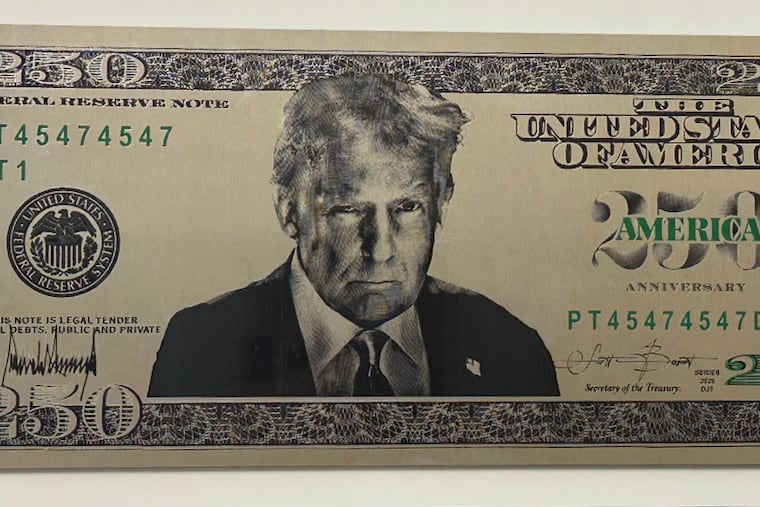
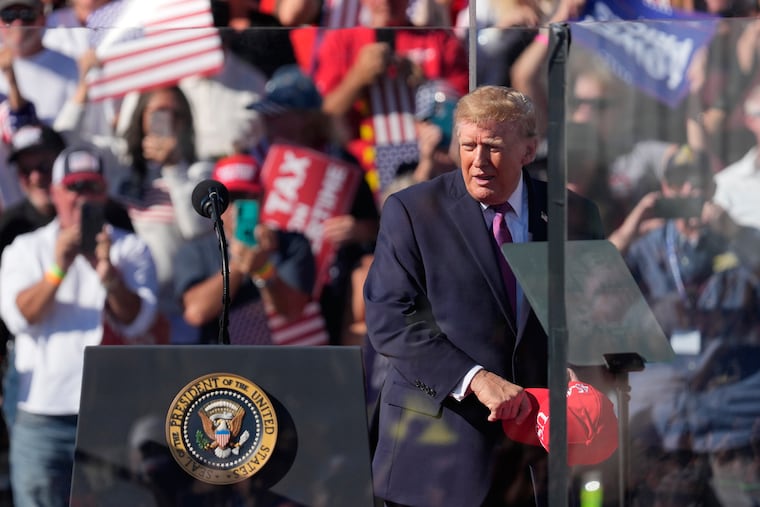
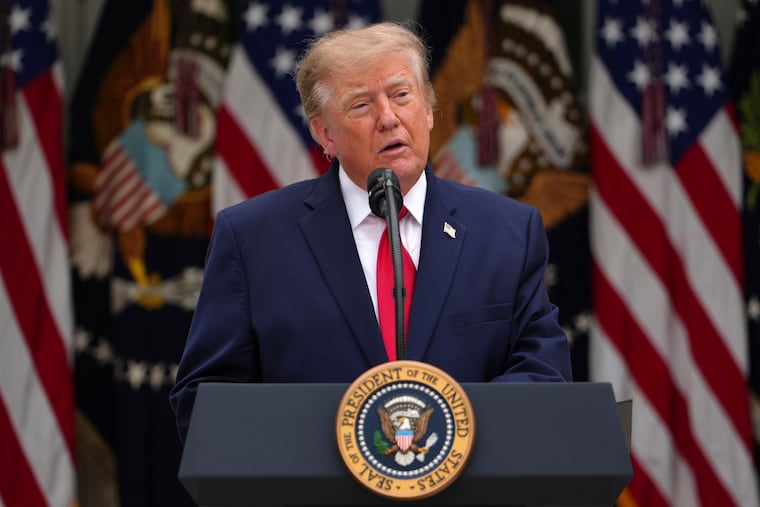
Trump administration officials have pressed the office responsible for printing the nation’s money to design a $250 bill featuring the president’s portrait, according to four current and former employees, in what would be the first appearance of a living person on U.S. currency in more than 150 years.
Starting last year, two political appointees at the Treasury Department — U.S. Treasurer Brandon Beach and his senior adviser, Mike Brown — repeatedly urged staff at the agency’s Bureau of Engraving and Printing to prepare prototypes of the note, according to the employees, who said the move raised concerns because federal law currently allows only deceased people to appear on bills.
The employees spoke on the condition of anonymity for fear of retribution.
As part of the effort, Beach in August and September provided bureau staff with mock-up designs for the note, including one that shows President Donald Trump’s face in the center of the $250 bill between the signatures of the president and Treasury Secretary Scott Bessent, according to one of the employees and records reviewed by the Washington Post.
The artist who said he designed the mock-up told the Post that he had spoken with Trump about it.
British painter Iain Alexander said Trump endorsed changes to his original design, such as adding the colors of the American flag and a logo commemorating the 250th anniversary of the nation’s founding.
“He likes to call me his favorite British artist,” said Alexander, a former competitive swimmer and DJ who describes himself as a royal portrait artist of Queen Elizabeth II and others.
No living person has appeared on U.S. currency since 1866, when it was outlawed after the image of a mid-level Treasury bureaucrat showed up on a 5-cent note. Legislation that would allow Trump to appear on a $250 bill was introduced in Congress last year to commemorate the nation’s 250th anniversary but has languished.
In a statement, a Treasury Department spokesperson said the printing office “is conducting appropriate planning and due diligence” in response to the proposed legislation.
“Should this legislative mandate be signed into law, the BEP is moving proactively to produce a $250 commemorative note which will appropriately recognize the 250th Anniversary of our great nation,” the statement said.
The director of the printing bureau, Patricia “Patty” Solimene, and other staff repeatedly explained to Beach and Brown that there were legal and procedural obstacles to producing the note and that it would take years longer than they envisioned, the four employees said.
The two political appointees were dismissive in response, two of the current employees said.
“She had told them we’re not authorized to do this. We can’t progress any further, and all the stakeholders have not even met to discuss the next steps,” said one of the employees. “Currency often takes six to eight years to produce a new bill, particularly one of such high value.”
Solimene said she was abruptly reassigned from her post by Treasury management on April 27, writing the next day in an email to colleagues that she was leaving with a “heavy heart.” She wrote in her goodbye email, a copy of which was obtained by the Post, that she had been reassigned to another job in the Treasury Department and that her departure was “not my choice.”
She added that she “never sacrificed the values or character of myself or the organization and always prioritized the U.S. Currency Program and the value each employee brings to the mission.”
“The buck stopped here,” she wrote.
Solimene did not specify in the email why she was reassigned and did not return calls seeking comment. A 24-year Army veteran, she had been the first female director of the bureau.
Brown, formerly a senior adviser to Beach, has since been named the bureau’s acting director. He did not return messages seeking comment.
The Treasury statement said Beach has “never asked staff to print the bill before congressional passage.” The agency declined to comment on Solimene’s reassignment. The White House did not respond to requests for comment.
Solimene and her staff had consented to another administration request: to print $100 bills featuring Trump’s signature, according to the four employees. They said those bills — the first in American history to bear a sitting president’s signature — are currently being printed at the bureau’s downtown Washington facility.
“Based on the recommendation of U.S. Treasurer Brandon Beach, Secretary Bessent will recognize the historic achievements of our great country and President Trump by adding his signature to the currency,” the Treasury statement said.
While no law prohibits printing bills with Trump’s signature, U.S. currency experts say that producing a $250 note featuring the president’s image would run afoul of current laws. One states only a “deceased individual” may be depicted on American currency. Another specifies which denominations the bureau may produce.
Larry R. Felix, a former director of the bureau, said “a $250 note is not statutorily authorized” without an act of Congress.
“The secretary has to be given authority to do that,” he said, referring to Bessent.
Alexander, the artist, said he was also told legislation was required. “I’ve been informed that it has to go through Congress,” he said.
A second challenge, experts said, is that designing and printing any new note typically necessitates extensive coordination with the Federal Reserve, the Secret Service and private sector partners.
Felix said it took more than a decade to design and produce a $100 note with dozens of embedded security features that prevented counterfeiting.
Brown, a Trump appointee who started at Treasury in October, is a former Kansas Republican Party chairman.
Beach, who was appointed treasurer in March 2025 and has direct oversight of the U.S. Mint, is a former Georgia state senator who backed Trump’s 2020 election denial claims. He did not respond to messages seeking comment.
“These guys think you can just print something overnight and it’s going to work in an ATM. It’s just crazy,” said one of the employees. “It takes years and years and years to produce these notes so they are reliable for the public.”
The effort to make a $250 note coincides with the Trump administration’s plans to celebrate the 250th anniversary of America’s founding starting this July. Trump has proposed building a 250-foot triumphal arch at the foot of Arlington National Cemetery and a “Garden of Heroes” in Washington featuring 250 statues.
Last month the State Department announced it would begin issuing passports featuring Trump’s portrait and signature to commemorate the anniversary, a move that did not require an act of Congress.
In February 2025, Rep. Joe Wilson (R., S.C.) introduced a bill that would order the Treasury secretary “to print $250 Federal reserve notes featuring a portrait of Donald Trump.” The bill was referred to the House Financial Services Committee but has not received a hearing.
In a statement to the Post, a spokesperson for Wilson’s office thanked Beach for endorsing the proposed legislation and said Wilson has spoken multiple times to the committee’s chairman about moving it forward.
“We can also confirm that both Treasury Secretary Bessent and President Trump have spoken with Rep. Wilson about their support for this on multiple occasions,” the statement said.
In January, Rep. Andy Barr (R., Ky.) posted a photo on X showing him and Beach holding a mock-up of the bill with the colors of the flag and the “250” logo. Alexander, the British painter, confirmed it was a design he had created after receiving Trump’s feedback.
The Post contacted Alexander because his signature appears below the mock-up design that was provided to bureau staffers in August.
For the back of the note, Alexander said he proposed a theme of “women’s liberation” featuring Betsy Ross, the seamstress who made flags during the American Revolution.
Trump’s feedback? “He absolutely loved it,” Alexander said.
Alexander said in addition to the $250 note, he is working on a much larger art project for the America 250 celebration but has had some difficulty getting regular feedback from Trump since the start of the war in Iran.
“You can appreciate all he’s got on his plate at the moment,” he said.