A Trump obsession that carries a cost for democracy
The bottom-line message he clearly wanted to leave with the public was this: He is not a loser, regardless of the result of the 2020 election. There were dark forces at work to thwart him.
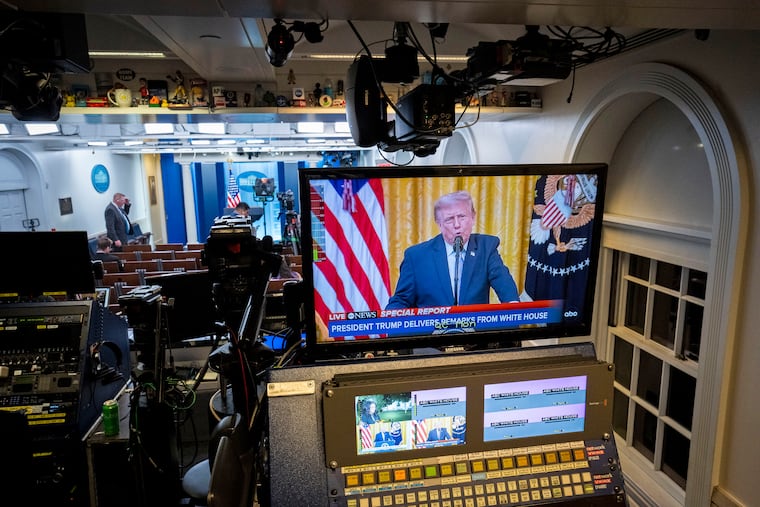
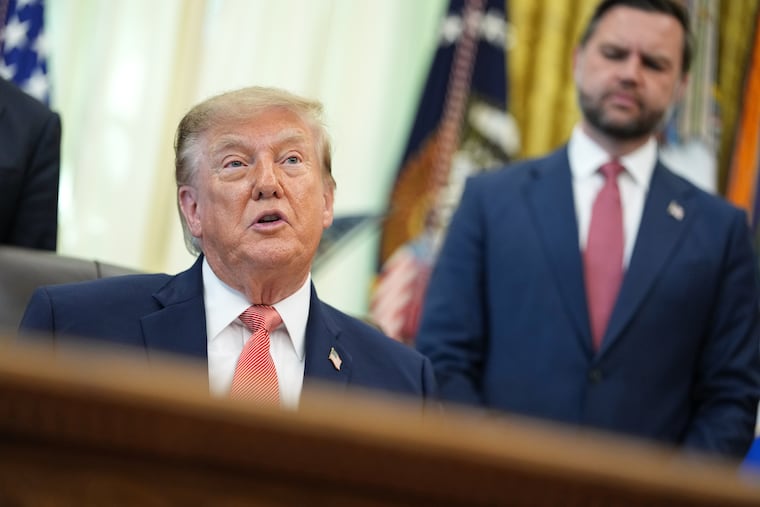
WASHINGTON — President Donald Trump used a lot of alarming words on Thursday night as he addressed the American people about threats to the integrity of elections in the United States: “Deep state.” “Rigged and stolen.” “Conspiring.” “Manipulation.” “Corrupt.” “Fraud.” “Cover up.”
But the bottom-line message he clearly wanted to leave with the public was this: He is not a loser, regardless of the result of the 2020 election. There were dark forces at work to thwart him. And if his party loses this fall’s midterm election, he intimated, that may not be an honest outcome either.
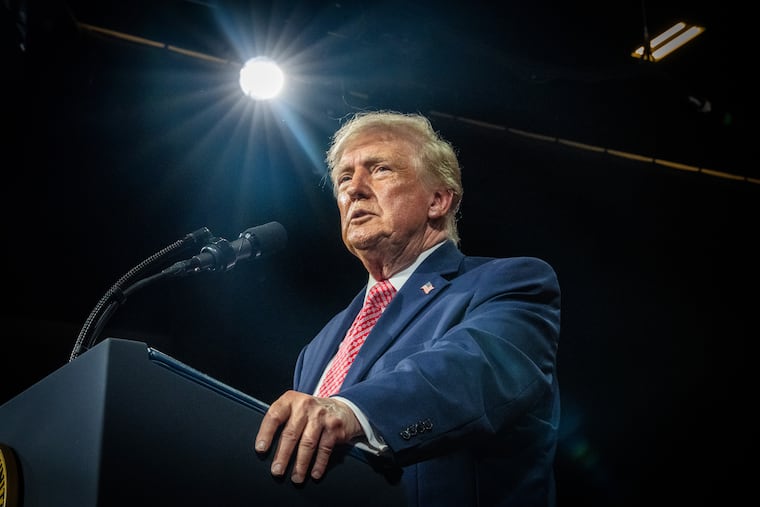
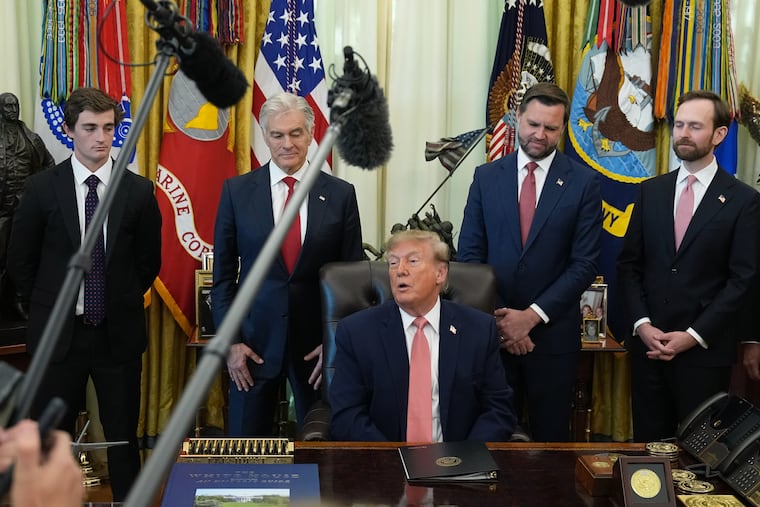
Trump’s primetime speech from the East Room of the White House was an astonishing spectacle featuring a president intent on persuading the country that its elections cannot be trusted, at least not the ones where he or his allies fall short. He cited selectively declassified documents to make sensational claims about vulnerabilities of the election system, although nothing he revealed proved any outcomes were actually changed.
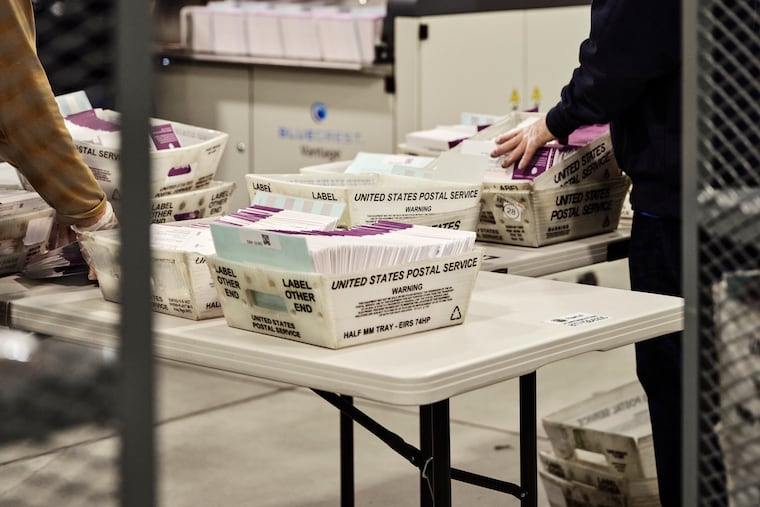
The exercise underscored how much Trump in his second term has come to be obsessed with relitigating the 2020 election and finding ways to cast doubt on the 2026 election. In the 18 months since he returned to office, he has installed election deniers in key positions, sought to change the rules to make it harder to cast ballots, seized voting records in a bid to prove his conspiracy theories and purged officials who investigated his efforts to overturn his election defeat six years ago.
“It does feel a little like Captain Ahab in ‘Moby Dick,’” said Trevor Potter, a Republican former chair of the Federal Election Commission. “He is just fixated on his claim that he didn’t lose the 2020 election. Armchair psychiatrists can say he doesn’t like losing, he can never admit he lost anything. But it’s clearly become an important part of his psyche and in some ways an important part of this administration.”
On one level, according to people close to him, Trump’s fixation on rewriting the history of 2020 is about salving the wounded ego of a man who constitutionally resists ever admitting that he has lost anything. He has made it a litmus test for anyone working for him to accede to, or at least not contradict, the lie that he won back then, not Joe Biden.
Trump has authorized investigations to revisit his many claims that have previously been debunked, inquiries seemingly aimed not at following wherever the facts may take them but in search of facts to back up his own unsubstantiated certitudes. It is hard to imagine that he would accept any investigation concluding that he lost fair and square.
But while part of this is about looking backward, it also is about looking forward. With Trump deeply unpopular, according to polls — just 37% approve of his performance in the latest Washington Post-Ipsos survey — his party faces a possible drubbing in congressional races in November. So Trump seems intent on laying a predicate that, at the least, could explain away a defeat and, at most, his critics fear, potentially justify direct intervention aimed at changing the results.
“It’s the standard approach to cast doubt on the electoral rules of the game where many populist authoritarians feel threatened by unpopularity at the polls or if the results declare them the loser at the ballot,” said Pippa Norris, who has taught political science at Harvard University for three decades and was the founding director of the Election Integrity Project. “Indeed, it’s been a leitmotif which the president has used for more than a decade now.”
Trump’s allies insist that he has well-founded reasons for his election conspiracy hunt, that Democrats, the news media, career officials and foreign governments all had cause to try to stop him from winning a second term and then hide their tracks. A self-serving establishment, they say, is protecting its own power and eager to take down a disruptive outsider in the form of Trump.
“The president passionately believes he was wronged in the 2020 election,” said Christopher Ruddy, his friend and CEO of Newsmax Media, “and I think he is motivated for two reasons, to get vindication and to prevent future election irregularities.”
But some Republicans wish Trump would move on, seeing the issue as politically unhelpful in a campaign season when voters are focused on the cost of living and other matters close to home.
An Economist-YouGov poll last month found that Trump has persuaded 50% of Republicans that the 2020 election was rigged, but that is more of an article of faith among the president’s base than the broader electorate. While 66% of self-identified MAGA Republicans share that view, just 32% of other Republicans do and only 23% of independents.
Trump’s repeated forays into election denialism this term also reflect the change in his inner circle. While there were powerful voices in his first term who told him that his claims of election fraud were not true, most notably William Barr, then the attorney general, Trump this time is surrounded by advisers who either cheer him on or keep quiet.
“Clearly, there’s nobody in the White House who can say no to him; there’s no adult in the room,” said former Rep; Barbara Comstock, R-Va., and a longtime Trump critic. “They won’t say to him, ‘Mr. President, you lost the damn election. Why are we doing this again?’”
Indeed, would-be administration officials at the start of this term were asked point-blank during job interviews if they believed Trump won the 2020 election. Those who said no were generally not welcomed into the fold. Conversely, Democrats have now made a point of asking the same question during confirmation hearings of Trump nominees, leaving them struggling to find an answer under oath that does not anger the president.
“Do you deny that Joe Biden won the 2020 election?” Sen. Mark Warner, D-Va., asked Jay Clayton, the president’s nominee for director of national intelligence, during a hearing this week.
“Senator, I’m not an election denier,” Clayton responded. “Joe Biden was certified as the president of the United States.”
Democrats noticed the use of the word “certified,” as opposed to “elected” or “won.” That has become an escape word for Trump nominees. Even the president does not deny that Biden was certified; he just claims that he should not have been.
Sen. Jon Ossoff, D-Ga., tried to pin Clayton down. “Who won the 2020 election?” he asked directly.
“I’ve answered it,” Clayton said. “I’ve answered it.”
“Isn’t it humiliating to be unable to answer this question, to have to indulge the president’s delusions?” Ossoff replied.
Trump’s laser focus on 2020 was evident in his speech Thursday night. As he spun out assertions of Chinese hacking, illegally registered voters and cover-ups, Trump referred seven times to the 2020 election that he lost, albeit without an explicit claim that he won. He offered no concerns about the validity of the 2016 or 2024 elections that he won.
And while he suggested that China intervened in the election six years ago because it “wanted me to lose,” he made no mention of Russia’s intervention four years before that on his behalf. He used the words “China” or “Chinese” 20 times and mentioned Russia only once as part of a list of nations that have the capacity to hack election machines.
In fact, U.S. intelligence agencies have concluded that while China made nascent efforts to influence American opinion during the 2020 election, it largely stayed on the sidelines, while Russia mounted an expansive and aggressive campaign to help Trump win in 2016.
With just less than 16 weeks until the next election, the pressing issue is where Trump plans to take the matter. He used the speech to announce that he has ordered the FBI and other agencies to investigate election interference. He also pushed Congress again to pass legislation to require proof of citizenship to register and photo identification to cast ballots. But Senate Republicans have made clear to him again and again that there are not enough votes to pass it.
The idea that Trump might opt to take action if the election does not go the way he wants it to is not unthinkable. In an interview with The New York Times in January, Trump said he regretted not heeding advisers who urged him to order the National Guard to seize voting machines in swing states that he lost in 2020.
“Great damage has been done to our country,” he said Thursday night. “Our elections were left vulnerable to being rigged and stolen and the trust of the American people was lost. This cannot be allowed to continue.”
The question for many Americans will be who do they trust.
This article originally appeared in The New York Times.