Eleanor Holmes Norton ends House reelection campaign
Norton’s campaign filed a termination report on Sunday, signaling that the 88-year-old will not seek an 19th term as D.C.’s nonvoting delegate in the House.
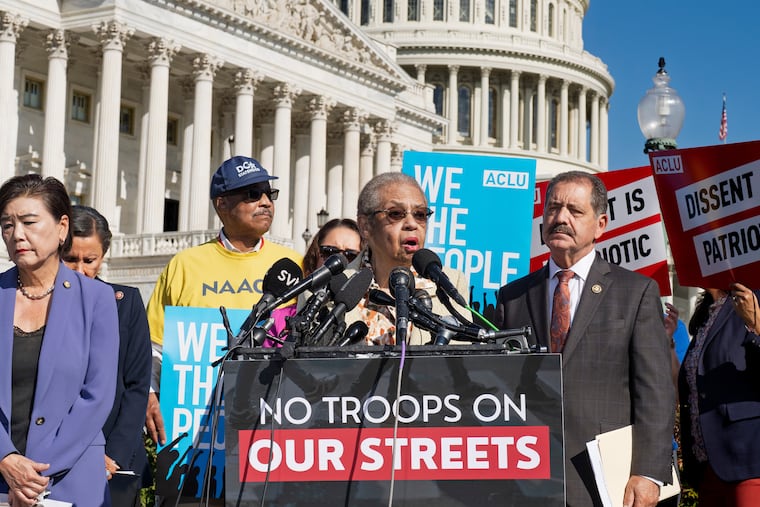
Eleanor Holmes Norton’s campaign filed a termination report with the Federal Election Commission on Sunday, signaling that the 88-year-old will not seek an 19th term as D.C.’s nonvoting delegate in the House.
The lawmaker has faced months of intense public scrutiny about her ability to adequately represent the nation’s capital during an unprecedented period of federal intervention.
The termination filing, first reported by NOTUS, has the practical effect of ending a candidate’s campaign operation, although it does not prevent them from filing to run for office in the future. Her campaign did not respond to repeated requests for comment.
The move would bring to a close a three-decade career in which she became known as D.C.’s “warrior on the Hill” and became, to an entire generation of Washingtonians who have known no other House representative, nearly synonymous with the city’s House seat in Congress and its crusade for D.C. statehood.
But her evident decline in recent months and years — appearing less often in public, speaking more haltingly and largely only from scripts, seeming to struggle with candid interactions or to walk without assistance — ignited concerns that she was not the advocate the city needed during a critical time. Her current term ends in January 2027, when she will be 89.
Two D.C. Council members — Robert C. White Jr. and Brooke Pinto — have already launched primary challenges against her, among a host of others. Her closest confidante, Donna Brazile, called on her longtime friend to step aside last year. And an October police case, in which she reportedly fell victim to fraud at her home, as NBC4 reported, only accelerated concerns about her vulnerabilities and mental sharpness as she has aged. A D.C. police report described her as having “early stages of dementia.”
Meanwhile, congressional Republicans have unleashed a cascade of efforts to erode D.C.’s already limited right to self-governance while President Donald Trump castigates the city as dangerous and filthy. During his first year back in office, he seized temporary control of local police, surged immigration enforcement, and deployed armed National Guard troops on city streets.
D.C. public officials and politicos began publicly voicing concerns about Norton’s ability to represent the District last year given the tenuous relations between the federal government and the nation’s capital.
Yet Norton (D) has spent months insisting she would seek reelection, raising concern within a party that has had to reckon with the consequences of geriatric leaders clinging to power for too long. While D.C. does not have a vote in Congress, its representative in the House can introduce bills, serve on committees, and spearhead advocacy efforts.
Her exit from the campaign would set the stage for the first competitive race for the seat since Norton first ran for it in 1990.
One of Norton’s top staffers, Trent Holbrook, recently left his job as her senior legislative counsel to run for her seat. White (D., At large) and Pinto (D., Ward 2), though, remain the candidates to beat. Other candidates include Kinney Zalesne, a former Democratic fundraiser who has raised more than $400,000; Deirdre Brown, a Democratic organizer in Ward 3; and Vincent Morris, who works in communications.