The EPA halted a study on gas stoves and asthma. But even partial results were striking.
Removing their gas stoves relieved study participants’ asthma so much that the results were clear even with only 85 of them.
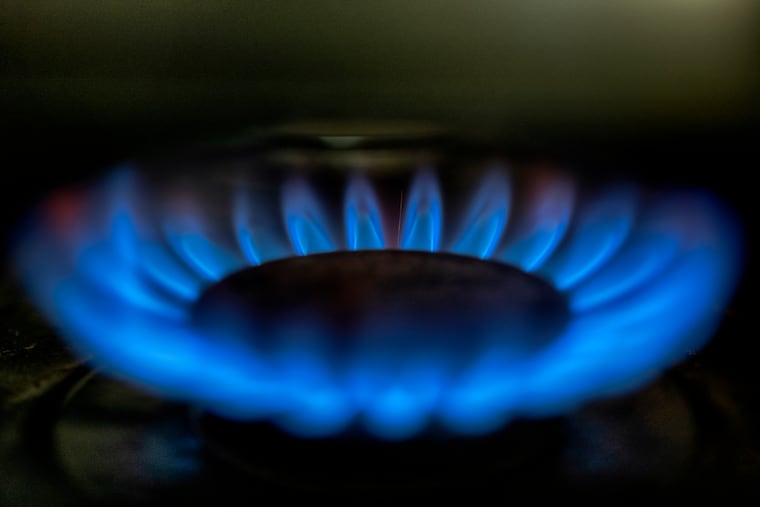
Paul Moore’s house is old. It was built around 1900 as a hunting lodge near where Cleveland would develop, and his grandparents bought the home around 50 years later, converting it over the years into a three-bedroom ranch that included what Moore called an “old school” gas stove.
When he moved into the house in 2020 with his wife and six children, Moore already had debilitating asthma. He got winded walking up hills and couldn’t play basketball with his children. He slept poorly and couldn’t hold steady employment, instead doing odd jobs like fixing neighbors’ cars and houses. He was hospitalized multiple times with severe asthma attacks and almost died from being unable to breathe.
“My asthma was a real hindrance at the time. And I couldn’t figure out why, you know?” Moore said. “Just couldn’t pinpoint one thing or another. Was it me? Is it something going on with my body? Is it something else?”
It turned out that researchers at Case Western Reserve University in Cleveland and a local hospital network were studying asthma sufferers like Moore. He signed up to have his gas stove swapped out for an electric one in June 2025. That research would end up providing vital evidence on gas stoves’ health impacts, amid fierce debate between fossil fuel advocates and climate change activists.
Moore said without the study, he has no clue how long it would have taken him to save the money to change it himself. The researchers spent an average of about $10,000 per household, as many old homes needed to be completely rewired to handle the larger electrical load of an induction stove.
What Moore didn’t know is that he would be one of the last people to get a new stove as part of that work.
Ash Sehgal, a Case Western medical professor who led the study, had received an $18 million grant from the Environmental Protection Agency in December 2024 to replace the stoves in 1,200 homes of asthma sufferers in the Cleveland and Akron, Ohio, areas. A month before Moore’s stove was replaced, Sehgal received a letter stating that the grant had been terminated.
It was one of thousands cut short after President Donald Trump took office and launched aggressive efforts to reduce government spending.
But unlike many others forced to halt their research, Sehgal and his co-authors released their study anyway, publishing it in the Journal of Allergy and Clinical Immunology in Practice this month with a fraction of the intended sample size. Still, removing the gas stoves relieved the participants’ asthma so much that the results were clear even with only 85 of them, according to two scientists who reviewed the methodology but were not involved in the study.
“What really surprised me is that the improvement in the asthma symptoms was similar to or even larger than the improvement in asthma symptoms that’s reported in clinical trials of commonly used asthma medications,” Sehgal said.
Participants recorded far fewer asthma attacks, emergency room visits and missed days of work after the stove was removed, and levels of nitrogen dioxide in their kitchens plummeted by 70 percent.
“They were able to see some important results, even with the grant getting canceled, even with the sample size being less than a tenth of what they’d intended,” said Julian Marshall, an environmental engineering professor at the University of Washington.
“It’s also an actionable finding. People who have asthma would want to know, ‘What can I do about this?’” he added. “This is a major problem facing thousands and thousands of people across the U.S.”
Sehgal said that while it can help to replace gas stoves that exacerbate symptoms, it is not a cure for asthma. Asthma sufferers still need to work with a doctor, take their medications and avoid triggers like pollen and cigarette smoke.
Rob Jackson, an environmental scientist at Stanford University who was not involved in the research, said many studies on indoor air pollution from gas stoves rely on models to estimate the impact on people’s health, whereas this study makes real-life observations.
“It’s important because the extent to which indoor air pollution from stoves harms people’s health is still debated in state houses, federally, in courtrooms, and so every piece of the puzzle, even if it’s only 85 individuals, strengthens that story,” he said.
In recent years, conservatives have championed gas stoves and fought Biden-era policies that sought to reduce the use of fossil fuels driving climate change. Trump has championed fossil fuel development, seeking to boost the oil and gas industry by rolling back environmental protections and opening new areas to exploration.
Politicizing science
Scientists have lamented the loss of federal funding following the Trump administration’s dramatic cuts last year to grants across the government, including those awarded by the National Institutes for Health and Centers for Disease Control and Prevention.
The EPA has terminated $28.5 billion in grants, according to Grant Witness, a tracking project, with much of that money intended to focus on helping communities respond to climate change or reduce pollution. That included funding projects that installed rooftop solar or sealed up houses against wildfire smoke, as well as scientific studies that had real-life applications, like evaluating the replacement of gas stoves.
The agency closed the Office of Environmental Justice and External Civil Rights, which awarded Sehgal’s grant, amid its broader purge of programs related to climate change, environmental justice and diversity, equity and inclusion.
Despite court challenges, including a district judge ruling earlier this month that the cancellations were illegal, many researchers were forced to end their studies early.
EPA spokesperson Brigit Hirsch said in an email that the agency’s internal scientists continue to conduct vital research.
“EPA’s core mission is protecting human health and the environment, and at the Trump EPA, gold-standard science supported by our excellent career scientists is happening like never before to ensure clean air, land, and water for all Americans,” she said.
The cancellation of the gas stoves research grant “seems to be a political decision, not necessarily based on science-based or public health priorities,” said Darya Minovi, a public health researcher at the Union of Concerned Scientists, an advocacy group.
The administration is looking to expand its ability to shape scientific funding, she said. The White House’s Office of Management and Budget proposed a new regulation in late May that would demand grants across the federal government align with the president’s policy priorities or face cancellation.
While presidents often set the general direction of agencies by appointing their leadership, Minovi said this new policy would give the president more control over decisions typically made by staffers at institutions such as the NIH.
“This is really making it government-wide policy to politicize grant-making that should not be subject to the whims of a president, but really should be decided on scientific merit,” she said.
What was lost
Based on the results that were published, Sehgal can estimate how much damage halting the study caused. If 1,100 more households had participated as originally planned, it would have resulted in 900 people with better-controlled asthma and 84 fewer people who would go to the emergency room or be hospitalized.
Many of those people probably don’t even realize the connection between their asthma and their gas stove, said Angela Bland, a 38-year-old stay-at-home mom in Akron who also participated in the study. She said the impact of replacing her stove was almost immediate, and she didn’t feel her throat closing up as much while cooking.
“It was kind of heartbreaking because I was like here’s something that can really help people and get information out there to help people, and they cut it so quick," she said.
Similar to Bland, Moore said he quickly felt the impact of removing his gas stove.
“It was just like, ‘Huh, I feel a little bit better. It’s not like how it used to be.’ It was a slow realization over the first week,” he said.
He remembers waking up to his daughter cooking, smelling the food and feeling good for once, so much so that his family noticed.
“They felt the difference. It was a magical moment,” Moore said.
After his health improved, Moore found a new job locating gas lines so that major construction projects don’t rupture them.
“There’s a whole lot of people out there probably feeling just like how I felt,” he said. “A lot more people deserve to feel good when they cook or when they eat or when they are able to sit down with their families.”