Despite signaling change, ICE still arrests many immigrants with no record
Trump officials indicated that agents would take a more targeted approach after Minneapolis. New figures show large numbers with no criminal history are still detained.
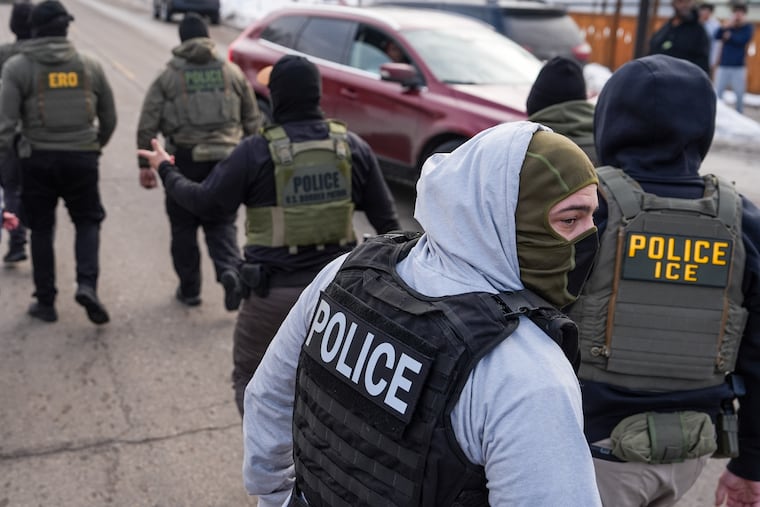
Federal immigration officers continued to target large numbers of immigrants with no criminal record in the weeks after two U.S. citizens were shot and killed in Minneapolis, newly released government data show, despite statements from Trump administration leaders indicating they wanted to take a more targeted approach.
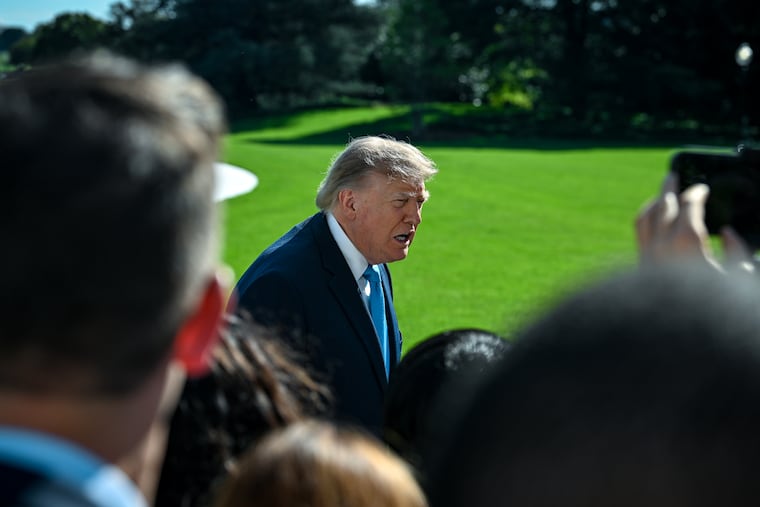
White House border czar Tom Homan said in late January that “all operations will be targeted” and prioritize “criminal aliens, public safety threats and national security threats.” President Donald Trump said he wanted to see “a softer touch” following the unrest in Minneapolis. The shift in rhetoric came as polls indicated that a growing majority of Americans thought the administration had gone too far in deporting undocumented immigrants.
U.S. Immigration and Customs Enforcement data obtained through a Freedom of Information Act lawsuit filed by the Deportation Data Project indicate that arrest numbers have dropped. ICE averaged about 7,000 arrests a week in the six weeks since Alex Pretti was shot and killed on Jan. 24 — down from 9,000 earlier in January.
But a Washington Post analysis of the data shows that people with no criminal record still make up the largest share of those detained. In all, 42% of those detained in the six weeks after Pretti’s death had no criminal record. That is a slight drop from the six weeks that preceded his death, when that figure was 46%. Thirty percent had prior convictions and 29% had pending charges in the latter weeks.
Julia Gelatt, associate director of the U.S. immigration policy program at the Migration Policy Institute, said the data reflect the view of senior Trump officials that “anybody without authorization should be arrested and deported.” While Homan stated that ICE would take a targeted approach after Pretti’s death, he also noted that “if you’re in the country illegally, you’re never off the table.”
The recently released data offer a lens on how much the Trump administration has shifted its strategy since the deaths of Renée Good and Pretti, and the challenges the Department of Homeland Security could run up against in trying to meet the president’s deportation goals. White House Deputy Chief of Staff Stephen Miller set a goal of 3,000 ICE arrests a day last spring, a number the administration has never attained. The closest ICE came to reaching that goal was in June 2025, when federal officers arrested more than 1,900 people in a single day.
To meet Miller’s goal, ICE would need to broaden the reach of its campaign. But the new data, which go up until March 10, suggest that is not happening. The most recent figures show that ICE is arresting about 933 people a day. The administration has yet to announce any additional large-scale immigration enforcement operations, and Trump has removed Homeland Security Secretary Kristi L. Noem and replaced her with Republican Sen. Markwayne Mullin of Oklahoma.
Sarah Saldaña, who served as ICE director under President Barack Obama, said she hoped that the decline in arrests reflected a “more deliberate process” to increase public safety. Nonetheless, she said that could change once public anger over the Minneapolis operation dissipates.
Overall, ICE has arrested more immigrants with no criminal record, compared with those with a conviction, since Trump took office again last year. Since January 2025, ICE has arrested more than 146,000 immigrants with no charges or convictions, compared with more than 127,000 immigrants with a criminal conviction.
The shift to arresting large numbers of people with no charges or convictions started in June, when DHS surged officers in Los Angeles, the first of several large-scale raids in more liberal cities. Before that, migrants with no criminal record accounted for more than 20% of all arrests. But as DHS turned its focus to finding and detaining people in places like Chicago, New Orleans, and Washington, the proportion of noncriminal arrests nearly doubled.
A DHS spokesperson asserted that “70% of ICE arrests are criminal illegal aliens” — a number the agency did not provide a detailed breakdown for. That figure probably combines those who have either a conviction or a pending charge. The most recent figures suggest that number is closer to 60%.
The spokesperson added that “any of the individuals that are counted as ‘non-criminals’ are actually terrorists, human rights abusers, gangsters and more; they just don’t have a rap sheet in the U.S.” Immigrants’ lawyers, their families, and reviews of court records inside and outside the United States contradict that allegation.
Despite the lower number of daily arrests, the most recent figures are still three times higher than they were in 2024, during the last year of the Biden administration.