New DHS chief’s call for quieter immigration enforcement alarms MAGA base
Some organizations interpret a quieter approach as a potential betrayal of one of the president’s core campaign promises.
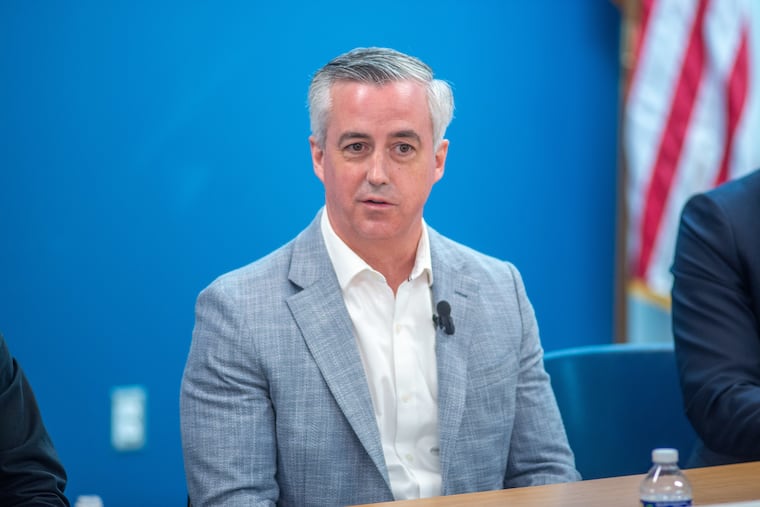
A month into his tenure, Homeland Security Secretary Markwayne Mullin is facing mounting pressure from conservative groups that fear the Trump administration is going soft on its mass deportation agenda amid a public backlash over aggressive enforcement tactics.
Mullin has vowed to restore confidence in the Department of Homeland Security after the fatal shootings of two U.S. citizens in Minneapolis. In a recent cable news appearance, he expressed a desire to conduct enforcement in a “more quiet way.”
Organizations such as the Mass Deportation Coalition, formed in March and led by the Heritage Foundation, interpret that approach as a potential betrayal of one of the president’s core campaign promises. The coalition recently published a lengthy report concluding that the administration had deported 350,000 immigrants in the first year of President Donald Trump’s second term, far fewer than the 650,000 deportations that Trump officials have cited.
The numbers “don’t represent a victory in quantity,” said the report, which offered 21 recommendations to vastly expand operations. “What remains is a policy choice: to carry out a program of mass deportation, in keeping with the campaign promise, or not,” the report said. Mike Howell, president of Heritage’s Oversight Project, said Mullin’s comments thus far appear aimed at “assuaging left-wing concerns.”
“There’s not a lot of recommitting to the cause” of mass deportations, Howell said in an interview. “It makes you wonder.”
DHS remains mired in a partial shutdown, and Trump is facing the lowest approval ratings of his second term, with the public souring on his handling of immigration, the economy and the war in Iran. Mullin has consistently struck a moderate message, saying his goal is to keep DHS from being the lead story on the news each night. That rhetoric reflects guidance given to Mullin by the White House, according to one federal official, who spoke on the condition of anonymity to discuss internal deliberations.
Mullin told lawmakers at his confirmation hearing that he supports requiring immigration officers to obtain judicial warrants, signed by a federal judge, before entering private residences. That would reverse the agency’s guidance last year that officers could instead rely on administrative warrants approved by ICE officials, which legal analysts said violated constitutional due process rights.
During an interview on Fox News in mid-April, Mullin told host Laura Ingraham that the nation favors legal immigration. Ingraham cut him off.
“We want mass deportations,” she said. “That’s what the American people voted for.”
Mullin responded by citing the costs to taxpayers of arresting and deporting migrants, saying it would be less expensive if they chose to self-deport in response to government pressure.
“We’re not slowing down,” he said. “We’re going after the illegals, and we’d love for them to leave on their own.”
Trump has tried to improve the public’s views of ICE, which he praised for helping the Transportation Security Administration manage lengthy lines at U.S. airports last month caused by the DHS shutdown. On Sunday, the president endorsed a conservative influencer’s suggestion of changing ICE’s name to National Immigration and Customs Enforcement, or NICE.
DHS is rapidly expanding federal detention centers and hiring new immigration officers after congressional Republicans approved $170 billion in new funding for enforcement last year. But federal data suggests the administration has begun to shift its approach, relying less heavily on the type of large-scale enforcement operations in Minneapolis and other big cities that led to a surge in “at-large” arrests of migrants in community sweeps, according to an analysis from the American Immigration Council.
The number of such arrests fell from a peak of more than 800 per day in December to fewer than 500 per day in March, the analysis found. In early April, ICE was holding 60,311 immigrants in detention, the lowest number since September and down from a peak of 70,766 in January, according to an analysis from TRAC Immigration.
The council said the administration appears to be moving toward a more concerted effort to pressure immigrants to voluntarily leave the country “by making it clear that the entire weight of the federal government will work to prevent them from remaining in the country. Whether this means that ICE will stop carrying out large-scale raids on American cities remains to be seen.”
A DHS spokesperson disputed the idea that Mullin’s quieter approach is tantamount to caving to pressure from Democrats, saying: “Any notion that Secretary Mullin is ‘slowing down’ or ‘assuaging left-wing concerns’ could not be further from the truth.”
The official said 3 million undocumented immigrants have left the country since Trump took office last year — a number that appears to combine deportations and voluntary departures. And the official pointed to the agency’s announcement this month that the U.S. Coast Guard seized more than $33 million in cocaine from smugglers as evidence that DHS is continuing to aggressively protect national security.
Some anti-immigration groups said they welcome a broader enforcement approach, including cracking down on employers who hire undocumented workers and prohibiting banks from providing financial services to people who are in the country illegally.
Mark Krikorian, executive director of the pro-enforcement Center for Immigration Studies, expressed frustration that the Trump administration has been reluctant to mount large-scale workplace enforcement, which he attributed to countervailing pressure from the business community.
“The problem there isn’t really Mullin — it’s probably the president,” Krikorian said, adding: Trump has said “our hospitality industry needs these people. You can’t generate significant amounts of self-deportation without large-scale, sustained, work-related enforcement.”
Krikorian said it was too early to pass judgment on how Mullin will lead DHS. But he said the “performative nature of enforcement” during Kristi L. Noem’s tenure as DHS secretary “wasn’t politically sustainable.”
Among the most outspoken in opposing Mullin has been Gregory Bovino, the Border Patrol commander who led the administration’s enforcement operations in Chicago and Los Angeles last year before being ousted amid the fallout over the fatal shootings in Minneapolis.
“There is not mass deportation taking place, unfortunately,” Bovino said Monday during a live Spaces chat on X. He said Border Patrol had plans to massively ramp up deportation sweeps across the country after the Minneapolis operations but that those were thwarted for political reasons.
“I think [Trump’s] advisers told him to push mass deportations down, and whether they will start up again after the midterms, I don’t have a lot of confidence that it will,” he said.
Bovino said the administration should be aiming for 100 million deportations, a number that wildly exceeds the estimated 14 million people living in the country illegally, according to an analysis from Pew Research Center last year.
His message has been cheered by prominent MAGA influencers, including Benny Johnson, who invited Bovino onstage at the Conservative Political Action Conference in late March. Johnson called him a “hero to the America First movement,” and Dean Cain, the former “Superman” actor who last year sought to enlist as an ICE officer, came out to shake his hand.
“I truly don’t care about the short term political ramifications of mass deportations,” Nick Sortor, a conservative influencer with 1.5 million followers who has supported Bovino, wrote on X this month. “If grown men’s tummies hurt over third worlders being sent home, they’ll have to get over it WE CANNOT SAVE AMERICA WITHOUT MASS DEPORTATIONS.”
Bovino could not be reached for comment. In response to a question about Bovino, the DHS spokesperson said: “Disgruntled former employees at DHS are welcome to criticize their nation’s leadership.”
Democrats and immigrant rights groups have been skeptical of Mullin’s willingness to back off from the most extreme parts of the administration’s enforcement agenda. They cited concerns raised in February by Ryan Schwank, a former ICE instructor, who testified at a congressional hearing that ICE had dramatically slashed training standards for new officers in an effort to rush hundreds of them into active duty — a claim the agency has denied.
“A quieter public profile and less harsh rhetoric shouldn’t be mistaken for reform,” said Chris Magnus, who served as commissioner of U.S. Customs and Border Protection during the Biden administration. “There is little evidence of structural changes that would significantly alter how ICE and CBP operate. The priorities appear to be consistent. Only the presentation differs.”
Jeremy Beck, co-president of Numbers USA, which advocates for steep curbs in overall immigration levels, said Mullin ultimately will be judged on his effectiveness in reducing immigration. Beck said he supports Mullin’s efforts to lessen public outrage around enforcement and establish a more sustainable path.
“We need to use all the tools in the toolbox — enforcement and ICE and all that — but you have to do the softer kind of enforcement, too,” Beck said, citing stricter requirements on employers. Mullin “will want to be effective and not be in the news every day. There are ways to do that.”
Scott Clement and Isaac Arnsdorf contributed to this report.