What does sedition actually mean? Here’s what to know about Trump’s accusation against Democratic lawmakers.
As Trump's administration escalates the issue, what does sedition mean and can lawmakers can actually face repercussions for urging military and intelligence personnel to “refuse illegal orders?"
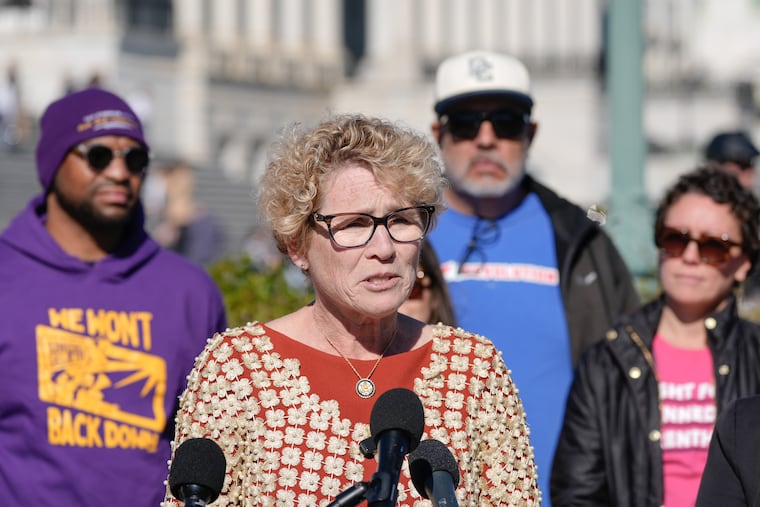
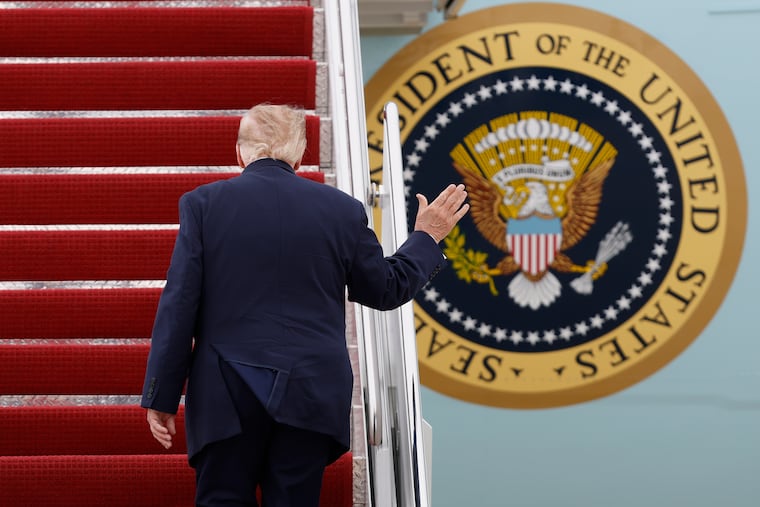
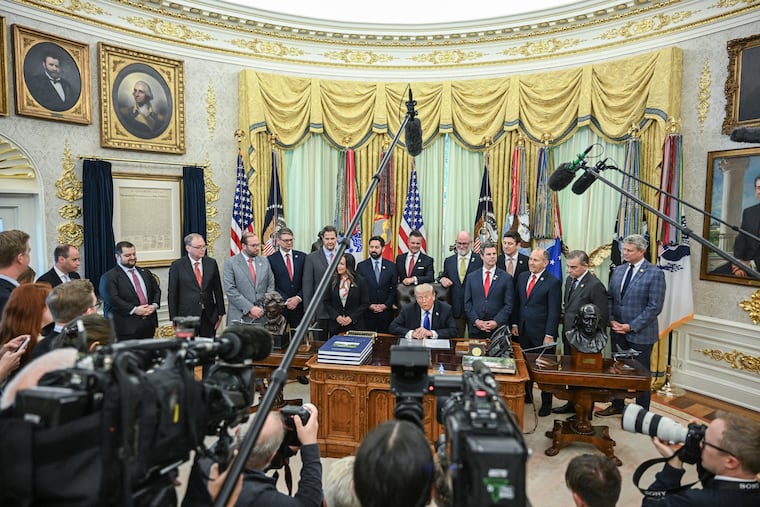
President Donald Trump accused six Democratic members of Congress of committing sedition, a claim that his administration has stuck to amid a fierce national debate that began when the lawmakers urged military and intelligence personnel to “refuse illegal orders.”
The Democratic members, who are all veterans or members of the intelligence community, shared a video online last week in which they accused Trump’s administration of pitting service members against American citizens and warned against orders that would violate the Constitution.
The lawmakers did not reference specific orders, but members have spoken against strikes in the Caribbean and Trump’s deployment of the National Guard in American cities — both of which have faced legal scrutiny — as cause for concern.
Trump first responded to the video with a string of posts on his social media platform, Truth Social, calling for the lawmakers to be arrested and put on trial for sedition, “punishable by DEATH,” and sharing posts against them, including one that called for them to be hanged.
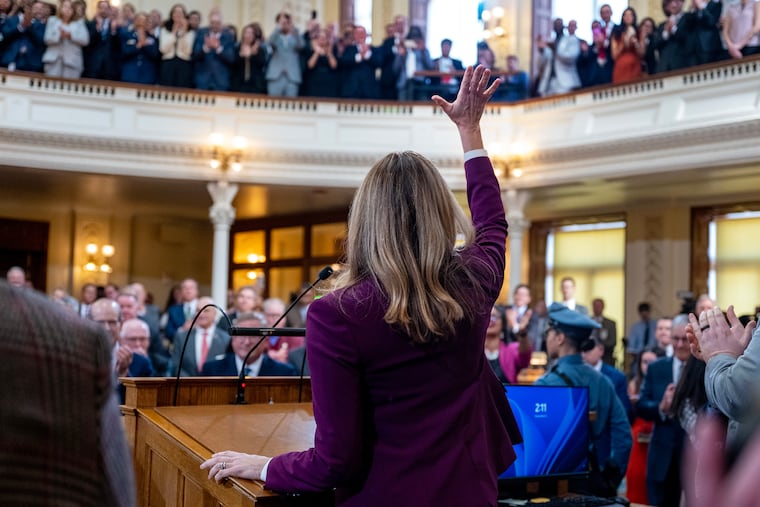
Two of the members represent Pennsylvania: U.S. Reps. Chrissy Houlahan (D., Chester), an Air Force veteran, and Chris Deluzio (D., Allegheny), a Navy veteran.
» READ MORE: Trump accuses Democratic vets in Congress of sedition ‘punishable by death,’ including two lawmakers from Pa.
While Democrats denounced the president’s rhetoric, Houlahan was dismayed by a lack of support from congressional Republicans.
On Monday, the Department of Defense announced that it would investigate Sen. Mark Kelly (D., Ariz.), a former naval officer and the one veteran in the video who is still obligated to follow military laws because he served long enough to become a military retiree. The announcement threatened to call Kelly back to active duty for court-martial proceedings.
On Tuesday, a Justice Department official told Reuters that the FBI has requested interviews with the Democrats who appeared in the video, which some of the lawmakers publicly corroborated. The FBI declined to comment when reached by The Inquirer.
As the debate over the video escalates in the wake of Trump’s sedition accusation and his administration’s actions, a rarely used charge and the intricacies of military law have been thrown into the spotlight.
What is sedition, and is it punishable by death?
Sedition is an incitement of a rebellion or encouragement of attacking authority, or, in other words, the intent to overthrow the government, according to legal and military experts. When acting with others, it is called seditious conspiracy.
Members of the Proud Boys and Oath Keepers were convicted of seditious conspiracy for the attack on the U.S. Capitol on Jan. 6, 2021, but within hours of beginning his second term, Trump granted sweeping pardons and commutations for those charged in the riot.
For civilians, sedition is a violation of federal law and carries prison time. It is not punishable by death.
Active-duty military, however, must follow the Uniform Code of Military Justice (UCMJ). While the military law has overlap with civilian law, it is more expansive, controlling, and strict, said Sean Timmons, a Houston-based attorney specializing in military law who previously served as an active-duty U.S. Army captain in the U.S. Army Judge Advocate General (JAG) program.
“In the civilian world you have a lot more defenses, and you have full First Amendment protections,” said Timmons, a managing partner at Tully Rinckey PLLC. “Whereas in the military, your First Amendment rights are quite limited.”
The maximum punishment for active military is death, but it can be far lower, he said.
Service members must be on active duty to be prosecuted under the UCMJ, but the conduct does not have to have taken place during active duty. This means that retirees like Kelly can be recalled for active duty to face UCMJ prosecution over their behavior while they were not on active duty.
What is an illegal order?
Members of Trump’s administration have pointed to the UCMJ rule that says members must follow lawful orders and orders should be presumed to be lawful. Service members can be punished for not following orders.
However, military rules also prohibit service members from following orders that are undoubtedly illegal — a point the lawmakers get at in their video — and they can be punished for doing so.
But whether orders are legal is supposed to be up to officers, not rank-and-file members, Timmons said.
“If you don’t comply, you could be charged with failure to follow orders and other crimes,” he said.
The exceptions (those obviously illegal crimes) would be war crimes like raping prisoners, deliberating killing civilians without justification, or torture, not day-to-day acts that would break the law, he explained.
Take the example of burning down an enemy’s structure.
“If your military unit says to burn it down because it’s part of the military objective, that’s a lawful order, even though it’s an illegal act,” he said. “It’s a war crime if it’s to burn down a daycare with kids inside.”
The boat strikes in the Caribbean have been in a legal gray area, he said, but “if your command says it’s legal, you’re supposed to execute.”
“The military system is harsh, cruel, and unfair … but it’s the system we have in place, and it’s designed that way to ensure discipline, obedience, and compliance,” he added.
Did the lawmakers commit sedition?
Claire Finkelstein, founder and faculty director of the Center for Ethics and the Rule of Law at the University of Pennsylvania’s Carey Law School and an expert in military ethics, said accusing the lawmakers of sedition “makes absolutely no sense, especially in a case in which they’re just reminding servicemen of their obligation not to follow illegal orders, which is a fundamental part of the UCMJ.”
“One has to really work hard to fill in the blanks here,” she said.
Timmons said five out of the six lawmakers have their freedom of speech to rely on as a protection.
“Just having divergent political views that the commander-in-chief doesn’t like, for civilians, there’s no liability, there’s no repercussions,” he said.
That doesn’t mean Trump’s administration cannot investigate them for “seditious behavior” anyway.
Kelly, on the other hand, was “on thin ice” by participating in a video that seems to undermine Trump’s authority, he said, and it’s not “totally crazy” to argue he engaged in seditious behavior under military law.
That being said, prosecutors would have to prove that his intent was to “cause a revolt within the ranks,” which would be “very hard,” he said.
“But could they make him miserable and humiliate him and charge him? Yes,” he said.
“Is that politically wise? Absolutely not. Is it reckless? Of course. But, technically, can they do it? Yes,” he added.
What are members of Trump’s administration saying?
White House press secretary Karoline Leavitt told reporters on Monday the White House supports the investigation into Kelly and accused him of trying to “intimidate” active-duty members with the video.
“Sen. Mark Kelly well knows the rules of the military and the respect that one must have for the chain of command,” she said.
“You can’t have a functioning military if there is disorder and chaos within the ranks, and that’s what these Democrat members were encouraging,” she added.
In a social media post on Monday, Defense Secretary Pete Hegseth called the lawmakers the “seditious six.”
“Encouraging our warriors to ignore the orders of their Commanders undermines every aspect of ‘good order and discipline,’” he wrote. “Their foolish screed sows doubt and confusion — which only puts our warriors in danger.”
How has Kelly responded?
Kelly, also a former astronaut, played down the impact of the threats against him on The Rachel Maddow Show Monday night.
“Is it stressful? I’ve been stressed by, you know, things more important than Donald Trump trying to intimidate me into shutting my mouth and not doing my job,” he said. “He didn’t like what I said. I’m going to show up for work every day, support the Constitution, do my job, hold this administration accountable.”
He also denounced the president’s rhetoric, calling it “inciteful.”
“He’s got millions of supporters,” Kelly said. “People listen to what he says more so than anybody else in the country, and he should be careful with his words. But I’m not going to be silenced here.”
He said he and his wife, former U.S. Rep. Gabby Giffords (D., Ariz.), who survived a 2011 assassination attempt in which she was shot in the head, “know what political violence is, and we know what causes it, too.”
What response have Houlahan and Deluzio gotten?
Houlahan and Deluzio, the two Pennsylvania lawmakers in the video, both reported bomb threats at their district offices on Friday following the president’s posts.
But they have also gotten messages of support.
Houlahan shared voice recordings of veterans from all over the country who left messages of support for her office and thanked her for her advocacy.
“Keep pushing it,” one said. “I’m with you, I’m behind ya,” another said.
“I am so proud of all six of you for making that video,” said another.