Supreme Court to review Catholic preschools’ bid for LGBTQ exemption
The Colorado schools say they’re being excluded from funding because of their denial of enrollment to children of LGBTQ parents, which the state deems discriminatory.
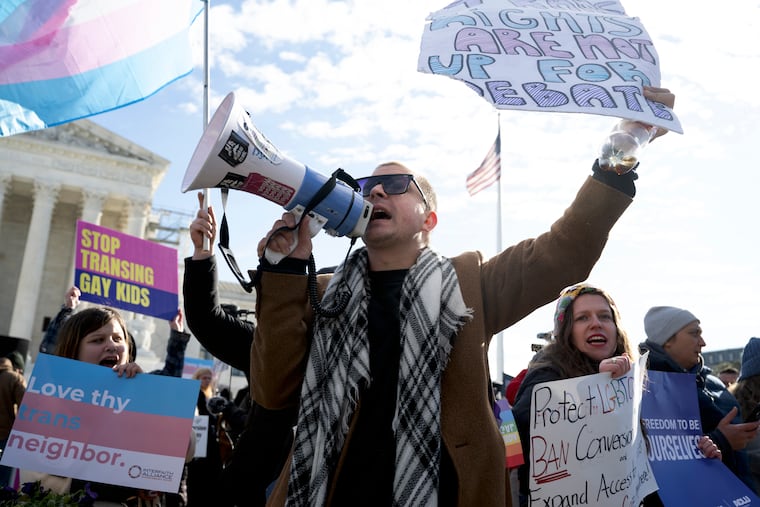
The Supreme Court on Monday agreed to review the bid of Catholic preschools to participate in Colorado’s universal prekindergarten program even as they deny admission to the children of LGBTQ parents.
The case is among the latest efforts to expand the boundaries of religious rights in the face of laws that require equal opportunity, birth control access and other mandates that might conflict with conservative religious beliefs.
The Supreme Court’s conservative supermajority has largely been sympathetic to arguments for expanding the Constitution’s religious speech and exercise rights. In March, the justices ruled 8-1 that a Colorado ban on “conversion therapy” for gay and transgender minors probably violates free speech rights.
The justices will now review a legal challenge brought by Catholic parishes and the Archdiocese of Denver, which say they are being excluded from the state’s universal pre-K funding in violation of their right to the free exercise of religion. The state’s program, passed in 2020, covers 15 hours per week of preschool costs for 4-year-old children in the state. To participate, public and private schools cannot discriminate on the basis of race, ethnicity, religious affiliation, sexual orientation, gender identity, lack of housing, income level, or disability.
The parishes say they have been found ineligible to participate and denied public funding because of their policies denying enrollment to children of LGBTQ parents, which they say are consistent with church teachings about marriage being a union only between a man and a woman. The state says that the policies are a form of discrimination in violation of the universal pre-K law’s equal opportunity mandate.
“Why the exclusion?” lawyers for the preschools wrote in a filing to the high court. “Because, Colorado says, these preschools’ religious practice of admitting only families who support Catholic teachings, including on sex and gender, is ‘discrimination.’”
At issue before the court is whether the Catholic schools should be exempt from that mandate. They argue that the state has made other exemptions, including allowing schools to prioritize low-income families and children with disabilities. Those other “secular” exemptions mean schools with religious policies should also benefit from an exception, the parishes argue.
The state denies that it makes exceptions, and it says the plaintiffs should not receive one. The carve outs for low-income families and children with disabilities are “protections” that do not deny equal opportunity to other families, the state contends.
In June 2024, a federal judge in Colorado sided with the state and denied the preschools’ request for a court order exempting them from the antidiscrimination mandate.
“Although the equal-opportunity requirement allows providers to specifically serve low-income families and children with disabilities, it does not grant the Department the authority or discretion to exempt providers from complying with the requirement,” U.S. District Judge John L. Kane, a Jimmy Carter appointee, wrote.
The U.S. Court of Appeals for the 10th Circuit affirmed the decision, prompting the parishes to appeal to the high court.