How Trump entrusted his World Cup to another Giuliani
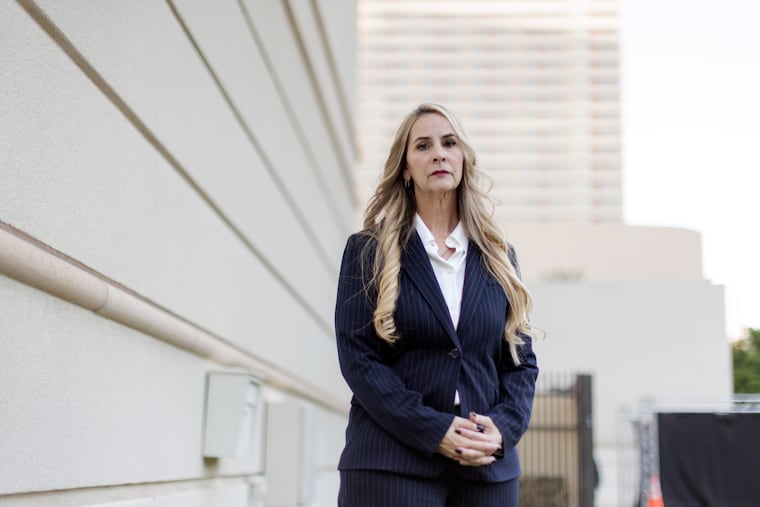
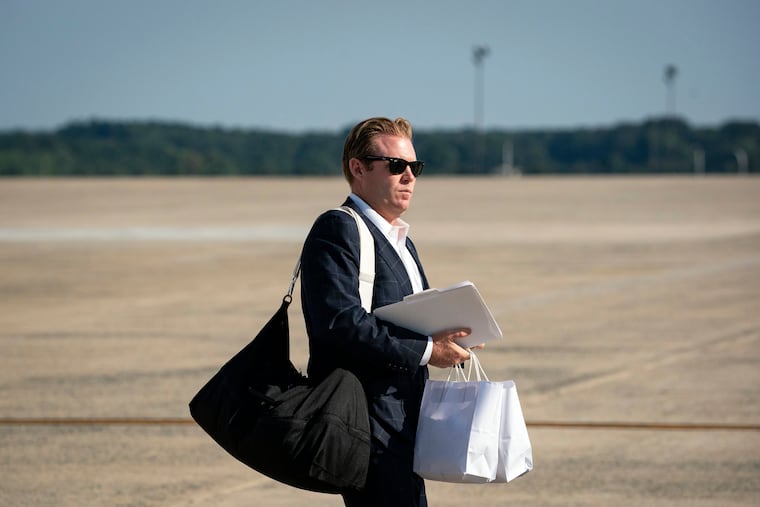
Andrew Giuliani, 40, is the executive director of the White House Task Force on the FIFA World Cup 2026.
Andrew Giuliani was haggling in a Florida hospital room, defending his presence to his recently comatose father — a man so stricken a short time earlier that a priest had been called.
At least Dad sounded like himself again.
“What are you doing here?” former New York City Mayor Rudy Giuliani asked after waking earlier this month, according to Andrew Giuliani, who had scrambled south from Washington, where he holds a senior federal post conferred by a president whom he has described as a second father figure. “You’ve got to get your ass back up to D.C.”
Five weeks remained before the highest-stakes professional moment of Andrew Giuliani’s zigzagging, sometimes painful, increasingly consequential public life.
And President Donald Trump had made his own expectations clear.
“You better do well, Andrew,” he said for the cameras last year, after making Giuliani the top-ranking administration official who once smiled at the boss through baby teeth.
Giuliani, 40, is the executive director of the White House Task Force on the FIFA World Cup 2026 — the nation’s steward for what he has billed, with Trumpian (and not inaccurate) flair, as “the largest sporting event in the history of the world,” which begins next month.
The job would have been complicated enough before the war in Iran, one of the countries competing in the draw; or the 76-day Homeland Security shutdown that waylaid vital funding (and left Giuliani and much of his team unpaid); or the jittery incoming messages from blue host cities unsettled by Trump openly musing about relocating matches that have been planned for years.
But it has fallen to Giuliani, a Trump superloyalist and regular golf partner who once played professionally, to reassure the soccer-loving masses that he is on the case, that the president hears their concerns, that everything will probably be fine.
“This guy,” Markwayne Mullin, Homeland Security secretary, said in a recent Instagram video, pointing double finger-guns at Giuliani, “is in charge of making sure it goes smooth.”
To which more than a few MAGA-skeptical counterparties initially wondered: This guy is in charge of making sure it goes smooth?
“One didn’t know,” Mayor Quinton Lucas, Democrat of Kansas City, Missouri, one of 11 U.S. host cities, said diplomatically, “the seriousness with which the position would be taken.”
Weeks before the first match in the United States, outside Los Angeles on June 12, Giuliani is navigating the daily triage as Trump’s de facto ambassador to the world’s game and its grandest showcase: boundless security threats; visa concerns among the more than 5 million expected international visitors; local angst about aggressive immigration enforcement upending the tournament; relentless complaints about runaway ticket prices; and delicate coordination with the World Cup co-hosts, Canada and Mexico, whose relationships with the administration can be volatile.
“I can only liken it to juggling chain saws,” said Jason Miller, a longtime Trump adviser.
“We try to catch the handle as much as possible,” Giuliani, who served in Trump’s first term as a liaison to sports leagues, said in an 85-minute interview.
He prefers a different analogy, comparing himself to an offensive lineman in American football, mostly anonymous unless he bungles something.
“If I’m the story of the World Cup,” Giuliani said, “then the World Cup has not gone well.”
By breeding and bearing, friends say, Giuliani is comfortable in spaces where it would never occur to him that he did not belong — swinging sand wedges with senators, mingling with Lionel Messi, subsisting in meetings where everyone else has a stately title.
“Mr. President, Secretary Rubio, Secretary Noem,” Gianni Infantino, FIFA’s president, began during a public World Cup discussion at the White House last year, acknowledging the luminaries beside him and hastening to add one more:
“Andrew.”
The toothy, excitable young son of New York’s toothy, excitable elected leader was about 9 or 10 when he slipped into a summit of almost unfathomable city royalty.
The sitting mayor. The Yankee boss. Joe DiMaggio. Donald Trump.
Andrew.
“It was a midsummer game,” he recalled, as if starting a novella, “in the old Yankee Stadium,” his and his father’s 1990s happy place, and Andrew Giuliani was wandering the ballpark suite of George Steinbrenner, the team owner, who had business to discuss with his father.
DiMaggio, the octogenarian Yankee legend, narrated the action on the field, Giuliani remembered, teaching the boy about defensive positioning. Trump shook his hand.
“One of those moments,” Giuliani said of the visit — and one of his first impressions of the future president.
He became something of a municipal mascot, cheering beside his father at Yankees playoff games and the 1994 World Cup, the last time the tournament came to America. He chased fly balls across the lawn at Gracie Mansion, the mayoral residence, with his younger sister, Caroline, and the family Labrador, Goalie, exhausting his security detail so thoroughly that they requested backup.
“They’d say to me, ‘Curtis, do me a favor? Would you take the Wiffle ball bat and just hit it out there?’” recalled Curtis Sliwa, the Guardian Angels founder whom the mayor had unofficially named his commissioner of stickball. “Boy, that kid wore out the grass.”
By adolescence, Giuliani had grown savvy and capable enough to hustle his father’s aides on the golf course. “He lost his amateur status with all the money I lost to him,” said Anthony Carbonetti, former City Hall chief of staff.
“The president likes him as a golfer,” said Christopher Ruddy, CEO of conservative outlet Newsmax, “respects him as a golfer.”
People who know both families credit the president with helping to mend the relationship between father and son, which had grown so frayed that Andrew Giuliani spoke publicly during Rudy Giuliani’s 2008 presidential run about their estrangement.
By then, the younger Giuliani had resolved to strike out on his own, plotting a career in competitive golf. When he was removed in 2008 from the Duke University golf team, Giuliani sued the school. (His coach had accused him of misdeeds that included breaking a club and chucking an apple at a peer.)
But like Donald Trump Jr., the MAGA-loyal son who as a young adult ventured west to live an outdoorsy life far removed from his complicated father, Andrew Giuliani would return to the family fold with the zeal of the reconverted. The Giulianis took up the shared cause of Trump’s 2016 campaign.
Andrew Giuliani joined the Trump White House with a broad sports focus in the Office of Public Liaison. The circumstances were atypical. Here was a staff member who might spend his weekend playing 18 holes with the president before returning on Monday to his junior gig.
“Look, the president talks about it,” Giuliani said. “A lot of business gets done on the golf course.”
Giuliani passed his first test in the new job.
“Tell them,” Trump said last May, introducing his World Cup appointee (“a highly competitive golfer — I mean, really good”) and congratulating Giuliani’s father. “Is my golf game OK, too?”
He answered correctly.
“He knew what to say, see?” the president said, half-smiling. “He’s a smart person. That’s why I appointed him.”
Among host cities, the announcement was greeted with the assumptions that Democrats tend to make about someone who rejected the legitimacy of the 2020 election and showed up daily at a Manhattan courthouse to support Trump during his 2024 criminal trial.
Yet after a year in this role, Giuliani has coaxed broadly positive reviews from the same host cities on the grounds that seemed to earn him the job: He gets the president. He can get to the president. And for once, there is clear alignment on what Trump wants — a wildly successful global bonanza over the nation’s 250th birthday — and what Trump-averse cities want him to deliver.
But some unexpected turns such as the war in Iran, one of 48 countries in the tournament, have placed Giuliani in a precarious spot.
He joined fellow Trump supporters in cheering the death of Ayatollah Ali Khamenei on the social platform X, adding, “We’ll deal with soccer games tomorrow.” The post, which no longer appears, did not go unnoticed inside FIFA, according to an employee who asked for anonymity to discuss internal matters.
At times, Giuliani’s task force has seemed to operate as a kind of therapist-interpreter for those straining to decode Trump’s Washington — an “administration whisperer,” Lucas, the Kansas City mayor, said.
Giuliani was a valuable sounding board, organizers said, as cities agitated for their share of $625 million in congressional funding for tournament security.
“There were mayor murmurings: ‘Did you get your money yet?’” Atlanta Mayor Andre Dickens said. “You’d pick up the phone and call Andrew, and he was confident: ‘Don’t worry. It’s going to happen.’”
Over the past year, Giuliani has also toured domestic host cities, toggling between weeds-y logistics and bond-building yuks. In Dallas, he learned about “heat mitigation” tactics and inspected a major broadcast center. In Philadelphia, he absorbed an emergency management briefing in a trailer outside the stadium over the din of Brazilian fans during the Club World Cup. In Kansas City, he showed off his swing at a novelty one-hole course modeled after Augusta National.
Speaking to the Times, Giuliani took an expansive view of his World Cup mission, noting that preparations might also inform ambitions for the 2028 Olympics and other events across what he envisions as an American “sports century.”
Friends predict that Giuliani might yet seek another political office — he rules nothing out — buttressed by what he expects to be a profile-raising success that would codify his status as a MAGA warrior in high standing.
Or ...
“This is Trump’s showcase,” Sliwa said. “I would not want to be Andrew Giuliani if anything went wrong.”
This article originally appeared in The New York Times.