Trump delays executive order on AI oversight hours before planned signing
The White House had already sent out invitations to the event, where the president had been expected to sign an order increasing government scrutiny of new artificial intelligence models.
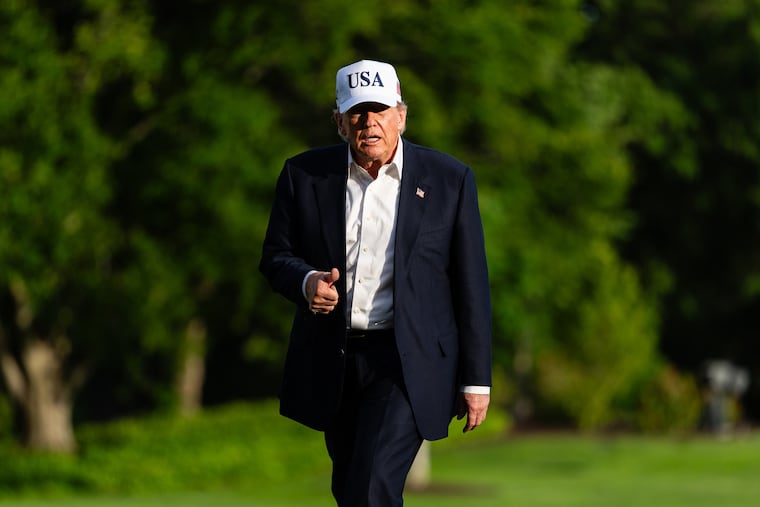
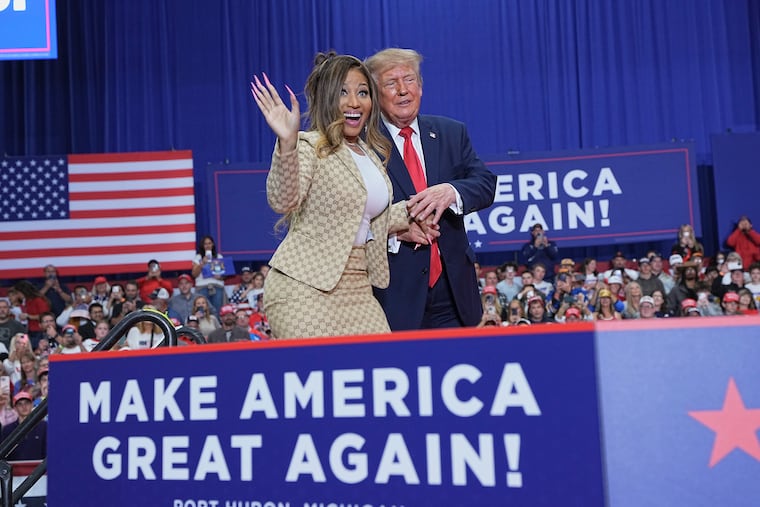
WASHINGTON — President Donald Trump on Thursday said he had decided to postpone signing a highly anticipated AI executive order, after the White House had sent out invitations to executives from leading tech companies.
“I didn’t like what I was seeing,” Trump told reporters. He said he was concerned that the order would prevent the United States from leading on the technology, which is “causing tremendous good.”
“I really thought that could have been a blocker,” Trump added. “And I want to make sure that it’s not.”
The executive order would mark a shift in the administration’s hands-off approach to AI, creating a system for the federal government to vet powerful new models before they are released publicly.
But Trump’s comments create uncertainty about how the administration will respond to a new breed of AI models, like Anthropic’s Mythos, that have been shown to be adept at finding security flaws in computer code and coming up with ways to exploit them. Some of Trump’s political supporters have sought an even more stringent, mandatory review process amid a growing backlash to AI that has divided the administration.
The White House notified companies that the event was delayed on Thursday, a day after invitations went out to executives, according to one person familiar with the matter, who spoke on the condition of anonymity to describe the communications. The White House did not immediately respond to a request for comment.
Trump has argued that AI is a critical engine of the economy, as investor optimism about its potential fuels stock market records. He also has repeatedly said that the U.S. leads China on the technology, amid growing competition between the nations.
He told reporters that he discussed safeguards for AI with Chinese President Xi Jinping during his trip to China last week.
The White House had invited executives from major AI labs to the event — including Anthropic CEO Dario Amodei, who had feuded with the Trump administration this year over limitations on the Pentagon’s use of Anthropic’s software. Many of the executives who were invited are based in California and had little advance notice to plan travel to Washington.
Under the planned order, companies would voluntarily provide the government with an early look at frontier AI systems — up to 90 days before public release — so agencies could test the models for dangerous capabilities, identify vulnerabilities, and prepare defenses before hackers or foreign adversaries could exploit them, according to a summary of the planned order and two people briefed on the plans.
Matt Pearl, a former official in President Joe Biden’s administration who handled emerging technologies, said the draft signaled that the administration is taking AI threats “much more seriously than they were.”
“They’re providing a framework by which the U.S. government is going to more robustly review AI models,” he said.
The government would like to gain access to the AI models up to 90 days before they are released to the public. But some White House officials and companies have resisted agreeing to a timeline that could slow the release of the technology, said two people briefed on the plans, who spoke on the condition of anonymity to describe the fluid discussions.
Some details of the plan were still under discussion Wednesday, but companies were expected to commit to give the government a roughly two-week advance look at the models, one person said.
The draft order also would elevate the intelligence community’s role in assessing AI systems. The National Security Agency would play a key part in determining which new models would need government scrutiny, according to the summary. The administration envisions the Treasury Department working with the AI industry to serve as a hub for finding vulnerabilities and distributing fixes.
The order was also expected to direct the government to surge hiring of cybersecurity and AI professionals in the wake of significant cuts to the Cybersecurity and Infrastructure Security Agency, whose mission is to help safeguard the nation’s critical infrastructure against growing cyberthreats.
A surge in cybersecurity hiring would provide “a Band-Aid on a self-inflicted hemorrhage,” Pearl said.
“It will — at most — partially address the attrition that key agencies experience following cuts and losing staff due to morale issues,” Pearl said. “That said, it does demonstrate that the administration now recognizes that having a skilled workforce in this area is critical.”
Trump’s return to the White House was heavily funded by tech industry leaders who argued that the Biden administration’s approach to AI regulation was too heavy-handed. In his early weeks in office, Trump overturned the Biden administration’s landmark AI executive order, which required tech companies to notify the government when they were building advanced models and share their safety evaluations with the Commerce Department.
The drafting of the new order caused a split within the Trump administration as some officials sought to hand more responsibility for overseeing AI to intelligence agencies and sideline an institute focused on the technology housed in the Commerce Department. At the same time, a senior adviser to the president raised alarms in the tech industry when he described the plans as akin to how the Food and Drug Administration oversees new medicines, prompting fears that it would result in burdensome regulation.
The White House briefed representatives this week from Anthropic, OpenAI, Google, xAI, and industry trade groups on the contents of the executive order.
Anthropic announced in early April that it would not release its new Mythos model to the public because of the risks it would pose if hackers used it. Instead Anthropic partnered with major companies so they could use the technology to fix their systems. Rival lab OpenAI soon announced that its latest model had similarly powerful capabilities.
The tools can identify long-overlooked security holes, and reviews by the British government have found they are able to carry out the kind of attacks previously limited to experienced hackers.
But the people whose job it is to write software and protect computer networks can also make use of the same abilities to patch systems, and some experts think they will ultimately come out on top.
While the latest models have raised potential cybersecurity risks, experts predict that AI is going to continue rapidly gaining power.
Helen Toner, interim director of Georgetown University’s Center for Security and Emerging Technology, said the government should be building its own technical expertise now in preparation.
“That would be a more strategic approach,” said Toner, a former OpenAI board member. “You need an approach that can be flexible and adapt to how these systems are changing.”