Trump, seeking executive power over elections, is urged to declare emergency
Activists who say they are in coordination with the White House are circulating a draft executive order that would unlock extraordinary presidential power over voting.
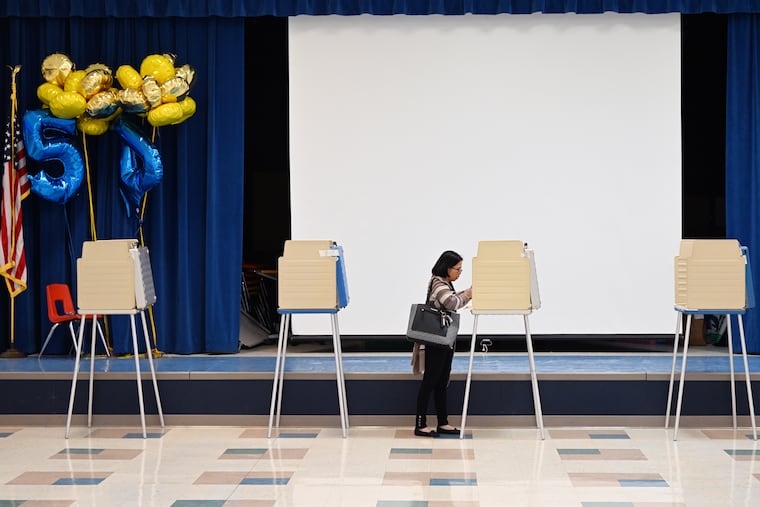
Pro-Trump activists who say they are in coordination with the White House are circulating a 17-page draft executive order that claims China interfered in the 2020 election as a basis to declare a national emergency that would unlock extraordinary presidential power over voting.
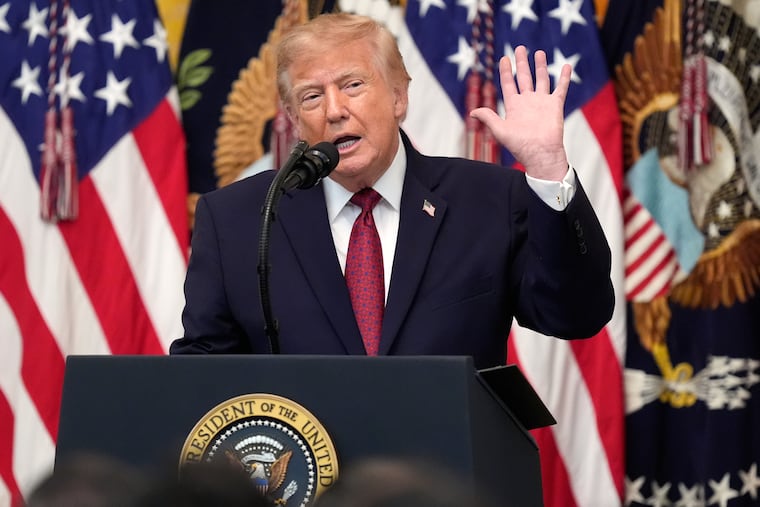
President Donald Trump has repeatedly previewed a plan to mandate voter ID and ban mail ballots in November’s midterm elections, and the activists expect their draft will figure into Trump’s promised executive order on the issue. The White House declined to elaborate on Trump’s plans.
“Under the Constitution, it’s the legislatures and states that really control how a state conducts its elections, and the president doesn’t have any power to do that,” said Peter Ticktin, a Florida lawyer who is advocating for the draft executive order. Ticktin attended the New York Military Academy with Trump and was part of his legal team that filed an unsuccessful 2022 lawsuit accusing Democrats of conspiring to damage him with allegations that his 2016 campaign colluded with Russia.
“But here we have a situation where the president is aware that there are foreign interests that are interfering in our election processes,” Ticktin went on. “That causes a national emergency where the president has to be able to deal with it.”
The emergency would empower the president to ban mail ballots and voting machines as the vectors of foreign interference, Ticktin argued.
The idea of claiming emergency executive powers based on allegations of foreign interference attaches new significance to the administration’s actions to reinvestigate the 2020 election. Trump has never accepted defeat, while never finding evidence of widespread fraud. Director of National Intelligence Tulsi Gabbard is leading a review of election security that officials said focuses on foreign influence.
A 2021 intelligence review concluded that China considered efforts to influence the election but did not go through with them.
Ticktin said he’s had “certain coordination” with White House officials but declined to specify, citing safety concerns. But his input has successfully led to a presidential action before. Ticktin represents Tina Peters, a former Colorado county clerk imprisoned on state charges arising from breaking into voting equipment, whom Trump said he pardoned in December. (The presidential pardon did not free Peters from her nine-year prison term because the president has no power over state crimes.)
A White House official said the staff is regularly in communication with a variety of outside advocates who want to share their policy ideas with the president, but any speculation about his actions or announcements is just speculation.
“I have searched the depths of Legal Arguments not yet articulated or vetted on this subject, and will be presenting an irrefutable one in the very near future,” Trump said on social media Feb. 13. “I will be presenting them shortly, in the form of an Executive Order,” he added the same day.
Trump is pressuring Republicans to pass legislation to require proof of citizenship for voter registration and ID to cast ballots. The measure, called the Save America Act, passed the House but faces obstacles in the Senate, where Republican leaders have rejected Trump’s demand to change the chamber’s rules to move the legislation forward.
“President Trump is committed to ensuring that Americans have full confidence in the administration of elections, and that includes totally accurate and up-to-date voter rolls free of errors and unlawfully registered non-citizen voters,” White House spokeswoman Abigail Jackson said. “The President has urged Congress to pass the SAVE Act and other legislative proposals that would establish a uniform standard of photo ID for voting, prohibit no-excuse mail-in voting, and end the practice of ballot harvesting.”
Trump has said that if the bill fails, he will act unilaterally to impose the changes for the midterms. What that executive order could look like and the draft circulating among activists have not been previously reported.
An early version of the proposed draft, obtained by the Washington Post, cites a 2018 executive order that declared an emergency to impose sanctions on foreign entities targeting election infrastructure. President Joe Biden repeatedly extended that emergency, and in 2024, the Treasury Department used the order to place Iranian and Russian entities under sanctions.
“There is now clear and compelling evidence from court cases and forensic analysis that these threats have not been mitigated but instead have intensified,” reads the proposed draft, dated April 2025. “This constitutes an unusual and extraordinary threat to the national security and foreign policy of the United States.”
Last June, Senate Judiciary Committee Chairman Chuck Grassley (R., Iowa) released FBI records showing an initial tip alleging a Chinese effort to produce fraudulent driver’s licenses for mail ballots. Suspicions of Chinese ballots spurred the hunt for bamboo fibers in Arizona ballots during a Republican-led audit in 2021, which reaffirmed Joe Biden’s victory in the state.
Gabbard recently was present when the FBI searched a warehouse in Fulton County, Georgia, to seize ballots from the 2020 election there. The affidavit submitted to obtain the search warrant, however, did not allege foreign interference. Her office also examined voting machines used in Puerto Rico looking for cybersecurity vulnerabilities, in coordination with the FBI and the Departments of Justice and Homeland Security, according to a spokesperson for the Office of the Director of National Intelligence. That inquiry was first reported by Reuters.
“The stage is largely being set by the revelations coming out of foreign powers being involved in influencing the 2020 election,” said Jerome Corsi, who circulated the draft executive order in July. Corsi helped spread the “birtherism” smear against Barack Obama and a conspiracy theory involving slain Democratic staffer Seth Rich, for which he later apologized. Special counsel Robert S. Mueller III investigated Corsi as a possible link between WikiLeaks and Roger Stone during the 2016 campaign, which Corsi denied.
“If there was a provable foreign intrusion, that would be a national security emergency and the order could be issued under his powers as commander in chief,” Corsi added.
Sen. Mark R. Warner of Virginia, the top Democrat on the Senate Intelligence Committee, said there is no national emergency.
“We’ve been raising the alarm for weeks about President Trump’s attacks on our elections and now we’re seeing reports that outline how they may be planning to do it,” Warner said in a statement in response to this article. “This is a plot to interfere with the will of voters and undermine both the rule of law and public confidence in our elections.”
The measures listed in the 2025 draft of the proposed executive order include requiring hand-marked and hand-counted paper ballots, requiring voters to register anew for the 2026 midterms with proof of citizenship, and restricting mail ballots to limited circumstances. The draft also proposes authorizing the Justice Department, U.S. Citizen and Immigration Services, the Social Security Administration, and the Postal Service to have a role in identifying ineligible voters.
The draft cites emergency authority from laws including the National Emergencies Act of 1976, the Federal Information Security Modernization Act of 2014 and the Defense Production Act of 1950.
Article I, Section 4 of the Constitution assigns power to regulate elections to state legislatures and Congress, with no role for the president. A presidential emergency on elections has never been tested in court.
Trump also signed an executive order last March to require proof of citizenship on voter registration forms and withhold funding from states accepting mail ballots after Election Day. Courts in five cases blocked parts of the order, with three of them pending appeal and another awaiting a ruling, according to a litigation tracker compiled by the legal website Just Security.
“The conduct of our elections is not for any president to decide. And it must never be manipulated to serve a political agenda,” the League of Women Voters, which brought one of the lawsuits against the 2025 order, said in a statement. “We will challenge any executive action that suppresses voters, undermines free and fair elections, or violates the constitutional framework that protects our democracy.”
A Washington Post-ABC News-Ipsos poll this month found 54% of American adults, and 55% of independents, oppose Trump’s stated desire for the federal government to take over election administration and vote-counting in certain states. Twenty-three percent of adults said they supported it, and the same proportion said they had no opinion.