Pentagon moves to cut U.S. participation in some NATO advisory groups
The planned exit marks the Trump administration’s latest move to scale back Washington’s military investment in Europe’s defense.
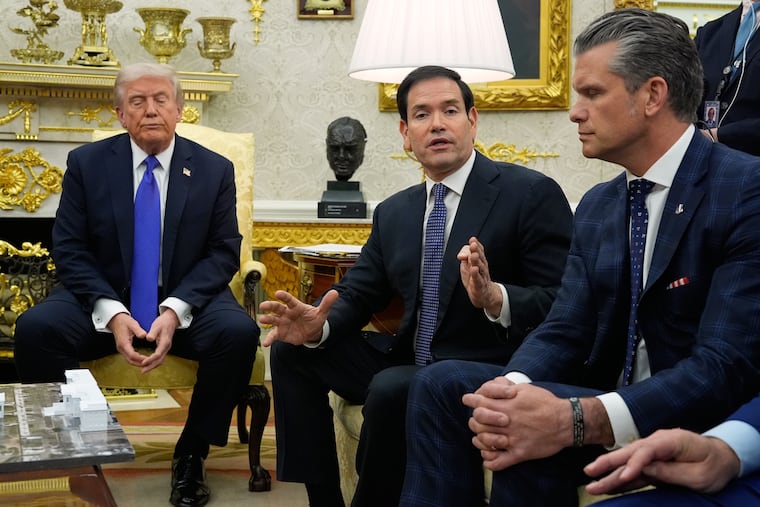
The Pentagon plans to cut its participation in a range of NATO advisory groups, the latest sign of the Trump administration’s drive to scale back the U.S. military presence in Europe, according to multiple officials familiar with the matter.
The impending move affects about 200 military personnel and will mostly diminish U.S. involvement in the alliance’s 30 Centers of Excellence, which seek to train NATO forces on key elements of warfare such as naval combat, these people said. They spoke on the condition of anonymity to detail the U.S. administration’s plans.
Rather than withdraw all at once, the Pentagon intends not to replace personnel as their postings end, a process that could take years, according to one U.S. official familiar with the matter. U.S. participation in the centers isn’t ending altogether, two officials noted.
The move has been under consideration for months, according to two U.S. officials, one of whom said it is unrelated to President Donald Trump’s escalating threats to seize the Danish territory of Greenland. Trump’s provocations have drawn widespread condemnation from European leaders and many lawmakers in Congress, who fear the president risks causing irreparable and unnecessary damage to the NATO alliance.
Spokespeople for the Pentagon and nor NATO did not immediately respond to requests for comment.
Under Trump, the U.S. military has pulled back from Europe as the administration presses allies there to take greater control of the continent’s collective defense. Last year, for instance, the Pentagon abruptly announced it would withdraw a brigade of troops from Romania and cut security aid programs to the three Baltic nations that border Russia, whose yearslong invasion of Ukraine has spurred fears of a direct conflict between NATO and the Kremlin.
Under pressure from the Trump administration, the alliance agreed last summer to surge defense spending to 5% of GDP over the next 10 years, including 1.5% dedicated to infrastructure and other civilian projects.
Lawmakers — including some key Republicans — objected to the administration’s moves in Europe and are working to fund the impacted security assistance programs despite the Pentagon’s directives.
Members of Congress also have passed legislation that requires the Pentagon to consult with them before making any major reductions to U.S. military posture in Europe. The law specifies that requirement would apply only if the overall U.S. force posture in Europe were to fall below 76,000. It stands at roughly 80,000 now.
While the personnel eventually being withdrawn amount to a small share of troops the United States stations in Europe, some current and former officials said the U.S. pullout could have an outsize impact on the alliance by reducing valuable American military expertise.
“We have a lot of operational experience that some of our personnel contribute to these centers,” said Lauren Speranza, a senior Pentagon official during the Biden administration. “There would be a bit of a brain drain that would come with pulling U.S. personnel out.”