Trump withdraws nominee to lead national parks as peak tourist season nears
The park service is at low staffing levels following the administration's efforts to shrink the federal government.
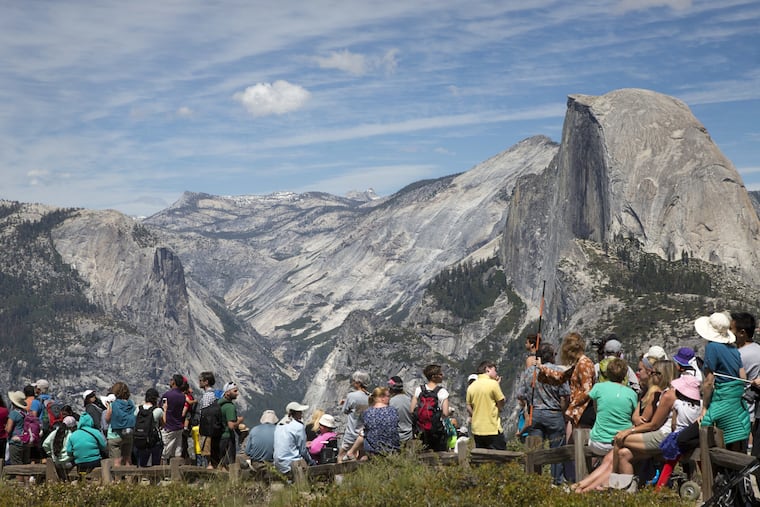
President Donald Trump has withdrawn his nominee for the head of the National Park Service, as the agency heads into peak tourist season without a chief and amid low staffing levels following the administration’s efforts to shrink the federal government.
The White House announced the decision on its website Monday. The Interior Department, which oversees the Park Service, and the White House did not respond to questions on why the administration withdrew Scott Socha, a tourism executive, from consideration.
A White House official and another person familiar with the matter, both of whom spoke on the condition of anonymity because of the sensitivity of the matter, said Socha decided to withdraw his own nomination rather than being asked to do so.
Socha made a “purely personal decision” as he did not want to face the financial scrutiny of the confirmation process or to sell off certain assets he held, according to the person familiar with the matter. There were no red flags, and the administration otherwise still had confidence to move ahead with his nomination, the person said.
Socha did not respond to a request for comment via social media.
The administration has cut a quarter of the Park Service staff, or about 4,000 people, since Trump took office, according to the National Parks Conservation Association, an advocacy group. Trump’s budget proposal for 2027 calls for cutting the agency’s budget by an additional 25%.
“It’s very unfortunate that our parks have gone more than a year without a permanent director at a time when they need strong, steady leadership the most,” Emily Douce, acting vice president of government affairs for the NPCA, said in a statement. “The next Park Service Director must undo the damage done to our parks and staff.”
Socha had worked for Delaware North, a food and hospitality company, for 27 years and had no government experience. Delaware North has government contracts to run certain operations at parks, such as the retail and food services at Yellowstone National Park.
“We’ve said all along that Scott Socha was deeply unqualified to run the National Park Service,” said Aaron Weiss, deputy director for the Center for Western Priorities, a conservation group, in a statement. “Our parks deserve far better than someone who spent his entire career trying to privatize them.”
Staffing at the National Park Service had already been declining gradually since 2010. Then, under Trump, the U.S. DOGE Service instituted more drastic cuts by eliminating probationary employees, offering voluntary layoffs, and encouraging early retirement.
Early last year, lower staffing levels at parks led to long lines, while some campgrounds, visitors centers, and trails were temporarily closed. Washington Post reporters who visited iconic national parks last summer found subtle changes, such as fewer ranger tours and reports of empty entrance booths and closed bathrooms.
Advocacy groups fear that this year could be worse given that the Park Service is also eliminating a reservation system previously instituted to reduce crowding at some of the most popular parks, including Yosemite National Park, Glacier National Park, Arches National Park, and Rocky Mountain National Park.
The agency said when it announced the change in February that it was aimed to expand public access to the parks.
The Park Service has also faced backlash over a campaign to remove information that Trump officials say disparages historic Americans. The administration has ordered the removal of displays that discuss slavery, persecution of Native Americans, historic ecological destruction, and climate change. Advocacy groups have sued to challenge the policy.
At Philadelphia’s Independence National Historical Park in January, for example, the agency removed displays at the President’s House that discussed George Washington’s ownership of enslaved people and the broader history of the slave trade. That display was partially restored under a judge’s ruling, but the work was halted by an appeals court while the case is being considered.
Interior Department officials did not respond to questions on staffing and the removals campaign.
Gerry James, deputy director for the Sierra Club’s advocacy campaign to expand outdoor access, said in a statement that Socha’s withdrawal “is an opportunity to reset.”
“That means restoring staffing and capacity, rejecting the whitewashing of history, protecting the full and complex stories of our public lands, strengthening infrastructure and visitor experiences, and ensuring these places are accessible and welcoming to all,” James said.