Tight N.J. governor’s race attracts record out-of-state spending
Mikie Sherrill, Jack Ciattarelli and primary candidates have spent nearly $200 million as the race for New Jersey governor enters its final weeks.

The New Jersey governor race is set to surpass $200 million in spending for the first time as both parties see control over the state in play.
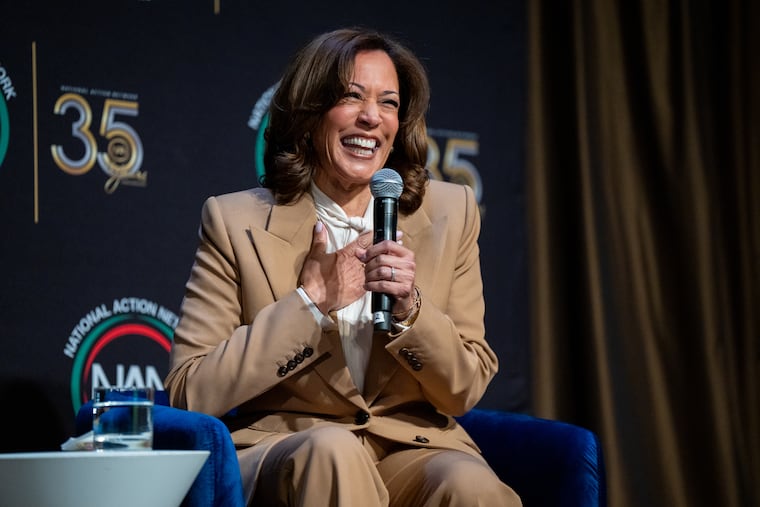
U.S. Rep. Mikie Sherrill, the Democratic nominee, has carried a single-digit lead over Republican Jack Ciattarelli in the polls. She also has a small edge in fundraising in the race, which has drawn national attention and investment.
Nearly $47 million has been spent in the general election so far, with a month left to go. That follows an unprecedented $145 million spent in the primary, according to the New Jersey Election Law Enforcement Commission.
Sherrill has raised more and spent less than Ciattarelli, but independent expenditure committees have spent more in support of Sherrill. As of Oct. 3, Sherrill reported having more than $6.5 million cash on hand, while Ciattarelli reported just under $4 million.
Both candidates will continue to fundraise ahead of the Nov. 4 election.
Sherrill’s campaign raised nearly $7.8 million in private funds, and Ciattarelli’s campaign raised nearly $6.9 million. Their actual fundraising numbers are currently more than $9.6 million higher, thanks to the state’s public-financing program.
At least $42 million has been raised between the two campaigns and the constellation of outside spending groups backing them, with Democratic groups having narrowly outraised the Republicans through Oct. 3.
National eyes — and money — on the race
New Jersey is only one of two states with a race for governor this year — along with Virginia — and people are watching from across the nation.
The biggest spender on the Democratic side, by far, is the Democratic Governors Association, which reported contributing $9.95 million to its super PAC. The group announced in July that it was reserving more than $20 million in ads for the race.
Similarly, the biggest Republican donor is the Republican Governors Association, which contributed $6.25 million to its super PAC.
Also among the highest Republican donors is Change NJ, a super PAC run by former advisers to President Donald Trump, including Kellyanne Conway. Change NJ contributed $1.25 million to the RGA’s PAC. The group took in $1.62 million from Kitchen Table Conservatives, which was the same group under a different moniker for the primary.
Sherrill leads in small-dollar — and out-of-state — donations
Campaigns must disclose the identities of only those donors who cumulatively contribute more than $200. Among those, a significantly larger share of Sherrill’s contributions have come from out-of-state donors than have Ciattarelli’s.
The vast majority — 80% — of Ciattarelli’s campaign donations are from New Jersey. Sherrill garnered 56% of her campaign contributions from in-state donors, and the rest came from out of state.
Eric Arpert, Ciattarelli’s campaign manager, used the opportunity to repeat one of the campaign’s favorite lines — that Sherrill isn’t originally from New Jersey, as Ciattarelli is.
“It’s no surprise, Jack Ciattarelli is the only candidate for governor who is from New Jersey, and the only candidate who understands New Jersey, the problems we face, and the only candidate who has solutions to fix them,” Arpert said.
Sherrill was born in Virginia but has lived in New Jersey since 2010.
Sherrill argues that she ran a grassroots campaign, as she raised more money than Ciattarelli from small-dollar donors who gave $200 or less.
She raised more than $990,000 from these donors, accounting for about 13% of her total fundraising. That’s more than double the $420,000 Ciattarelli pulled in from small-dollar donors, accounting for about 6% of his total contributions.
“Mikie’s grassroots campaign, unlike Jack’s, is fueled by New Jerseyans chipping in a few dollars at a time, and it’s why she’s outraising him by nearly a million dollars,” said Sherrill campaign spokesperson Carly Jones.
Sherrill’s campaign also received a little more of her campaign contributions from individuals rather than PACs, businesses, and unions. For her, 90% of her campaign donations were from individuals, while that number was 84% for Ciattarelli.
Both campaigns received just over a third of their total money from people who maxed out the contribution limit of $5,800.
Sherrill leads in labor support, but some unions back Ciattarrelli
While the vast majority of unions that gave money donated to Democrats, two unions each gave six-figure donations to a Republican super PAC.
Unions are often a reliable source of support for Democratic candidates, and Sherrill received endorsements from 32 unions representing a range of workers, from actors and teachers to firefighters, carpenters, and healthcare workers.
Jennifer S. Higgins, president of the American Federation of Teachers’ New Jersey chapter, said her union supports Sherrill because “we need a governor that does not disparage the work that our members do,” pointing to Ciattarelli’s arguments that New Jersey schools are failing. (U.S. News & World Report ranked New Jersey schools as best in the nation earlier this year.)
An AFT super PAC was one of the top donors on the Democratic side, contributing $500,000 to the Democratic Governors Association-backed super PAC.
The Laborers’ International Union of North America contributed even more, donating a total of $1.5 million to the DGA’s PAC through two political committees. LIUNA endorsed Sherrill in August 2024, even before she announced that she was running.
Robert Lewandowski, a spokesperson for LIUNA, cited Sherrill’s “100% lifetime rating from the AFL-CIO” and her work to secure funding for the Gateway Program to connect New York and New Jersey under the Hudson River — which saw its federal funding put on hold by Trump. Sherrill has said she will sue the Trump administration to get the funding.
“Mikie has shown up on our worksites and our training centers,” Lewandowski said. “She has sat down with our leadership and our members to better understand the issues that matter. ”
But Ciattarelli’s campaign pocketed endorsements from four unions representing police, bricklayers, operating engineers, and retired emergency responders. Two of those unions, the Operating Engineers Local 825 and the Bricklayers and Allied Craftworkers Union of New Jersey, were among the top Republican donors.
Ciattarelli’s union support mirrors a national trend in which labor groups are starting to shift away from endorsing only Democratic candidates in response to Trump’s ability to garner support from working-class voters.
The operating engineers union gave $250,000 to a pro-Ciattarelli super PAC in September, and the bricklayers union gave $100,000 to the same PAC that same month.
Greg Lalevee, the business manager of the operating engineers union, whose members often work on large-scale construction projects like electric plants, roads, airports, and ports, cited Ciattarelli’s support for streamlining New Jersey’s permitting process and cutting down on red tape.
“We work on construction projects,” Lalevee said. “That’s how we make a living.”
Both campaigns are set to receive the most public funds possible
New Jersey has provided public matching funds to gubernatorial candidates since 1977.
Sherrill and Ciattarelli both surpassed the $6.4 million fundraising threshold to qualify for the maximum public matching funds of $12.5 million. (Their contributions are matched 2:1 after the first $185,000 raised.)
Sherrill has received more of her disbursements from the program than Ciattarelli has, but they are both on track to max out the public funds.
As part of this program, campaigns are limited to spending $18.5 million for most expenses. However, they can use money raised beyond that for specific expenses like compliance with public financing laws, travel, and election night parties.