Delaware County is poised to become the first collar county to adopt an ordinance protecting LGBTQ residents from discrimination
Delaware County is poised to become the first of Philadelphia’s collar counties to ban discrimination on the basis of sexual orientation and gender identity.

Delaware County is poised to become the first of Philadelphia’s collar counties to ban discrimination on the basis of sexual orientation and gender identity.
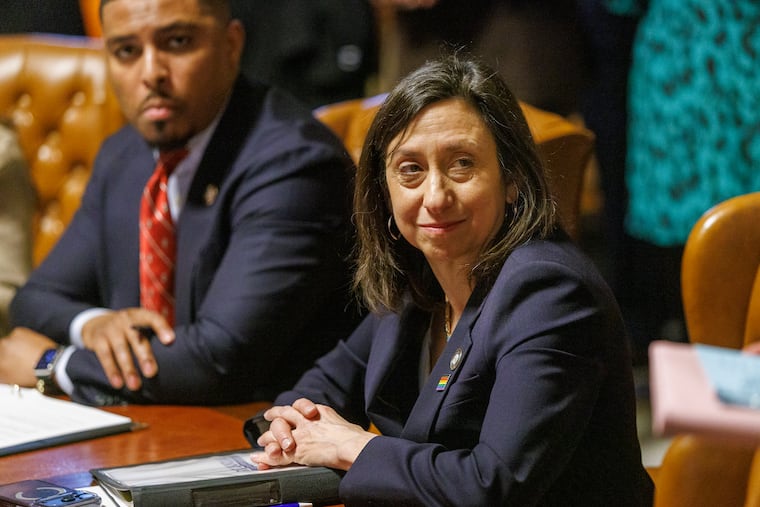
Council Chair Monica Taylor said she hopes the county’s all-Democratic council will vote next month on an ordinance codifying a comprehensive nondiscrimination policy for the county and establishing a human relations commission to enforce it.
The ordinance, which was introduced Wednesday, expands on work the council began earlier this summer to protect LGBTQ residents as President Donald Trump targets the transgender community. The council passed a resolution in June declaring Delaware County a safe haven for transgender people and gender-affirming care.
“When we have an opportunity to protect [our residents] from discrimination, whether it’s in education or housing, we should be taking that opportunity,” Taylor said.
At least 78 local governments across Pennsylvania, including Philadelphia, have enacted nondiscrimination ordinances, according to the Pennsylvania Youth Congress, which advocates for LGBTQ youth. While Delaware County would be the first of Philly’s collar counties to enact such a policy, several townships and boroughs within the suburbs have already taken this step on their own. At the county level, Lehigh and Allegheny Counties have approved similar ordinances.
If approved, the ordinance would place a sweeping ban on discrimination in housing, employment, healthcare, education, and public housing for a broad set of reasons, including race, religion, sex, disability status, education, and LGBTQ identity.
The ban expands upon discrimination already prohibited by state law to protect against discrimination on the basis of sexual orientation, gender identity, and gender expression.
Linda Embry, a Wallingford mother of an adult transgender woman, said parents of transgender individuals are facing an immense amount of fear for their children. When her daughter presented as a man, Embry said, she was able to fly under the radar and face little discrimination. All that changed, she said, when her daughter began to live authentically.
“Now, as she walks through the street as a transgender woman, the amount of oppression she has to absorb is painful,” Embry said.
Joe Finio, a Marple resident, complained that the council was too focused on “social issues” rather than financial problems facing the county — Delaware County raised taxes 23% last year in response to budget shortfalls.
In response, Councilmember Christine Reuther argued that much of the county’s budget is spent on social issues like mental health, child abuse, trauma from bullying, and crime victimization. LGBTQ Americans face disproportionately high levels of mental health struggles, according to the American Psychiatric Association.
“There are people who have differences in the way they live their lives and how they’re seen that need to be addressed because they are facing challenges that most people, cisgender people, don’t face,” she said, arguing that the commission would help address the social problems to which the county is already devoting resources.
Commission for enforcement
Under the proposed ordinance, individuals who face discrimination in the county could file a complaint to a newly established Delaware County Human Relations Commission, which will review and have power to investigate complaints. After receiving a response from the entity accused of discrimination, the commission will have the power to hold hearings, make a determination, and mediate the dispute or order a remedy, including a $500 fine.
Michael Straw, the chair of the Media Republican Party, told council members Wednesday night that, as a gay man, he supported the nondiscrimination ordinance. But he asked if the nondiscrimination ordinance could be passed without the commission because of the cost running the commission could create for county government.
“It’s an expense at the moment that I don’t know that we can necessarily afford,” he said. Later in the meeting county staff argued that the ordinance would be unenforceable without the commission.
Without further study, the commission might not receive unanimous support from the board.
Reuther and Councilmember Elaine Schaefer said some changes to the final policy may be necessary. Schaefer called specifically for more study regarding the costs of the commission and potential for abuse. While she supports the concept, Schaefer said, she is not ready to support the policy without that research, which she said could not be completed by the time Taylor hopes to bring the ordinance for a vote next month.
“I’m very anxious to address these issues and to support a structure that would get to the aims that we’re trying to get to,” she said.