Doug Mastriano wouldn’t say if he believes all American leaders should be Christian as he’s vetted for an ambassadorship
The Pennsylvania lawmaker and Trump ally faced a contentious confirmation hearing on his nomination to become ambassador to Slovakia.
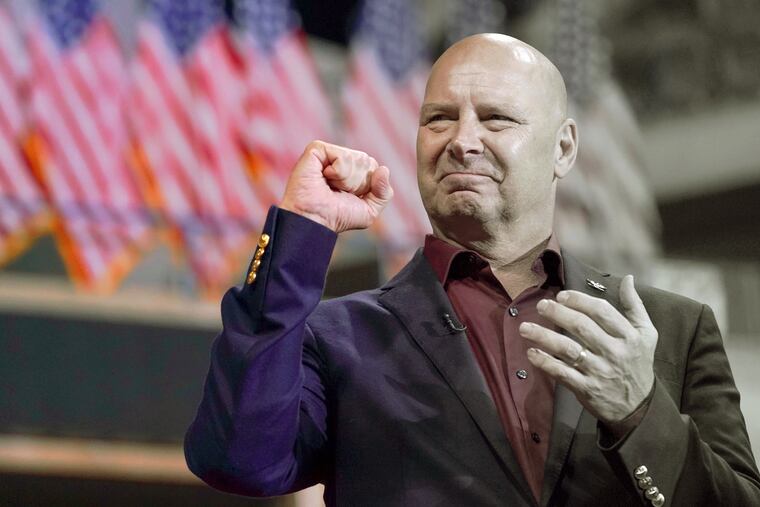
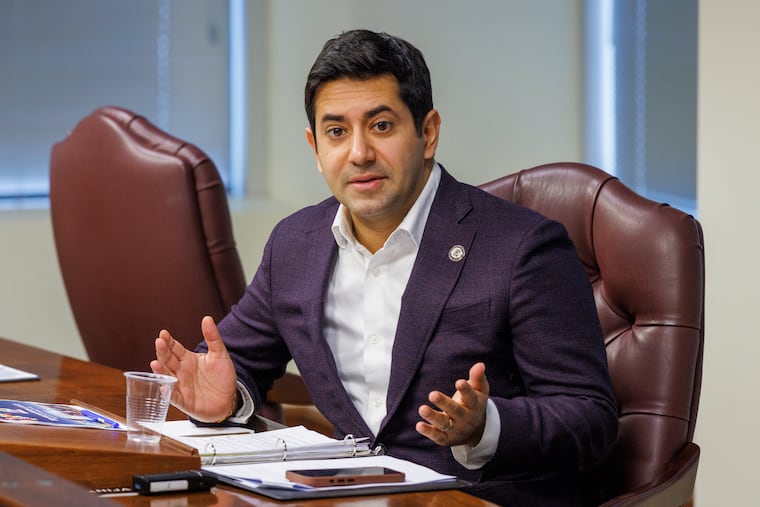
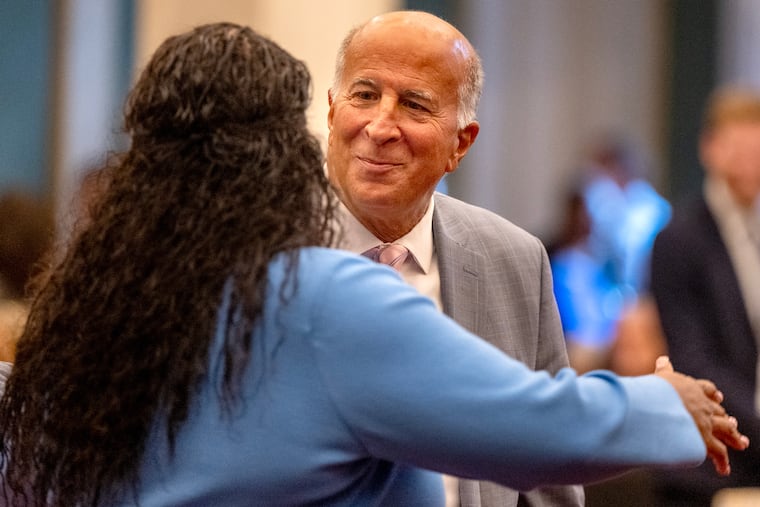
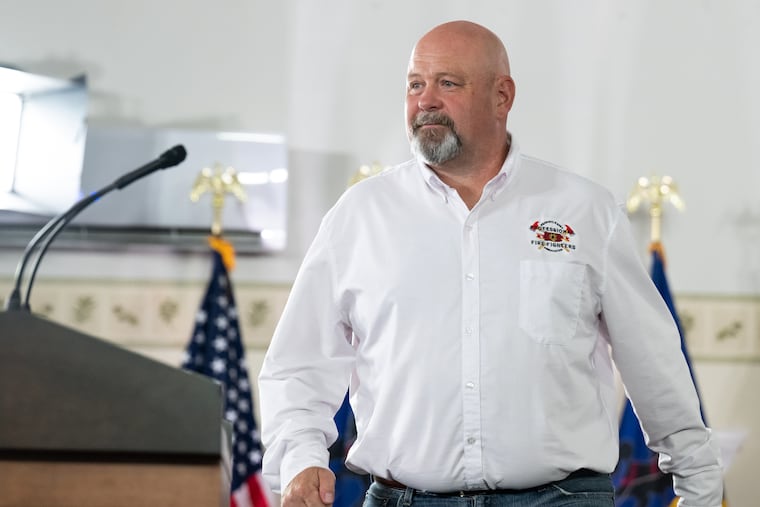
WASHINGTON — Doug Mastriano, the far-right Pennsylvania lawmaker whom President Donald Trump nominated to become the U.S. ambassador to Slovakia, refused to tell senators during his confirmation hearing on Thursday whether he believes all American political leaders should be Christian.
A key Trump ally during the president’s attempt to overturn the 2020 election, Mastriano also rejected claims that he is a conspiracy theorist who assisted in the Jan. 6, 2021, attack on the U.S. Capitol.
And while he said he regretted some of his past statements about the Holocaust and his associations with individuals considered antisemitic, he repeatedly pushed back on Democratic senators’ concerns about his fitness for the role.
“I’ve never been involved in conspiracies,” he said during a heated exchange with U.S. Sen. Tim Kaine (D., Va.), who at different points referred to Mastriano as “gullible” and someone who needs to “look in the mirror a little bit.”
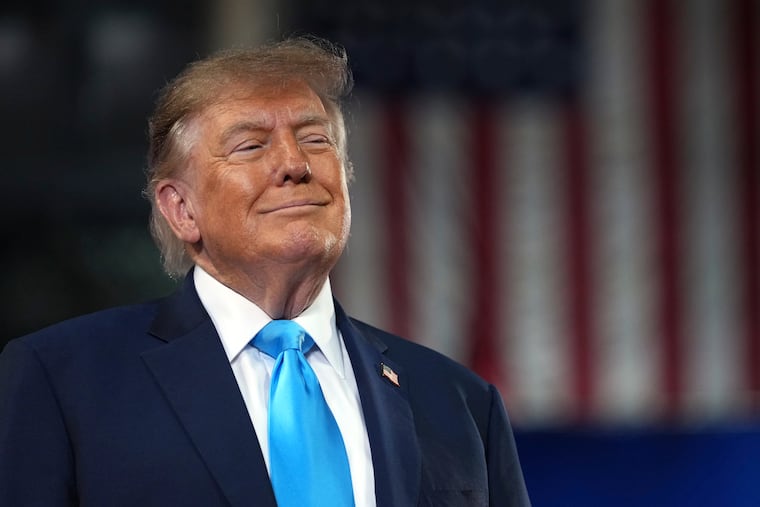
Trump nominated Mastriano for the ambassadorship in May.
The Republican state senator from Franklin County is a retired U.S. Army colonel who deployed three times to Afghanistan after 9/11 and previously served in Eastern Europe.
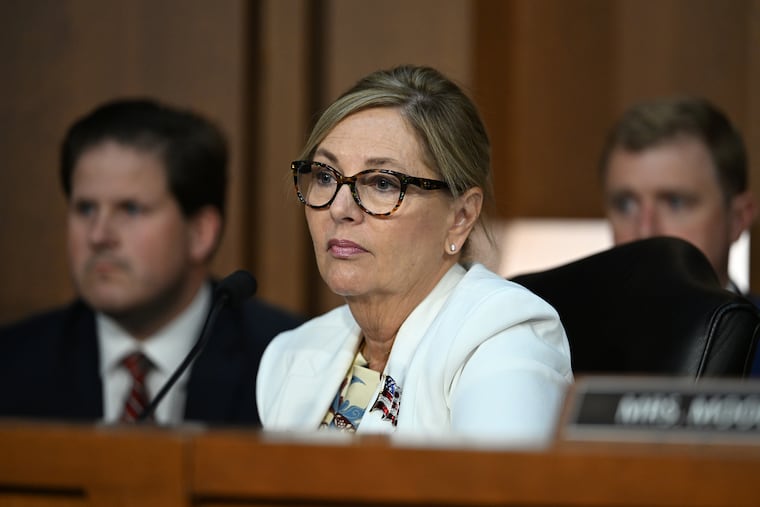
He was the Republican nominee for Pennsylvania governor in 2022 with Trump’s backing, but he lost to Democrat Josh Shapiro by nearly 15 percentage points. Mastriano’s nomination for the ambassadorship came as his supporters were promoting him as a write-in candidate for governor ahead of the May Republican primary, in which Treasurer Stacy Garrity was unopposed.
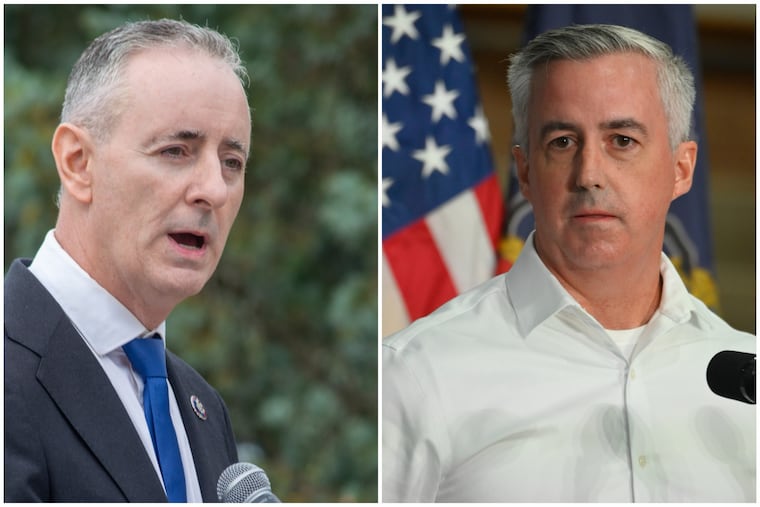
U.S. Sen. Dave McCormick (R., Pa.), who pushed for Mastriano’s nomination and chaired his confirmation hearing during the Senate Foreign Relations Committee hearing Thursday, said Mastriano’s military career made him “highly qualified” for the role.
“This position needs a leader with strategic judgment, intimate knowledge of NATO’s inner workings, and firsthand experience working alongside our allies with an unwavering commitment to advancing America’s interest,” McCormick said during the hearing. “Doug brings that experience, and I’m confident that he’ll represent the United States with great professionalism and integrity.”
Mastriano also leaned on his experience, which he said involved planning operations in the Baltic states and fending off Russian aggression. He said he hoped to strengthen America’s relationship with Slovakia and encourage the country to contribute to Ukraine’s defense.
But Democrats on the committee said they had serious concerns about both Mastriano’s past comments on foreign policy and a range of other issues — including an ideology that has been described as Christian nationalist.
U.S. Sen. Jacky Rosen (D., Nev.) said Mastriano had spoken often about his Christian identity and his belief that the separation of church and state is a “myth.” Rosen, who is Jewish, asked Mastriano to look her in the eye and say whether all U.S. political leaders should be Christian.
Mastriano said that he believed “religious liberty applies to every American” and that it was “why our country was founded.” After Rosen said it was “deeply problematic” that he would not say America is a pluralistic nation where leaders do not need to be Christian, Mastriano responded, “I will look you in the eye and repeat even simpler language” — though he did not answer the original question.
“We are absolutely a pluralistic society and I have worked for non-Christians in the military and the government, and I’ve had them working for me,” Mastriano added.
Rosen also questioned him about previous comments comparing abortion and his loss to Shapiro in the 2022 Pennsylvania governor’s race to the Holocaust.
“There was a social media post that I would not post today,” Mastriano said, calling any comparisons to the Holocaust “unwise.”
Asked about his associations with Andrew Torba, founder of the online platform Gab, which has been used to share extremist and antisemitic views, Mastriano said he “immediately” returned a campaign donation from Torba and cut off advertising on the platform when he learned about the Gab founder’s views.
“You can denounce your past associations with antisemites. You can point to your support of Israel,” Rosen said. “But for me, I’m not sure that either excuses you or erases your record.”
U.S. Sen. Jeanne Shaheen (D., N.H.) questioned Mastriano while displaying a giant poster with his picture and a 2018 quote in which he said European Union leaders were “political, diplomatic enemies of the United States of America.”
She said staff who had interviewed him recently had also quoted him as saying he believed the European Union was a “rising rival comparable to China and that it would eventually create a standing army to challenge the United States.” Visibly frustrated during her questioning, Shaheen said that the EU should be treated as allies, not rivals, and that Mastriano “should absolutely know better.”
The most contentious exchange came between Mastriano and Kaine, who started by saying that he respected the nominee’s military service and that the nomination brought him “a real sense of sadness.”
“You’ve associated with antisemites and Holocaust deniers. You’ve associated with 9/11 conspiracy theorists. You’ve made comments about foreign leaders that are not diplomatic in quality. And you and I share a very special day in American history,” Kaine said. “We were both here on Jan. 6, 2021.”
Mastriano was Trump’s top ally in Pennsylvania as the president contested his 2020 election loss to Democrat Joe Biden. He worked both publicly and privately to contest the vote, and he was near the Capitol on the day that a mob broke in to stop the certification of the results. The Republican lawmaker was not charged with a crime related to any of those activities, which he reminded Kaine about on Thursday.
“That is incorrect,” he said as Kaine pressed and said he had been at the Capitol to overturn the results. “I was here to hear the president. I was here with my wife to hear the president of the United States speak. We didn’t do anything illegal. We came, we saw, we left.”
Asked if he would say, now, that Biden had won the election, Mastriano said only that Biden had been certified as the winner — a phrase that other Trump nominees have used in nomination hearings and that Democrats have described as a pre-negotiated script to appease a president who still stands by the fraudulent claims.
“Conspiracy theorists generally are gullible people. They might have master’s degrees and Ph.D.s, and you’ve got them,” Kaine said to Mastriano, referring to his degree in history.
“I don’t know what you’re talking about, senator,” Mastriano said, denying that he subscribes to conspiracy theories as the two talked over each other.
Kaine said Mastriano could claim, if he wanted, that he only held a public hearing on the 2020 election — an event in Gettysburg that helped spread false claims that there was widespread fraud in the election — but he could not erase his record.
“No, sir, there’s no erasing,” Mastriano said. “Facts are stubborn things.”