A new bipartisan housing law was on track to bring Pennsylvania’s home-repair program nationwide. Then Trump refused to sign the bill.
The legislation, which cleared Congress this week, includes a pilot version of a program pioneered in Pennsylvania.
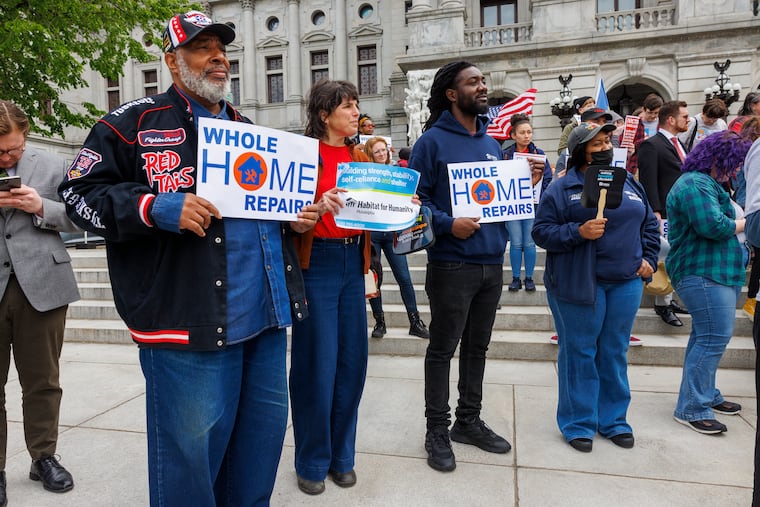
WASHINGTON — A Pennsylvania program that assists homeowners and small landlords by financing repairs was on track Wednesday to expand nationwide, after Congress this week passed a bill that both Republicans and Democrats are celebrating as the first major federal housing law in decades.
Tucked into the 374-page omnibus legislation is a pilot version of a federally backed Whole-Home Repairs program — an idea that was originally sponsored by State Sen. Nikil Saval (D., Philadelphia) and passed in Pennsylvania in 2022.
The program offers grants or loans to address safety, habitability, and efficiency concerns.
But despite wide bipartisan support for the program and dozens of other housing reforms in the larger bill, final approval was derailed on Wednesday when President Donald Trump canceled the bill-signing ceremony in an attempt to force Congress to first pass more restrictive voter-ID laws.
Democrats and some Republicans quickly rebuked the president, who still made a rare appearance on Capitol Hill to meet with Senate Republicans. The intraparty meeting turned contentious, according to multiple reports, while Democrats noted they had enough votes to overturn Trump’s veto if he holds out long enough.
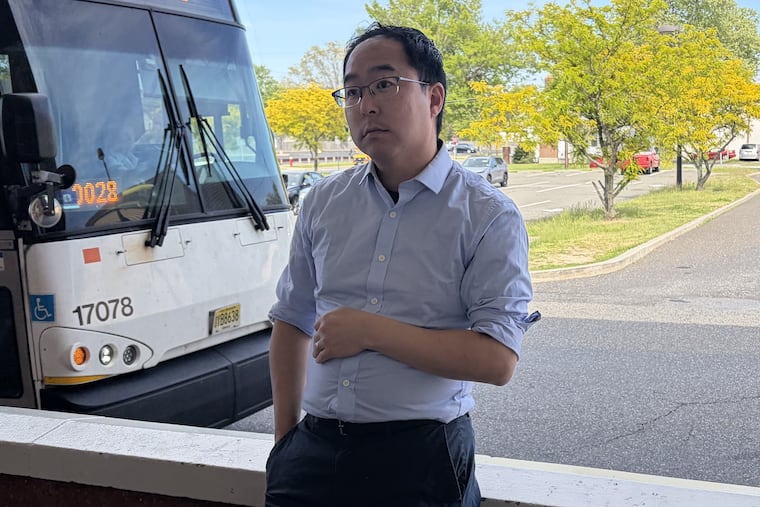
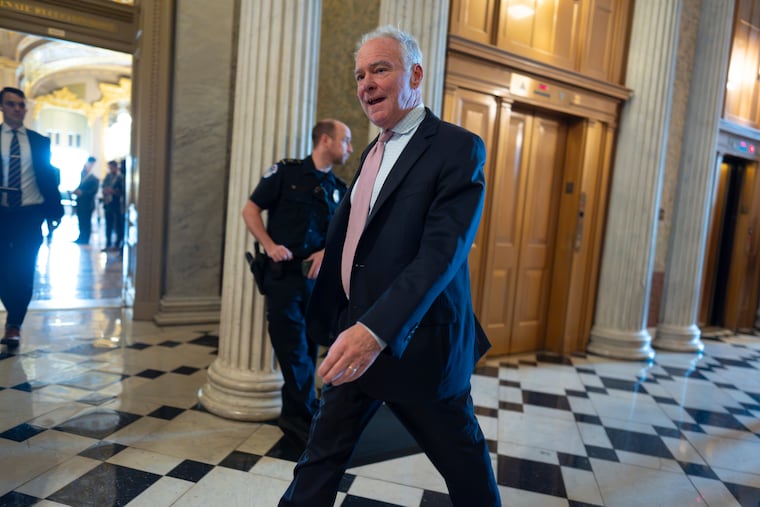
“It’s a mess,” said U.S. Sen. Andy Kim (D., N.J.). “Finally, we’re doing something that the American people want. We got bipartisanship. We worked on it forever. … Then he just parachutes in and just blows it all up here at the end.”
The 21st Century ROAD to Housing Act aims to incentivize housing construction, restrict large institutional investors from buying single-family homes, improve financial literacy, and more.
More than a year in the making, it includes a separate stand-alone Whole-Home Repairs Act that U.S. Sen. John Fetterman (D., Pa.) had introduced in each of the last two sessions of Congress. Fetterman’s bill merged last year into the larger bill while keeping many of the same provisions as the Pennsylvania-level program.
Households that earn less than 80% of the area median income are eligible for grants, while small landlords with affordable units can access loans, including forgivable loans.
Funded with more than $120 million in COVID-era federal stimulus money, the program has been limited amid high demand, with as many as 18,000 homes on the waiting list.
Saval said he expects the national version to also reflect that level of “immense demand” — particularly as the program starts small and as homeowners across the country face higher costs to maintain their residences.
“This is a huge issue. There are some 200,000 homes in Pennsylvania alone that have moderate to severe deficiencies,” Saval said. “Everyone is dealing with rising energy costs. Everyone’s dealing with the cost of materials and labor and the inability to pay for all that.”
Addressing those kinds of affordability concerns, which have become a top-of-mind political issue during this year’s high-stakes midterm elections, is a rare bipartisan effort to emerge from the U.S. Capitol.
Philadelphia-area lawmakers on both sides of the aisle had spent months advocating for the bill.
U.S. Sens. Dave McCormick (R., Pa.) and Lisa Blunt Rochester (D., Del.) — members of the Senate committee that advanced the legislation — both celebrated the final passage by talking about its impacts on affordability and “cutting red tape.” Kim called it a “historic” move to bring costs down.
“This package comes at a critical moment,” Blunt Rochester said in a statement, noting a nationwide housing shortage of as many as 7 million units. Five bills she separately sponsored — to accelerate building, increase investment in community development projects, develop zoning and land-use policies, and more — were featured in the final law.
The Whole-Home Repairs provision of the legislation was not a guarantee as negotiations developed over the last year. House Republicans were generally skeptical of creating a new government program, and specifically critical of the policy’s tenant protections, according to a source familiar with the negotiations. But their counterparts in the Senate, and Democrats in both chambers, helped keep it in the larger bill.
Fetterman said in a statement that Whole-Home Repairs “ensures families can stay in their homes” and that passing it had been a priority since he entered the Senate in 2023.
“I’ve consistently maintained that our housing crisis needs real solutions that help address the problems at the center,” Fetterman said.
Saval, who said he made multiple trips to Capitol Hill to work with sponsors and lobby for Whole-Home Repairs, said he was “thrilled” by the inclusion of a program that he and the coalition of advocates who helped push the idea had always envisioned as a model that could be replicated.
He said he expects the pilot program to prove successful in “a few states” where it is able to launch. Unlike previous version of the federal bill that would have allocated $30 million to the pilot, there is no specific funding number for Whole-Home Repairs in the 21st Century ROAD to Housing Act.
The legislation calls for the secretary of the U.S. Department of Housing and Urban Development to identify between two and 10 “implementing organizations” every year during the pilot, which is set to run through October 2031. The organizations will be local or state governments that administer the programs.
Saval said that no matter how much funding is allocated, it “will undoubtedly fall short of the need,” but that its effectiveness will spur further investment.
“It repays itself,” Saval said. “It repays itself in stabilized communities. It repays itself in stabilized property values, in people remaining in their homes rather than in unsafe or unhealthy homes, or rather than abandoning them.”
Staff writer Jake Blumgart contributed to this article.